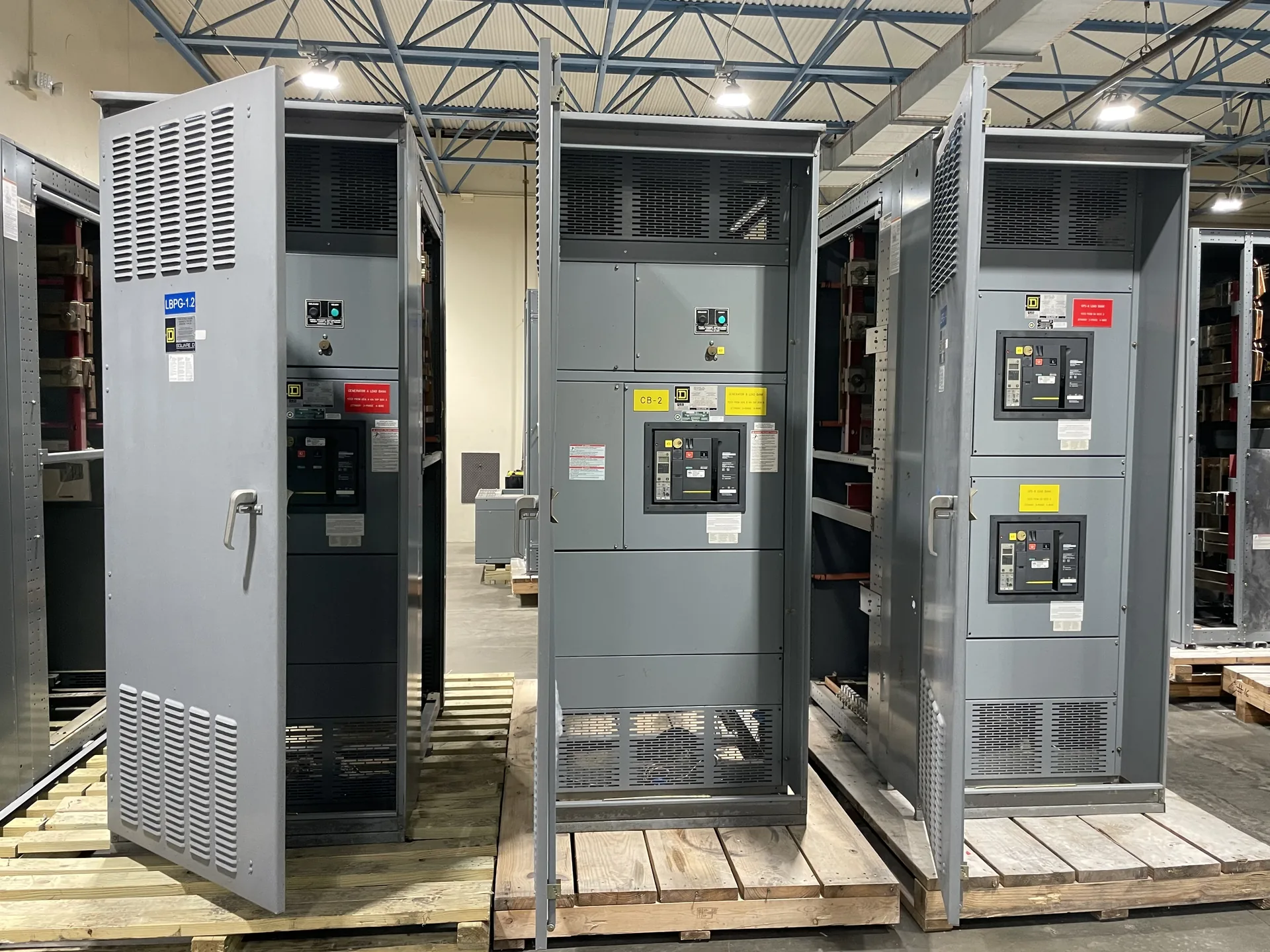
Power distribution, with purpose.
A useful switchgear quotation starts with a clear picture of the application, not just a voltage and an equipment name. Before requesting a price, gather the drawings, operating requirements, site constraints, and schedule assumptions that determine what must be built and how it connects to the rest of the system. A manufacturer can then identify gaps, state its assumptions, and flag details that need engineering review. For projects in Dallas–Fort Worth or elsewhere, the same principle applies: the quote should be based on the actual project and its governing requirements, rather than on an unverified assumption about local conditions or standard configurations.
Define the equipment boundary and project stage
Begin by describing what the requested equipment must do and where the quoted scope starts and ends. Identify whether the request concerns a low-voltage switchboard, medium-voltage switchgear, or another assembly, and explain whether it is new construction, a replacement, an expansion, or a planned future phase. State what equipment is upstream and downstream, and whether the quotation should include only the assembly or account for specified accessories and interface requirements. A one-line diagram and equipment schedule are often more useful than a broad description such as “main switchgear.”
Clarify the project stage and the intended use of the quote. A budgetary review based on preliminary drawings is different from a firm quotation against coordinated, approved documents. Note which drawings are current, what remains under design, and when decisions are expected. If equipment is being replaced, identify the existing gear as context, but do not assume dimensions or connection details are transferable. New equipment may require changes to cables, bus connections, protection settings, or room arrangements; those boundaries should be visible before scope is priced.
Provide electrical inputs that affect the design
Supply the system’s nominal voltage, phase, frequency, grounding arrangement, and the equipment rating required by the project. Keep nominal system voltage distinct from an assembly’s maximum voltage rating. Include available fault-current information or the study used to establish the required short-circuit rating, along with the protective device and coordination assumptions that affect withstand and interruption requirements. If the study is unfinished, say so and identify who will provide the final values. Ratings and component availability must be confirmed for the specific order rather than inferred from a voltage label.
Describe the intended function of each section or feeder, including incoming sources, tie arrangements, outgoing loads, and any transfer or paralleling sequence that applies. Provide the required breaker or switch functions, metering, protective relays, control power, and communications interfaces where defined. Explain whether automatic operation, interlocking, remote status, or owner-supplied controls are part of the design. These details help distinguish equipment that merely fits a one-line from equipment that supports the operating sequence the facility needs.


Send drawings, load information, and interface details
Attach the latest one-line diagram, relevant schedules, and specifications, and identify revisions so reviewers do not compare mismatched documents. A load list can explain feeder destinations, expected loading, spare or future ways, and special load characteristics. Where available, include the coordination or arc-flash study inputs relevant to equipment selection, while making clear whether those studies are preliminary or final. The manufacturer should not be expected to fill in missing engineering decisions by guessing; a clear list of open items makes assumptions easier to expose and resolve.
Document the physical and electrical interfaces that could constrain the build. Useful inputs include room and access drawings, equipment lineup orientation, cable entry and exit direction, termination preferences, available working space, and connection points to existing equipment. Note environmental conditions and any project-specific enclosure or seismic requirements, but identify the specification governing them instead of relying on informal labels. For replacement work, provide verified field dimensions and connection information if available. A site survey or field verification may be a separate project responsibility and should not be assumed to be included in a quotation.
State compliance, origin, and documentation requirements
Identify the standards and specifications the project requires, including the applicable edition where the contract documents name one. If the requested assembly is a low-voltage switchboard, UL 891 may be relevant; it is not a general listing for medium-voltage or high-voltage switchgear. Do not treat a component’s certification or a familiar product description as proof that a complete proposed assembly meets a project requirement. Ask the manufacturer to confirm the applicable construction and documentation for the specific configuration before relying on a compliance statement.
If the procurement includes American-origin or domestic-content conditions, provide the exact contract language and the required evidence. “American components” can refer to different thresholds or documentation depending on the procurement, so the requirement needs to be evaluated against the actual bill of materials and applicable rules. Also specify required submittals, drawings, test records, labeling, and closeout documents. Standards applicability, listed status, origin claims, and component availability must all be confirmed for the proposed order; avoid treating any of them as automatic based on a general product category.
Make schedule and commercial assumptions visible
Give the requested ship date or required-on-site date, the site location, and any receiving or delivery constraints that matter to the project. Explain whether dates depend on approved submittals, release of drawings, receipt of customer-furnished information, or other milestones. A manufacturer may work toward a shorter lead time, but no schedule should be treated as guaranteed until the specific scope, components, approvals, and production requirements are reviewed and confirmed. For Dallas–Fort Worth projects, provide the actual delivery destination and access constraints; service to the region does not establish a local manufacturing or installation presence.
State how the quotation should handle freight, taxes, startup, field services, spare parts, and other scope items if the procurement documents address them. Do not assume a service is included merely because it appears in a project specification; ask for each boundary to be stated. When comparing proposals, check that they use the same drawing revision, rating basis, feeder count, accessories, documentation, and delivery assumptions. A lower initial figure may reflect omitted scope or unresolved engineering rather than a like-for-like offer.
Review the response before issuing a purchase order
Evaluate the quotation for a traceable match to the request: equipment type, configuration, ratings, named standards, included components, exclusions, and open technical questions. Confirm that nominal voltage and equipment ratings are described consistently and that the proposed short-circuit basis aligns with the project information. If an assumption changes the design, cost, or schedule, request a written clarification before approval. A quotation is not a substitute for final coordinated engineering documents or approval of submittals.
Before placing an order, resolve deviations and assign responsibility for remaining inputs, such as final fault-current data, control schematics, cable termination details, and interface dimensions. Confirm which documents govern if drawings and specifications conflict, and establish the approval and change process. Manufacturer-specific capabilities, the selected configuration, component availability, and project requirements should be validated for the actual order. That disciplined review turns a quote request into a reliable basis for procurement without implying a price, delivery commitment, or compliance result before engineering confirmation.
Specifications & planning
Review the details that matter for your application. Final specifications and availability should be confirmed for your project.
| Evaluation factor | Information to confirm |
|---|---|
| Electrical basis | Nominal voltage, required equipment rating, and fault-current basis |
| Physical interface | Lineup orientation, access, cable entry, and verified connection details |
| Compliance basis | Applicable project standards, documentation, and origin language |
| Schedule basis | Required date, approval milestones, and delivery assumptions |