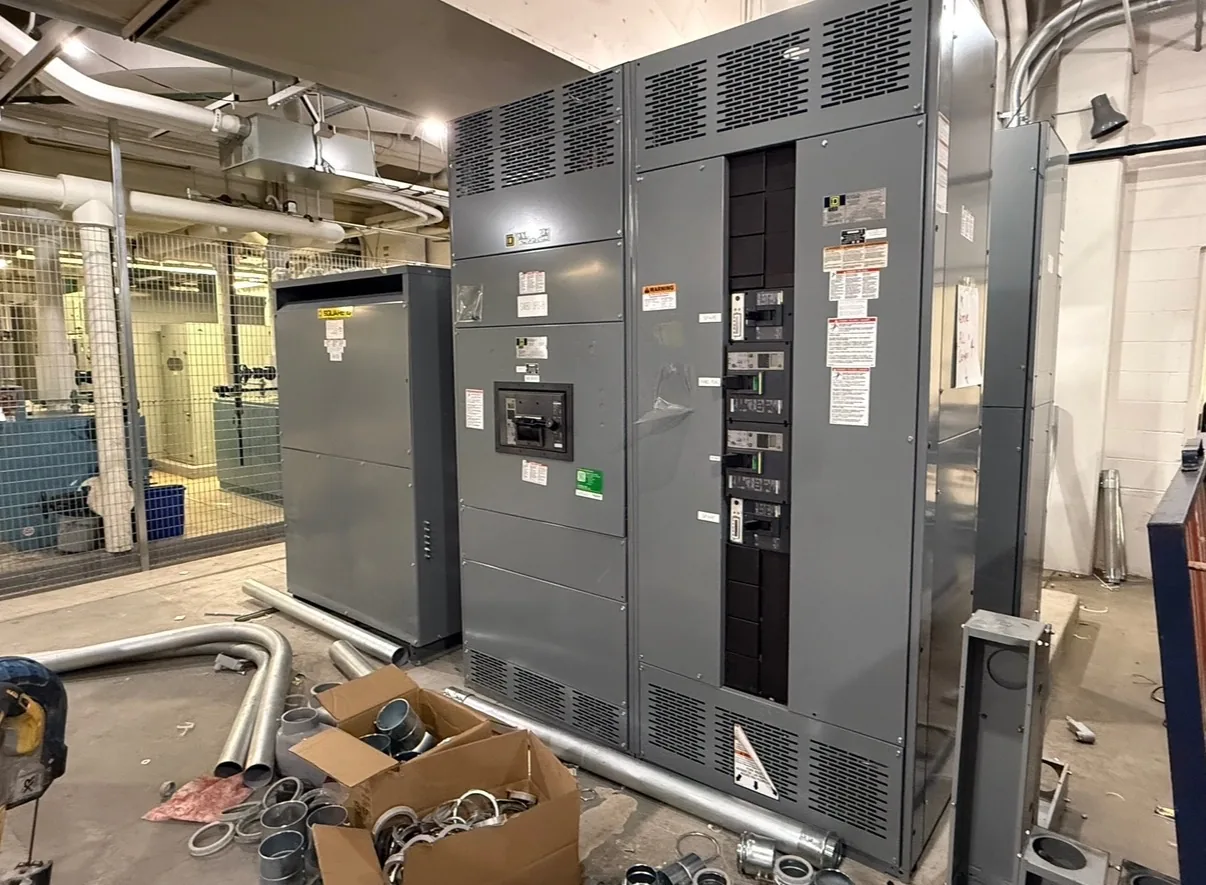
Power distribution, with purpose.
A switchgear retrofit can preserve useful infrastructure, but an existing lineup is not a blank canvas. Before requesting a modification, determine what the original equipment listing and construction permit, which interfaces must remain unchanged, and whether the proposed work can be evaluated as part of the original assembly or requires a different approval path. These questions help buyers compare a retrofit with replacement on sound technical grounds.
Define the retrofit before selecting a path
“Retrofit” can mean replacing a component, adapting a compartment for a different device, or supplying a new lineup that connects to existing equipment. Those scopes carry different engineering and approval implications. A component change may be limited by the original manufacturer’s design, while a new section tied into an older lineup can raise questions about bus connections, enclosure construction, and fault withstand. Describe the intended change precisely rather than relying on the word retrofit alone.
Start by identifying the operational problem and the boundary of the work. Is the goal to add a feeder, change protection functions, accommodate a new load, or address obsolete equipment? Specify what must remain in service, what can be isolated for replacement, and whether the project permits new equipment adjacent to the existing lineup. These constraints do not establish that a particular modification is feasible, but they give an engineer a basis for comparing options.
Treat existing listing status as a decision boundary
An assembly’s original listing or certification applies to the evaluated construction and conditions stated for that equipment; it should not be assumed to cover later changes. Altering buswork, barriers, device mounting, wiring, or protective components may affect whether the modified assembly remains within its original evaluated configuration. A nameplate or drawing alone cannot establish that every proposed field change is acceptable.
Ask who will determine the approval route for the specific scope and what documentation that review requires. Depending on the equipment, change, and authority having jurisdiction, the answer may involve the original manufacturer, an engineering evaluation, field evaluation, or replacement with a newly built assembly. Do not describe a retrofit as “still listed” unless that status is substantiated for the modified configuration. UL 891 concerns low-voltage switchboards; it is not a general listing for medium-voltage switchgear.


Collect records and interface measurements
A useful quote request includes clear photographs of nameplates and the lineup, available one-line and elementary diagrams, original equipment drawings, and the device or component identification. Record system nominal voltage, frequency, phase, continuous-current requirements, available fault current or required short-circuit rating, and protective-device information. Nominal system voltage and equipment maximum rating are related but distinct; provide both where known and have the design team confirm the required rating.
For work that connects to existing sections, provide dimensions and interface details rather than a general statement that the new gear must “fit.” Relevant information can include section width and depth, bus height and orientation, bus material and dimensions, splice locations, enclosure and barrier arrangements, cable entry space, grounding connections, and access clearances. Note site conditions such as indoor or outdoor location, ambient environment, and seismic or other project requirements when applicable. Missing or inconsistent records should be flagged rather than silently treated as verified.
Compare modification with replacement
Evaluate whether the existing lineup has enough physical and electrical capacity for the proposed change. A new feeder may require space, bus capacity, protection coordination, and a suitable fault rating, not merely an open compartment. A device substitution can also affect control voltage, trip functions, instrument-transformer interfaces, wire routing, and operator procedures. A retrofit that preserves one useful section may still require substantial engineering or outage coordination elsewhere.
Compare the retrofit scope with a replacement scope using the same load assumptions and project constraints. Consider equipment condition, documentation quality, compatibility risk, outage duration as a planning issue, future expansion, and the effort needed to establish acceptance of modified construction. Neither option is automatically safer, faster, or less costly. If existing equipment condition or short-circuit data is uncertain, identify that uncertainty as an open engineering item rather than assuming the old rating remains adequate.
Prepare a decision-ready request for quotation
For a new-equipment quotation, send the one-line diagram, load and protection requirements, requested scope, existing lineup details, interface drawings, and the project’s applicable specifications. Identify the governing codes and standards, required documentation, inspection or approval expectations, delivery destination, and any U.S.-origin or component restrictions. State which information is confirmed and which is preliminary. This helps the manufacturer distinguish a request for a new assembly from a request to modify existing gear.
A manufacturer can review a proposed custom build and discuss whether a new assembly or replacement section appears suitable, subject to engineering review and confirmed component availability. American components and shorter lead time may be project goals, not blanket guarantees. Ratings, short-circuit performance, construction details, applicable standards, and U.S.-origin requirements must be confirmed for the specific order. Customers in Dallas–Fort Worth and elsewhere should provide the same technical basis; serving a region does not establish a local manufacturing or installation capability.
Set a clear go, pause, or replace boundary
Proceed toward a retrofit only when the scope, equipment identity, interfaces, and approval route can be established well enough for responsible engineering review. Pause when nameplate data is unreadable, drawings conflict with field conditions, fault-current information is missing, or the proposed change would alter construction whose original evaluation cannot be verified. A pause is a useful outcome: it prevents a quote from implying compatibility that has not been demonstrated.
Replacement deserves serious consideration when the lineup is damaged, undocumented, materially altered, incompatible with required devices, or unable to meet the project’s confirmed ratings and acceptance requirements. The decision is not a promise that every existing section can be reused or that every replacement will meet a desired schedule. Confirm the final scope, ratings, interfaces, standards, and approval responsibilities with the project engineer and relevant authority before purchase.
Specifications & planning
Review the details that matter for your application. Final specifications and availability should be confirmed for your project.
| Evaluation factor | Buyer input or question |
|---|---|
| Existing identity | Nameplate data, manufacturer, model, and available drawings |
| Electrical basis | Nominal system voltage, equipment rating, load, and fault-current information |
| Physical interface | Section dimensions, bus arrangement, cable access, and connection details |
| Approval boundary | How will the proposed change affect the original evaluation or listing status? |
| Scope choice | What evidence supports modification rather than replacement? |