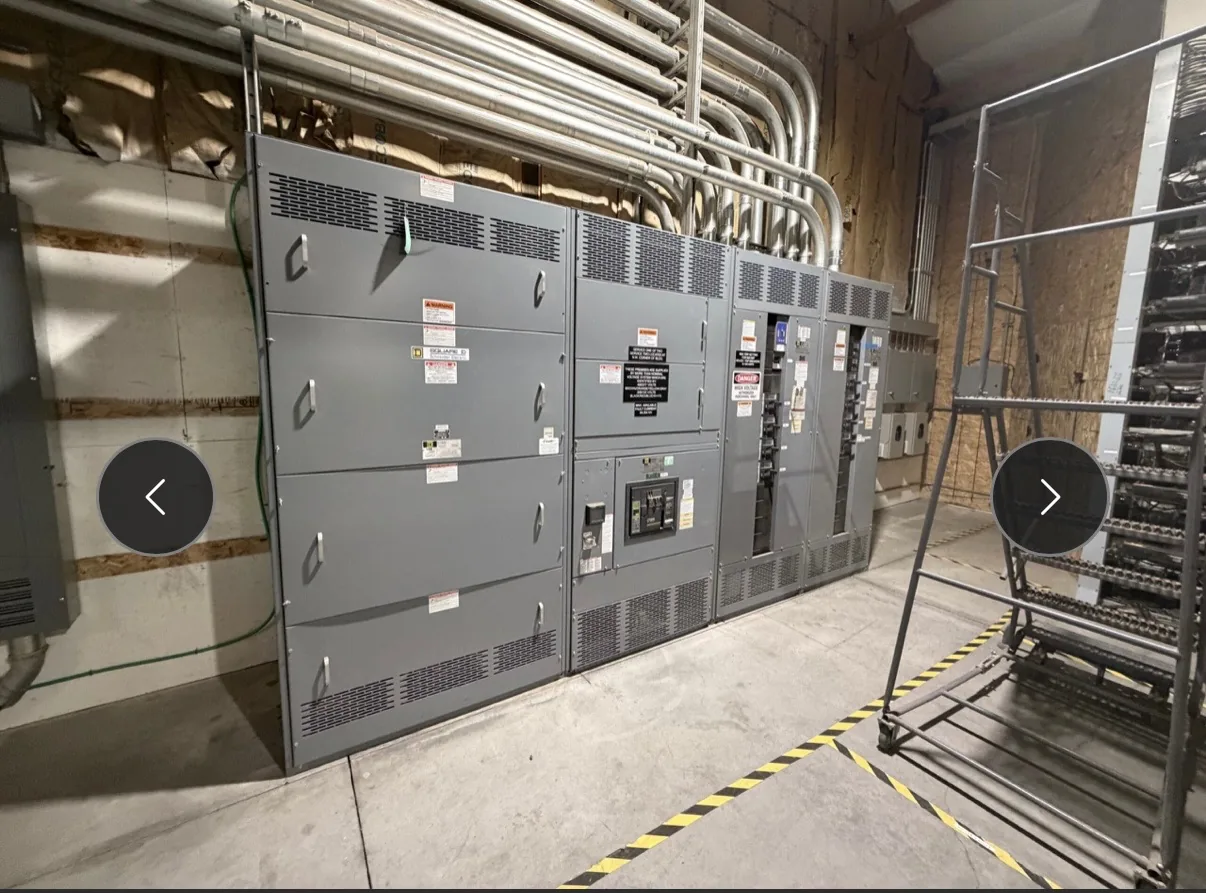
Power distribution, with purpose.
A switchgear plan for a Denton campus or municipal facility should begin with the parcel, the electrical service arrangement, and the people responsible for each side of the service point. City limits alone do not establish which utility serves a property, who owns a feeder, or which authority reviews the work. Before specifying new equipment, confirm those details for the actual site. The guidance below is a planning framework for a hypothetical project, not a claim of a local office, completed installation, or guaranteed service territory.
Verify the parcel, permitting authority, and serving utility
Use the project’s exact street address and parcel information to determine whether the site is within Denton city limits, in an extraterritorial or adjacent jurisdiction, or subject to another authority’s review. Confirm permit requirements with the official City of Denton building-safety or permitting resources, and ask which department handles electrical construction documents, inspections, and any separate site or fire reviews. A mailing address that says “Denton” is not enough to settle jurisdiction.
Separately verify the electric provider and service arrangement for that parcel through the provider’s official service-area and customer or engineering channels. Do not assume a city utility serves every nearby property, or that a campus’s existing provider and service conditions will apply to a new building or separately metered parcel. Confirm current requirements directly with the relevant city and utility before publication or design reliance; boundaries, review processes, and utility responsibilities can change.
Establish feeder ownership and the service-point boundary
For a campus or municipal site, draw the electrical path from the utility source to the proposed switchgear, then identify ownership and maintenance responsibility at each segment. The utility may control some upstream facilities while the owner controls the service entrance and downstream distribution, but the actual division depends on the service agreement and approved design. Obtain utility documents that define the point of delivery, metering location, primary or secondary service, and any required utility-owned equipment.
This boundary affects more than who repairs a cable. It can determine who selects and procures transformers, metering provisions, protective devices, and the service entrance arrangement. Make the one-line diagram consistent with the utility’s written direction, and flag any mismatch between record drawings, field information, and proposed scope. If feeder ownership or fault-current responsibility is unresolved, treat it as a design hold point rather than filling the gap with an assumption.


Build an intake package that supports a useful quote
A purchaser seeking new switchgear should provide the latest one-line diagram, electrical specifications, equipment schedules, and available utility service data. Include system nominal voltage, phase and frequency, service configuration, bus and feeder requirements, main and tie arrangements, metering needs, and the loads or downstream equipment served. Identify required continuous-current and short-circuit ratings only when supported by the engineer’s study or utility information; nominal system voltage is not the same as an equipment’s maximum voltage rating.
Add site-specific interface details: indoor or outdoor installation, available space and access, cable entry direction, conductor information, grounding approach, environmental conditions, and the intended sequence for future expansion or outage work. State the applicable project standards and submittal needs, along with the required delivery destination and schedule milestones. These details let the manufacturer assess configuration and component availability instead of quoting against an incomplete description. The company builds and supplies new equipment, including custom builds; a shorter lead time may be a goal, not a guarantee.
Resolve campus continuity and municipal operating needs
Campus planning often involves more than matching a switchboard to today’s connected load. Ask whether the proposed lineup must support phased construction, a future feeder, a normally open tie, separate metering, or selective isolation of critical buildings. Each feature consumes space and can alter protection, interlocking, and operating procedures. Show which loads must remain available during planned work, but have the owner’s engineer and utility establish permissible switching arrangements and outage boundaries.
For a municipal facility, clarify who operates the equipment, who is authorized to maintain it, and what documentation and labeling the owner needs at turnover. Space for safe access, working clearances, cable bends, and removal of major components should be checked against the actual room and handling route. Coordination is especially important when an existing installation must remain in service while new distribution is prepared; do not infer that a cutover date or temporary-feed method is feasible before the responsible parties review it.
Balance ratings, protection, and equipment standards
The engineer should compare the available fault-current information with the proposed assembly’s short-circuit rating and protective-device arrangement, then coordinate that result with utility requirements and downstream equipment. A higher nominal voltage or larger main device does not by itself resolve protection suitability. Confirm the system voltage, equipment maximum rating, bus rating, interrupting or withstand requirements, and any required arc-energy or coordination study for the specific application.
For low-voltage switchboards, UL 891 may be relevant when it is specified and applicable to the proposed assembly; it is not a general listing for medium- or high-voltage switchgear. Medium-voltage classes such as 5 kV, 15 kV, 27 kV, and 35 kV require a distinct equipment and standards review. Confirm standards, assembly status, component availability, and any U.S.-origin requirements for the exact order rather than assuming universal compliance. Final selections depend on engineering review and the project specification.
Use clear review and quote handoffs
Before requesting a firm proposal, assign responsibility for providing utility data, approving the one-line, confirming jurisdictional submittals, and resolving open interface questions. A practical handoff is a controlled quote package with revision dates, the utility’s service requirements, the engineer’s design basis, and a list of unresolved items. This is particularly useful when an owner, design consultant, general contractor, and utility each control different portions of a Denton-area project.
The manufacturer can review the purchaser’s documents for a new-equipment configuration and identify information needed to proceed, while the project team remains responsible for confirming site conditions, utility authorization, permits, and design approvals. Request that deviations and assumptions be stated plainly in the proposal, including ratings and components that remain subject to verification. Confirm the final scope, standards, origin requirements, and schedule in writing before release; neither a quote request nor a preliminary review establishes a guaranteed delivery date or service territory.
Specifications & planning
Review the details that matter for your application. Final specifications and availability should be confirmed for your project.
| Evaluation factor | What to verify for the parcel |
|---|---|
| Jurisdiction | City limits, permitting authority, electrical review, and inspection path |
| Utility service | Serving provider, service configuration, written requirements, and point of delivery |
| Feeder boundary | Ownership, maintenance responsibility, metering, and supplied equipment |
| Quote basis | One-line, verified ratings, interfaces, standards, and schedule assumptions |