Power distribution, with purpose.
Short-time withstand is the ability of switchgear or a device to carry a specified short-circuit current for a stated duration under defined test and application conditions. It matters when a protection scheme intentionally delays an upstream breaker so a downstream device can clear a fault first. The rating is not a prediction that equipment can tolerate any fault indefinitely; it is one boundary in a coordinated design that must account for the complete assembly, protective devices, and system conditions.
What the rating actually states
A short-time withstand rating pairs a current magnitude with a time interval. For a switchboard, that rating describes the assembly’s ability to withstand the specified short-circuit effects for that interval when applied under the conditions associated with its rating. The current may be stated as symmetrical RMS amperes, while the associated test or specification may also address peak current, which reflects the initial asymmetrical forces. A current value without its duration and applicable conditions is incomplete.
The rating is different from nominal system voltage and from a device’s continuous-current rating. It is also distinct from an interrupting rating: a breaker’s interrupting rating concerns its ability to open and clear a fault, whereas short-time withstand concerns carrying fault current for a defined period. A complete review checks the equipment voltage class, available fault current at its location, required duration, and the ratings of the assembly and installed devices.
Why coordination may require time
Selective coordination aims to have the protective device nearest a fault operate before upstream devices, reducing the extent of an outage. In some designs, an upstream breaker uses a short-time delay to allow a downstream breaker or fuse to clear the fault. During that delay, the upstream assembly and current path may be exposed to fault current. Their short-time withstand capability must be adequate for the current and clearing interval established by the protection study.
This creates a practical tradeoff: a longer delay can improve selectivity across portions of the system, but it can also increase the time equipment experiences fault stress. The engineer must compare the intended delay and device clearing behavior with the assembly’s documented withstand capability and the available fault current. Coordination should not be achieved by choosing a delay first and assuming the switchgear can tolerate it.


Illustrative application: an upstream main
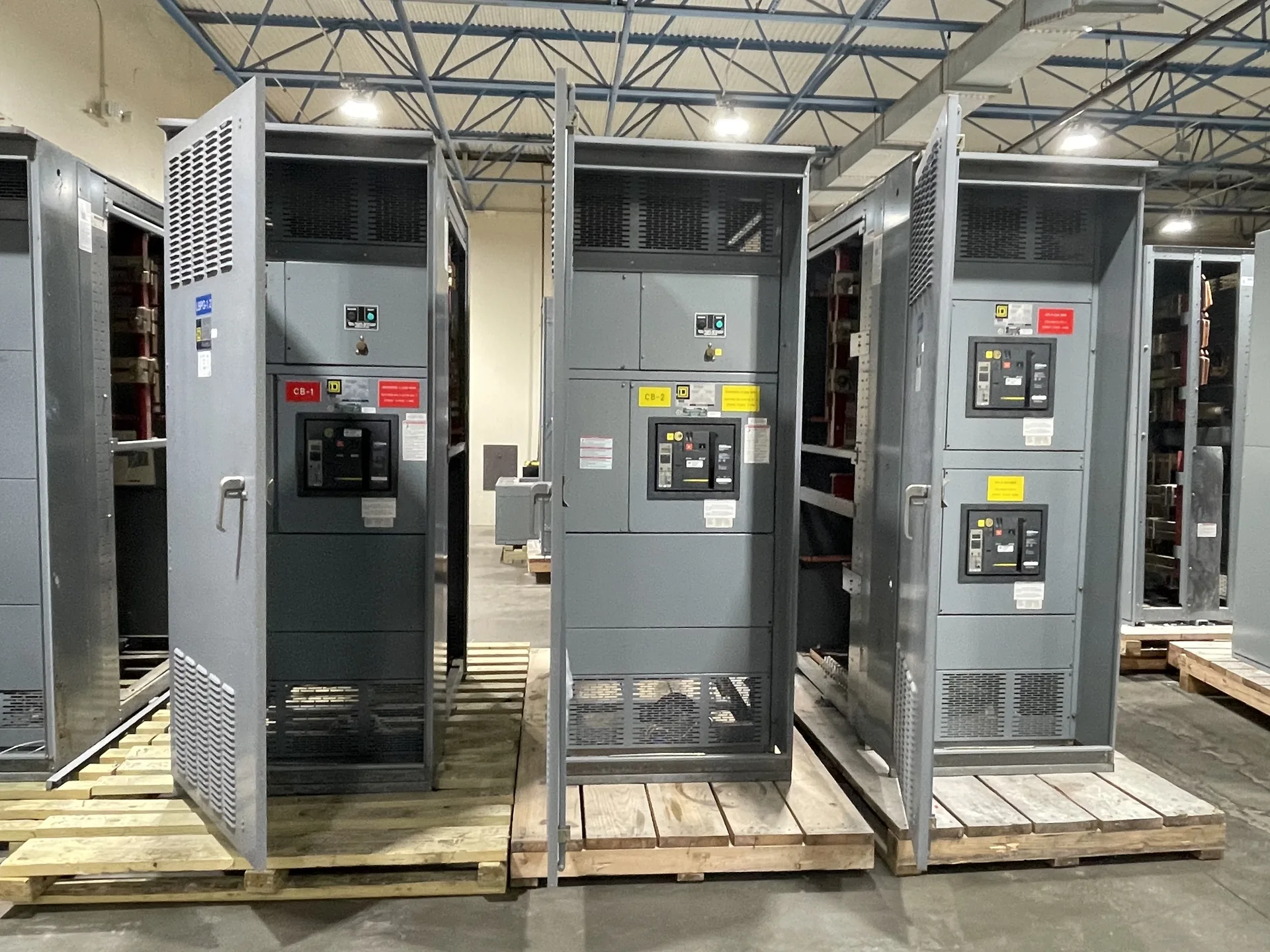
Consider a hypothetical low-voltage distribution system in which a downstream feeder breaker serves a branch circuit and an upstream main breaker protects the switchboard. The protection design may delay the main briefly so the feeder breaker has an opportunity to clear a branch fault. If the fault occurs, the switchboard’s bus and associated current path may carry the fault current until the responsible breaker opens. The relevant comparison is the study’s calculated fault exposure and clearing time against the switchboard’s applicable short-time rating.
This example does not establish a suitable rating, delay, or coordination result for any actual installation. Fault levels can differ by source configuration, transformer impedance, conductor length, and operating mode; protective-device settings and equipment construction also matter. A Dallas–Fort Worth facility and a facility elsewhere may have similar nominal voltage yet require different evaluations because their sources and system arrangements differ. The project’s qualified engineering review must determine the actual duty.
Common misunderstanding: a single number is enough
A frequent error is treating a short-time current value as a universal withstand guarantee, or assuming that a higher value alone resolves coordination. The time associated with that value is essential, as are the rating’s scope and the conditions under which it applies. An assembly rating cannot automatically be assigned to every breaker, accessory, bus joint, or connected component, and a component rating does not by itself establish the capability of the completed switchgear assembly.
Another mistake is using an interrupting rating as a substitute for short-time withstand. A device may be capable of interrupting a fault yet have a different limit for carrying current while delayed. Conversely, a switchboard withstand value does not mean its main breaker can interrupt that same current. Review the actual equipment documentation and protection design together; do not infer one rating from another or from a product family name.
What to verify in specifications and records
Specifications should identify the system’s nominal voltage and frequency, the calculated available fault current at the equipment, the required short-time current and duration, and the coordination objectives that drive any intentional delay. They should also identify relevant source and operating configurations, protective-device types and settings, and whether the requirement applies to the complete assembly or a particular component. Short-circuit and withstand information should be reviewed alongside applicable interrupting and peak-current requirements.
For a quotation on new custom-built equipment, provide the one-line diagram, system study or available fault-current data, equipment location in the distribution system, voltage and continuous-current requirements, protective-device schedule, and required standards or documentation. State any U.S.-origin component requirements explicitly. A manufacturer can confirm component availability and the documentation applicable to the proposed configuration; the project engineer must confirm the design requirements. UL 891 applies to low-voltage switchboards where applicable, not as a general listing for medium-voltage switchgear.
Related terms and project decisions
Short-circuit current is the fault current available at a particular point in the system. Short-time withstand describes a defined ability to carry that current for a specified duration. Interrupting rating concerns the ability of a protective device to break fault current, while selective coordination concerns how protective devices operate in relation to one another. These terms are related, but none can stand in for the others in a specification or engineering review.
When evaluating a proposed build, ask whether the stated current and time match the study, which assembly or device the value covers, and what conditions or test documentation support its use. Confirm that the selected breakers, buswork, enclosure, and protection settings form a coherent design. Custom builds and American components may be considered when specified and available; shorter lead time can be a goal, not a guarantee. Final ratings, component availability, standards, and origin requirements must be confirmed for the specific order.
Specifications & planning
Review the details that matter for your application. Final specifications and availability should be confirmed for your project.
| Evaluation factor | What to confirm |
|---|---|
| Fault-current duty | Calculated available current at the equipment location and applicable system configuration |
| Withstand interval | Specified duration and its relationship to the protection study and clearing time |
| Rating scope | Whether documentation applies to the complete assembly, a device, or a defined component |
| Coordination | Protective-device settings, intended selectivity, and relevant interrupting ratings |