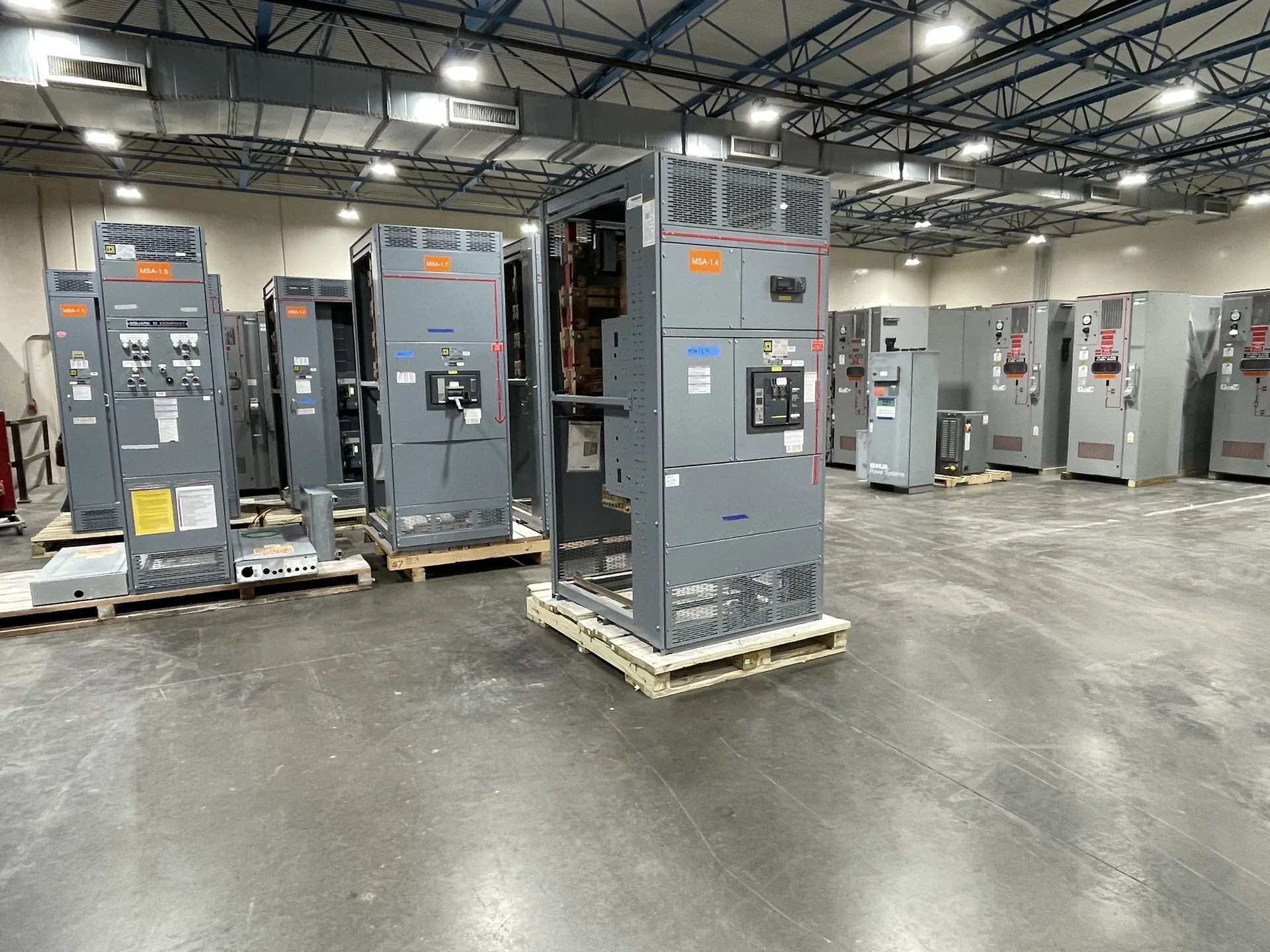
Power distribution, with purpose.
A switchboard is a low-voltage assembly that receives power and distributes it to downstream circuits through buses, protective devices, and associated controls. The term does not identify one universal construction: its governing standard, device arrangement, ratings, and interfaces must be established for the application. Understanding those distinctions helps purchasers specify the right equipment rather than treating “switchboard” and “switchgear” as interchangeable labels.
What the term means
In a typical distribution system, a switchboard serves as a central point for dividing an incoming supply among feeders. Its enclosure contains a bus structure and devices such as molded-case circuit breakers, fusible switches, or other components selected for the design. Sections may be arranged to accommodate incoming power, distribution, metering, and control functions. The exact configuration depends on the electrical system and project requirements, not simply on the name printed on a drawing.
Low-voltage switchboards are commonly designed to UL 891 where that standard applies. UL 891 is not a general standard for all switchgear, and it should not be used to describe medium-voltage equipment. A system’s nominal voltage and an assembly’s maximum voltage rating are related but distinct specification items. Likewise, a short-circuit rating must be established for the actual assembly and system conditions; it should not be inferred from a component’s rating or from a product category.
How it differs from power-circuit-breaker switchgear
A key distinction is construction and the applicable equipment standard. Low-voltage power-circuit-breaker switchgear is generally associated with metal-enclosed, drawout power circuit breakers and ANSI/IEEE switchgear standards. A switchboard is generally a different low-voltage distribution assembly, often using molded-case breakers or other devices, with construction and testing governed by its applicable standard. These are typical design distinctions, not a substitute for reviewing the proposed equipment’s construction and documentation.
The choice is not simply a matter of which product sounds more robust. The engineer and purchaser should consider fault-current duties, selectivity and coordination, maintainability, operating practices, space, and the consequences of an outage. If drawout breakers, particular compartment arrangements, or specific test and maintenance practices are essential, state them directly and evaluate whether the proposed equipment meets the need. A label alone cannot confirm equivalent construction, performance, or serviceability.


Illustrative application and interfaces
Consider a hypothetical commercial facility receiving low-voltage power from a transformer and distributing it to lighting panels, mechanical loads, and other building systems. A switchboard could combine the incoming connection, main protective device, feeder breakers, and metering in a coordinated assembly. The one-line diagram should make the intended power path clear, while schedules identify the connected loads and protective devices. This is an illustrative arrangement, not a description of a completed customer project.
Interfaces deserve as much attention as the enclosure itself. The specification should identify the incoming conductor or bus arrangement, phase and wire configuration, grounding method, feeder destinations, cable entry and exit directions, and any required access or working clearances. Confirm whether metering, communications, control power, or connections to a transfer switch or generator are part of the design. In Dallas–Fort Worth, as elsewhere, site conditions and utility or engineer requirements should be confirmed for the specific project rather than assumed from the service area.
Ratings and documents to settle before ordering
A useful specification identifies nominal system voltage, frequency, number of phases and wires, continuous current requirements, and the required short-circuit rating. It should also state the applicable standard and any project-specific environmental or enclosure requirements. The available fault-current study and protective-device coordination information help the design team evaluate whether the proposed assembly and devices are suitable. Rating terminology can differ across components and the assembled equipment, so the basis of each value should be documented.
Provide the current one-line diagram, feeder or breaker schedule, load information, available fault-current data, and relevant utility or engineering criteria when requesting a quote. Include required device types and frame or trip details where established, metering and control needs, cable-entry preferences, and space or shipping constraints. Final drawings and submittals should be reviewed against the project documents before release. Ratings, component availability, standards applicability, and any U.S.-origin requirements must be confirmed for the specific order.
Common misunderstanding: the names are not interchangeable
In everyday conversation, “switchgear” is sometimes used as a broad name for electrical distribution equipment, while technical specifications use it to describe a particular construction or class of assembly. This can create a procurement mismatch: a buyer may request a switchboard while expecting drawout power circuit breakers, or request switchgear while the one-line and device schedule indicate a switchboard. Resolving the terminology before quotation reduces the chance of comparing unlike equipment.
A second misconception is that a familiar voltage figure alone determines the equipment type or standard. Nominal system voltage, maximum equipment rating, interrupting capability, and assembly short-circuit rating answer different questions. Do not assume a particular voltage class, UL standard, or device arrangement applies without reviewing the design. Where the specification is ambiguous, request clarification from the engineer of record and compare the proposed construction and ratings with the approved requirements.
Related terms and buying new equipment
Related glossary terms include switchgear, switchboard, switchboard bus, main breaker, feeder breaker, molded-case circuit breaker, power circuit breaker, available fault current, interrupting rating, short-circuit rating, and selective coordination. A bus carries current within the assembly; a breaker interrupts current under specified conditions; and a system study helps establish what the equipment must withstand or interrupt. These terms are connected, but none alone defines a complete switchboard specification.
For a new custom-built assembly, a purchaser should send the project’s electrical documents and clearly separate firm requirements from preferences. A manufacturer can review the requested configuration, applicable construction, component availability, and documentation needs before the order is finalized. Custom builds using American components and shorter lead time as a goal may be relevant to procurement, but neither availability nor schedule is universal or guaranteed. UL 891 applies only where appropriate to a low-voltage switchboard and must be confirmed for the specific assembly.
Specifications & planning
Review the details that matter for your application. Final specifications and availability should be confirmed for your project.
| Evaluation factor | What to confirm |
|---|---|
| Equipment type | Switchboard or power-circuit-breaker switchgear construction required by the design |
| Electrical basis | Nominal voltage, system configuration, continuous current, and available fault current |
| Protection | Device types, interrupting ratings, coordination needs, and assembly short-circuit rating |
| Project interfaces | Incoming and outgoing connections, metering, controls, access, and cable-entry preferences |