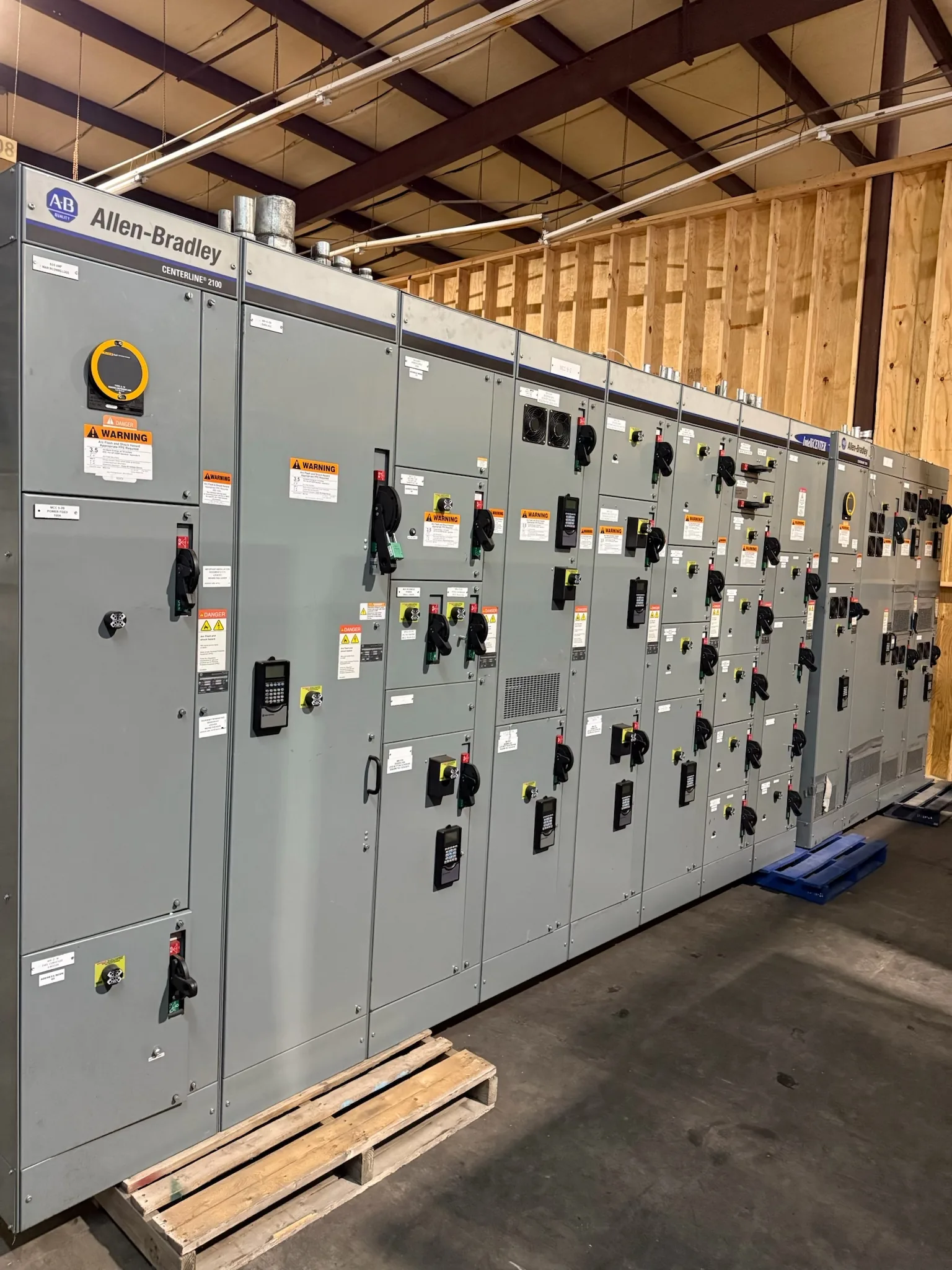
Power distribution, with purpose.
Transfer permissives determine whether a transfer controller may move a load from one source to another; source sensing supplies the evidence behind that decision. A sound design makes both explicit: which electrical conditions count as acceptable, which transitions are allowed, and what the system does when information is missing or contradictory. These choices depend on the actual one-line, source characteristics, load behavior, and control scheme—not a generic threshold or a controller’s default settings.
Define Each Source State Before Setting Thresholds
Start by documenting what “available” means for each source. A utility source might be considered acceptable only when measured phase-to-phase voltages and frequency are within specified limits, required phases are present, and any intentional delay has elapsed. A generator source may also require a run indication, stable output, and a permissive from its own controls. The design must identify whether sensing is line-to-line, line-to-neutral, or both, and whether voltage transformers, fuses, or control-power sources affect what the controller can actually observe.
Treat source states as distinct rather than reducing them to a single healthy/unhealthy bit. A source can be connected but unacceptable, acceptable but not selected, unavailable because sensing has failed, or intentionally blocked. Record phase-loss and imbalance criteria, under- and overvoltage thresholds, frequency limits, pickup and dropout delays, and the required response to a failed sensing circuit. These values require review against the equipment, loads, source behavior, and applicable project requirements; nominal system voltage alone does not establish settings.
Make Permissives and Interlocks Traceable
A permissive is a condition that must be true before an action is allowed. Depending on the arrangement, transfer may require an acceptable alternate source, a confirmed switch or breaker position, a healthy control supply, and an approved operating mode. Interlocks serve a related but different purpose: they prevent prohibited combinations, such as closing two sources together where paralleling is not intended. Specify each condition by its source, electrical state, and consequence if it is absent; avoid relying on an unexplained “ready” signal.
Hardwired contacts can provide direct, inspectable paths for critical indications and interlocks, but their design still needs a defined normal state, contact supervision where appropriate, and treatment of broken wires or loss of control power. A normally open contact that never closes can mean an unavailable source or a failed circuit; those conditions may be indistinguishable without additional supervision. The logic should state whether transfer is inhibited, delayed, alarmed, or handled by a separate operating procedure when a permissive is lost.


Choose Communication Interfaces Without Hiding Failure
Communications can exchange status, alarms, commands, and measured values with a generator controller, building-management system, or supervisory control system. The specification should identify the interface and protocol, signal ownership, update expectations, command authority, and which functions remain local if the network or remote device is unavailable. A displayed source status is not automatically a dependable transfer permissive; confirm its origin, quality indication, latency, and behavior on stale or invalid data.
A practical design may use communications for monitoring while retaining hardwired paths for selected time-critical permissives, or it may use a validated controller interface for defined functions. Neither choice is universally safer: added wiring can increase termination and maintenance points, while network dependence can complicate troubleshooting and failure analysis. Decide explicitly whether loss of communications blocks an automatic transfer, permits locally sensed operation, or raises an alarm while another independent control path remains available. Confirm actual controller and component capabilities for the specific order.
Work Through a Hypothetical Transfer Decision
Consider a hypothetical distribution arrangement with a normal utility source and a standby generator feeding a load through a transfer scheme. The utility voltage falls outside the project’s approved acceptable range for longer than its specified dropout delay. The controller declares the normal source unacceptable and requests generator start. That request alone does not authorize transfer: the generator must reach its defined acceptable state, and any required run, control-power, position, and interlock conditions must be satisfied before the alternate path can close.
If generator voltage appears acceptable but its phase-rotation input is invalid, or a required position indication is missing, the permissive matrix determines the result. The design might inhibit transfer and annunciate the specific failed condition rather than infer readiness from voltage alone. If the utility returns during the sequence, the return delay and retransfer policy determine whether the load stays on generator temporarily or returns when conditions are met. This is an illustrative decision path, not a recommended setting or a representation of a completed project.
Compare Operating Strategies and Failure Behavior
Open-transition transfer separates the sources before connecting the alternate source and is commonly considered where the design must avoid intentional source overlap. Closed-transition operation briefly overlaps sources and therefore raises additional synchronization, utility coordination, protection, and equipment requirements. A delayed or manual transfer policy may better fit some loads or operating constraints, but it changes interruption duration and operator responsibilities. The one-line and protection philosophy must support the selected method.
For every strategy, review what happens on loss of control power, a failed voltage-sensing fuse, contradictory breaker-position contacts, a generator start failure, or a controller restart. Fail-safe behavior is not a universal instruction to open or close; the preferred response depends on hazards, load consequences, source arrangement, and protection. Qualified electrical and controls professionals should determine settings, work practices, testing, and code interpretation. Do not assume a communications alarm or a source-health indication substitutes for protective relaying.
Specify the Evidence Needed for Review and Quotation
Provide a current one-line diagram, source and load data, transfer sequence, desired operating modes, and available control schematics. Include nominal system voltage and frequency, source grounding, fault-current information, protective-device coordination inputs, sensing locations, generator-controller details, and the required hardwired and network interfaces. Identify whether the project needs open or closed transition, bypass or isolation features, remote monitoring, alarms, and particular environmental or enclosure conditions. In Dallas–Fort Worth or elsewhere, delivery planning also depends on the project’s receiving constraints and schedule; no local factory presence should be inferred.
For review, request or maintain the cause-and-effect matrix, point-to-point and elementary diagrams, terminal plan, communications register, controller configuration record, and approved sequence of operation. These records let the engineer check each permissive against an observable signal and define commissioning acceptance criteria. A manufacturer can build new custom equipment using American components and can pursue a shorter lead time as a goal, but availability and timing must be confirmed. Supply the application details for a quote; confirm ratings, short-circuit capability, component availability, applicable standards, and any U.S.-origin requirements for the specific order. UL 891 applies to low-voltage switchboards where applicable, not medium-voltage gear.
Specifications & planning
Review the details that matter for your application. Final specifications and availability should be confirmed for your project.
| Evaluation factor | Project-specific question |
|---|---|
| Source acceptance | Which voltage, frequency, phase, and delay criteria define an acceptable source? |
| Permissive path | Which conditions are hardwired, communicated, or independently supervised? |
| Failure response | What inhibits, alarms, or remains operational when a signal or control supply fails? |
| Transfer strategy | Does the protection and operating sequence support open or closed transition? |