Power distribution, with purpose.
Breaker obsolescence is not simply a question of whether a manufacturer still sells a particular model. A breaker may remain serviceable while its control components, trip unit, accessories, or replacement parts become difficult to source; conversely, an available replacement may not fit the existing switchboard or preserve its protection design. A sound plan ties lifecycle evidence to the specific distribution lineup, documents uncertainty, and defines what must be verified before equipment is ordered or work begins.
Build the decision from equipment-specific evidence
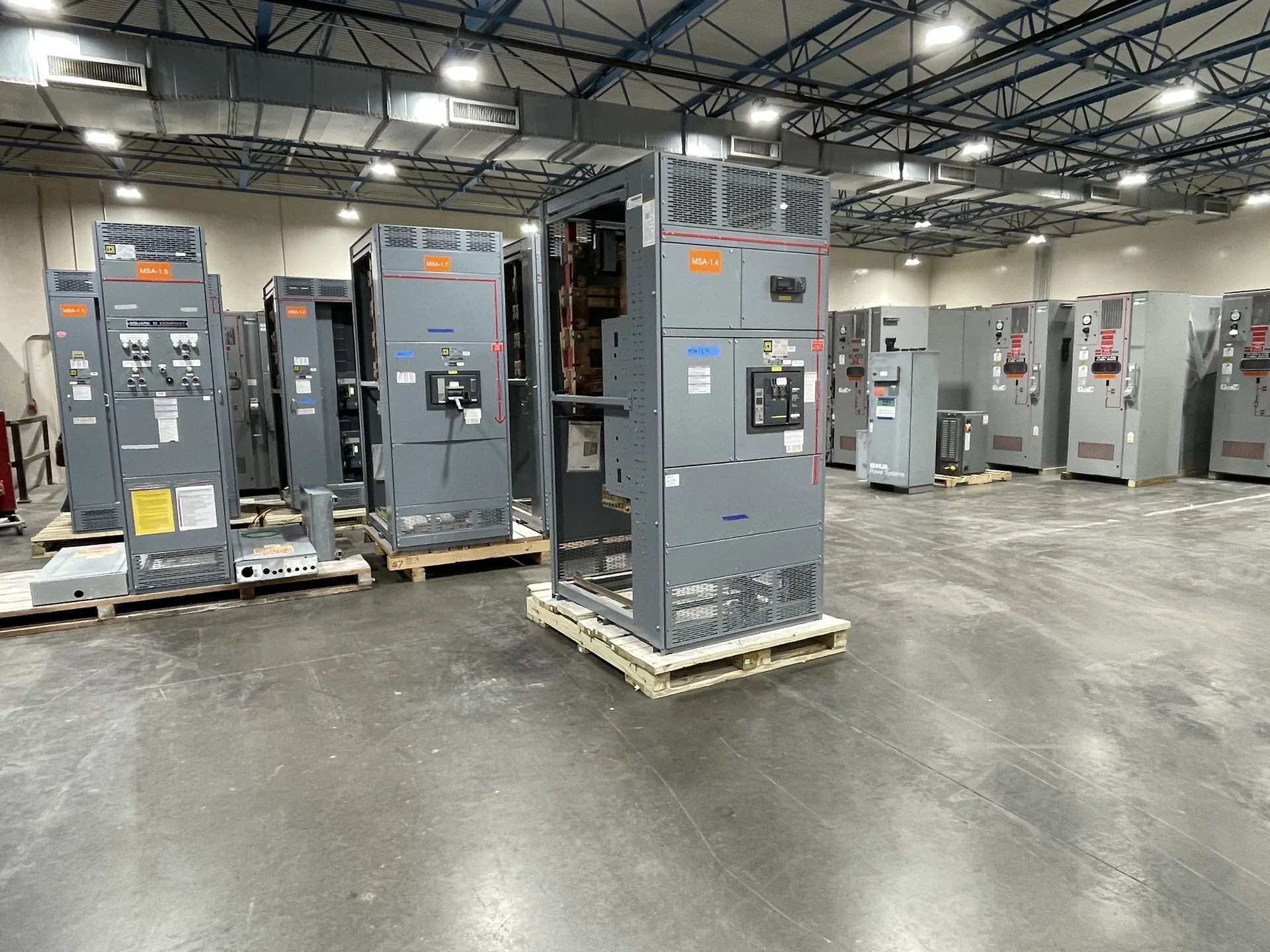
Start with the installed breaker and the assembly around it, not a catalog description alone. Record the manufacturer, model and catalog numbers, frame and trip ratings, interrupting rating, voltage class, poles, trip-unit type, control voltage, accessory configuration, and any visible revision markings. Capture the switchboard or switchgear nameplate, section and cell identifiers, bus arrangement, and the breaker’s physical and electrical interfaces. A photograph can help identify details, but it does not replace a legible nameplate or verified drawings.
Then compare this field information with the equipment’s original submittals, wiring diagrams, bills of material, maintenance records, and available manufacturer notices. Look for explicit end-of-sale or end-of-support information, but distinguish a discontinued catalog number from a loss of all repair or parts support. Record the source and date of each lifecycle statement. If records conflict, treat the status as unconfirmed until a qualified engineer or the relevant manufacturer resolves the discrepancy.
Use operating history without overstating what it proves
Maintenance and operating records can show whether replacement planning is urgent. Useful evidence includes inspection findings, operation counts, fault interruptions, trip-unit alarms, nuisance trips, test results, repair history, parts delays, and known changes in the load or protection scheme. A pattern of recurring defects or unavailable critical components may support earlier replacement than an age-based schedule alone. Missing records are also relevant: they reduce confidence in the condition assessment but do not, by themselves, prove that a breaker is unsafe.
Interpret this evidence through the equipment’s duty and service conditions. A breaker’s workload, environmental exposure, fault duty, maintenance condition, and the consequences of an outage affect the decision; calendar age alone does not establish remaining life. Maintenance intervals and inspection methods should follow applicable manufacturer documentation, site requirements, and qualified professional judgment. This planning guidance cannot determine whether a particular breaker is fit for continued service or set a safe work procedure.


Work a hypothetical decision through the interfaces
Consider a hypothetical low-voltage distribution lineup serving a critical process, where the installed breaker’s trip unit is discontinued and the maintenance file shows a previous replacement delay. The lineup drawings identify the breaker position and feeder, but the available records do not confirm whether the present trip settings match the latest coordination study. The next decision is not automatically to replace the breaker: first verify the installed configuration, current protective-device study, fault-current basis, and the consequences of taking that feeder out of service.
If inspection and records support continued operation, a documented maintenance and parts strategy may be a temporary option while replacement is engineered. If support risk, condition, or outage exposure is unacceptable, compare a manufacturer-supported replacement within the existing assembly against a replacement section or broader lineup renewal. A proposed breaker must be checked for mounting and connection fit, bus and cell interfaces, control wiring, interlocks, accessories, ratings, and coordination implications. A physically compatible device is not automatically an electrically equivalent or approved substitute.
Compare replacement paths against lifecycle and outage risk
A direct replacement can limit the scope of change when the original assembly and a suitable device remain supported, but it may leave other aging components and documentation gaps untouched. A retrofit can address support or functionality concerns while retaining part of the lineup, yet it requires detailed interface verification and may introduce new control, protection, or maintenance considerations. Replacing a section or complete lineup can provide a more consistent lifecycle baseline, but typically broadens engineering, procurement, installation, outage, and commissioning planning.
Compare options using the same project assumptions: required continuity, outage window, future load changes, maintainability, parts support, protection coordination, physical space, and the condition of adjacent equipment. Also consider whether the owner needs a staged plan, temporary operating restrictions established by qualified personnel, or a defined point for reassessment. No option is inherently best without the system data and site constraints. For Dallas–Fort Worth facilities or projects elsewhere, delivery planning should be coordinated with the actual work schedule; geographic service does not establish local inventory or a guaranteed lead time.
Prepare a quote and engineering package that can be checked
For a useful new-equipment quote, supply clear nameplate and breaker identification, the existing assembly manufacturer and model, one-line diagram, relevant elementary and wiring diagrams, physical dimensions, breaker-cell details, and the required quantity. Include system nominal voltage and frequency, available fault-current information and its source, required continuous and interrupting ratings, trip-unit and accessory needs, control power, enclosure or environmental conditions, and any known interface constraints. State whether the request is for a replacement device, retrofit, section, or complete assembly, and identify required documentation or delivery milestones.
Where the project requires a new low-voltage switchboard, a custom-built UL 891 assembly may be considered when appropriate to the design; UL 891 is not a general listing for medium-voltage or high-voltage switchgear. A purchaser should identify applicable specifications and any required U.S.-origin provisions rather than assume compliance from a product description. Ratings, short-circuit capability, component availability, standards, origin requirements, and compatibility must be confirmed for the specific order. A quote is not a substitute for a sealed design, field verification, or approval by the authority having jurisdiction.
Close the plan with controlled records and professional review
The replacement record should preserve the basis for the decision and make future maintenance practical. Retain the approved one-line and elementary diagrams, equipment and component data, nameplate schedule, protection study and settings documentation, interface drawings, inspection or test reports, and the final bill of material. Record deviations from the existing design, configuration changes, unresolved assumptions, and the revision status of each document. Update site asset records so that future teams can distinguish the installed condition from superseded drawings.
Before procurement and implementation, qualified electrical professionals should verify the design, applicable code interpretation, protection coordination, equipment ratings, work practices, and acceptance requirements for the actual installation. They should also determine whether additional studies, shutdown planning, or authority review is needed. The evidence described here supports a planning decision, not a conclusion about a specific installation’s safety, code compliance, or final settings; those conclusions depend on verified project data and professional review.
Specifications & planning
Review the details that matter for your application. Final specifications and availability should be confirmed for your project.
| Evaluation factor | Evidence to review |
|---|---|
| Obsolescence status | Dated manufacturer support or end-of-sale information |
| Condition and duty | Inspection, operation, trip, repair, and test history |
| Design compatibility | Nameplates, drawings, interfaces, ratings, and protection basis |
| Replacement scope | Continued maintenance, breaker replacement, retrofit, or lineup renewal |