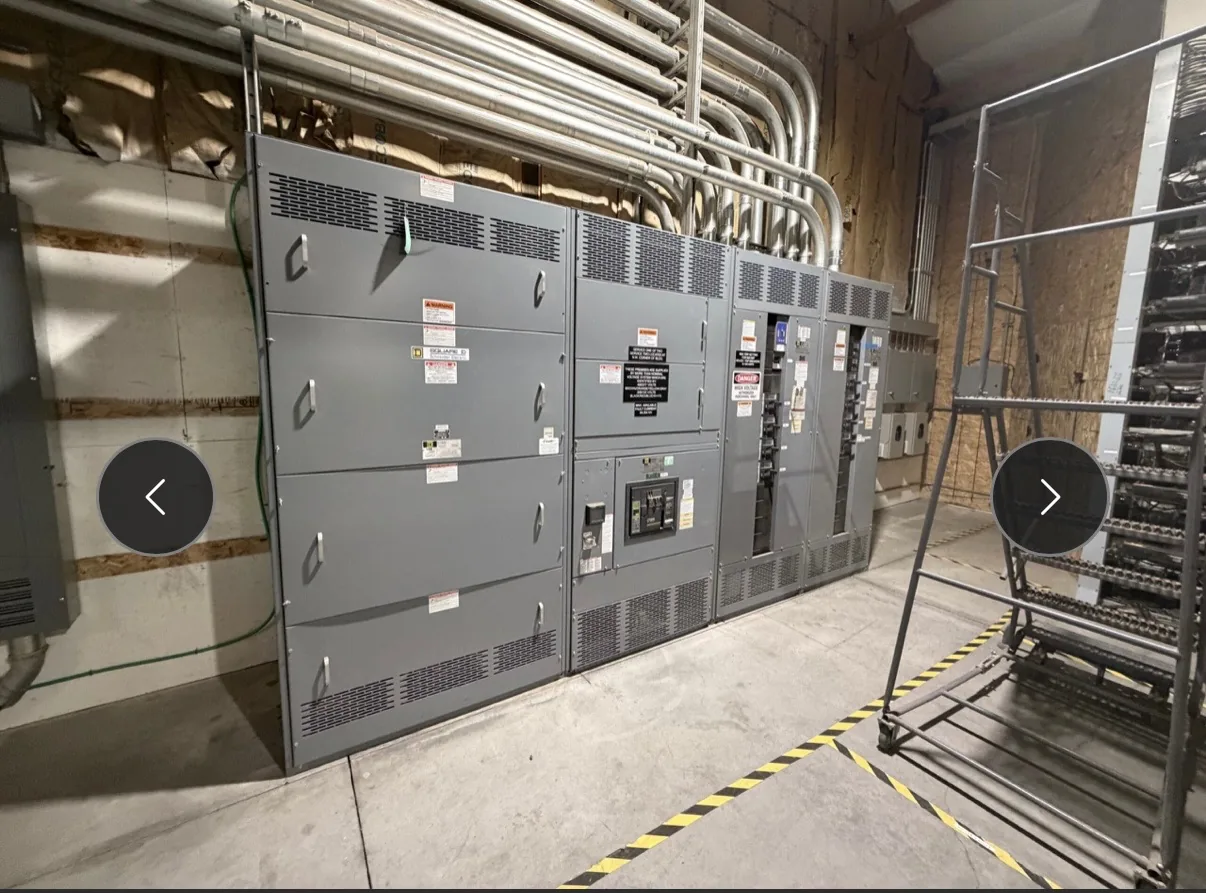
Power distribution, with purpose.
Field inspection and commissioning are not interchangeable with factory design review, and neither automatically transfers responsibility for the installation to the equipment manufacturer. A reliable project plan assigns who verifies site conditions, who approves design inputs, who performs electrical tests, and who authorizes energization. For switchgear ordered new from a manufacturer serving Dallas–Fort Worth and shipping nationwide, those boundaries should be documented before drawings are released and revisited as the installation approaches startup.
Set responsibilities before design begins
The owner or its designated engineer should establish the project’s electrical basis: system nominal voltage, available fault current and its source, grounding method, load and future-growth assumptions, operating sequence, and applicable project specifications. The contractor should verify field conditions that affect the equipment, including room dimensions, access and rigging route, cable entry direction, conduit locations, working space, ventilation, and environmental conditions. The engineer of record remains responsible for interpreting the design criteria and resolving conflicts in the contract documents.
The manufacturer needs a coordinated package to develop an appropriate proposal and drawings. A purchaser should provide the one-line diagram, equipment schedule, technical specification, system and protection information, site constraints, preferred delivery milestones, and any required component or U.S.-origin provisions. The quote should identify unresolved assumptions and requested exceptions rather than silently treating incomplete inputs as confirmed. Ratings, short-circuit capability, component availability, applicable standards, and origin requirements must be confirmed for the specific order; a general equipment description is not approval for a particular installation.
Use design milestones to close open decisions
At the quotation and design-input stage, the owner and engineer should identify which values are fixed and which remain subject to study. Available fault current, for example, may depend on utility data or a revised transformer selection. The engineer should provide the basis for the required withstand or interrupting performance, while the manufacturer confirms the proposed assembly and components against that basis. An assumed value should be labeled as an assumption and assigned an owner and due date before it becomes a released design input.
During drawing review, the contractor should compare proposed footprints, cable compartments, terminations, access clearances, and shipping splits with coordinated architectural and electrical plans. The engineer should review functional and protection details, including metering, control power, interlocks, and protective-device interfaces, where applicable. Approval of a drawing should not be treated as verification of concealed site conditions or a substitute for field measurement. Changes after release can affect interfaces, cost, or schedule, so the project should record who may authorize revisions and how revised drawings supersede earlier versions.


Make the hypothetical fault-current decision explicit
Consider a hypothetical project where preliminary utility data indicates one available fault-current value, but the final transformer impedance and utility contribution have not been confirmed. The engineer should decide whether the design can proceed using a documented conservative basis or whether equipment selection must wait for confirmed study data. The contractor can verify the planned service and transformer arrangement in the field but should not infer fault current from physical observation. The owner coordinates the utility information, and the engineer records the calculation basis and acceptance decision.
Two design paths may then be compared: selecting equipment for the confirmed study result, or retaining a higher design basis to accommodate uncertainty or planned system changes. The latter may influence component selection, physical arrangement, and cost; it is not automatically the better choice. The engineer must assess coordination, protection, and project requirements, and the manufacturer must confirm that the proposed assembly is suitable for the specified values. This example illustrates a decision process only; actual ratings and conclusions require project-specific engineering review.
Separate factory records from field verification
A useful handoff distinguishes records created during design and manufacture from checks performed after delivery. The project file should retain approved drawings, the final equipment schedule, documented deviations, applicable factory test or inspection records, and the manufacturer’s operating and maintenance information. The contractor’s field package should capture receiving condition, installation observations, connection and grounding verification, and any deficiencies or corrective work. The engineer should define the required field tests and acceptance criteria in the project documents, with qualified personnel responsible for performing and interpreting them.
The records should identify the equipment by section or lineup, revision, and relevant device designation so that test results can be matched to the approved design. If a delivered configuration differs from the latest approved drawing, the discrepancy should be resolved through documented review rather than an informal field assumption. The manufacturer can clarify its supplied equipment and its documentation, but the project team must establish who verifies site wiring, external protection interfaces, and system-wide performance. Requirements for standards and UL 891, where applicable to a low-voltage switchboard, must be confirmed for the specific assembly; UL 891 is not a general designation for medium-voltage equipment.
Draw the field boundary and control energization
Before startup, the owner should name the party responsible for commissioning coordination and identify the engineer, contractor, testing provider, utility, and manufacturer roles in writing. The contractor is generally responsible for installation quality and for reporting site conditions; the commissioning or testing team performs its assigned checks under approved procedures; and the engineer evaluates results against the design intent. The manufacturer may address questions about supplied equipment, but should not be presumed to inspect the installation, perform commissioning, set protection, or authorize energization unless those services are explicitly verified and contracted.
Field changes to device settings, wiring, interlocks, or protection logic require controlled review because they can affect coordination and safe operation. Final settings, work practices, code interpretation, test scope, and energization authorization belong to qualified professionals with the appropriate project authority. No general guide can determine whether a particular installation is ready for service: that conclusion depends on approved design documents, actual site conditions, verified test results, applicable requirements, and resolution of open deficiencies. The handoff is complete only when responsibilities, evidence, and unresolved items are clear to the people who will operate and maintain the equipment.
Specifications & planning
Review the details that matter for your application. Final specifications and availability should be confirmed for your project.
| Evaluation factor | Project record or decision to confirm |
|---|---|
| Design basis | One-line diagram, nominal system voltage, grounding, loads, fault-current source and calculation basis |
| Physical interface | Verified dimensions, access route, cable entry, clearances and environmental conditions |
| Configuration control | Approved drawing revision, documented deviations and authorized change process |
| Commissioning boundary | Assigned test scope, acceptance criteria, responsible qualified parties and energization authority |