Power distribution, with purpose.
A damaged switchgear shipment creates two linked questions: what was physically affected, and whether the condition compromises the equipment’s specified design or delivery scope. A dented enclosure, shifted bus bracing, moisture exposure, or a broken crate does not by itself establish the extent of electrical damage. Strong claim documentation preserves evidence before handling changes it, connects the observed condition to the correct shipping unit and design records, and leaves technical disposition to qualified professionals. This guide explains the owner, contractor, carrier, and manufacturer inputs that help make that record useful.
Preserve evidence before unloading or repair
At receipt, the owner’s representative or receiving contractor should compare the shipment against the bill of lading, packing list, and delivery condition. Record the date and time, carrier, vehicle or container identification when available, seal condition, package marks, and any exception noted on the delivery receipt. Photograph the equipment or packaging in place before moving it, then take clear views of each damaged side, impact point, exposed opening, moisture trace, and nearby identifying label. Keep original image files and note who took them; close-up images without context can be difficult to tie to a specific shipping unit.
Do not discard crates, blocking, shock or tilt indicators, moisture barriers, or packaging fragments until the claim and technical review teams agree they are no longer needed. Avoid cleaning, straightening, energizing, or making repairs merely to improve appearance. If safe receipt or site conditions require movement, document the condition first and record who authorized the move and how it was handled. These are documentation practices, not instructions for electrical work; inspection, testing, and any work near electrical equipment belong to qualified personnel under applicable site procedures.
Match the damage to the approved design
A useful review starts with the equipment identity and the design baseline, not a general description such as “switchgear damaged.” Identify the project, purchase order, manufacturer order or serial number if assigned, lineup and section identifiers, shipping split, and crate or package number. The owner supplies the intended service conditions and project requirements; the electrical contractor or engineer of record supplies the applicable approved drawings and records. The manufacturer needs the order-specific configuration and revision history to determine which construction details are relevant.
For a low-voltage switchboard, the comparison may involve approved elevation and plan drawings, one-line diagram, bus arrangement, device schedule, enclosure details, and specified electrical ratings. For medium-voltage equipment, use the applicable equipment drawings and documents for that design rather than assuming low-voltage switchboard rules apply. Record the system nominal voltage separately from the equipment maximum rating, and identify the specified short-circuit rating and any project-specific environmental or seismic requirements. Drawings, ratings, component availability, applicable standards, and any U.S.-origin requirements must be confirmed for the specific order; a shipment claim alone cannot establish compliance or a design deviation.


Coordinate claim ownership and decision authority
The consignee or other party named in the shipping documents should promptly notify the carrier and follow the applicable freight terms and claim deadlines. The purchaser should coordinate the claim path with the seller and carrier rather than assuming that the contractor, owner, or manufacturer has automatic authority to settle it. Maintain a dated record of notices, acknowledgments, inspection requests, and instructions about preserving or moving the shipment. Include the delivery receipt with any exception notation and retain a copy of the full shipment paperwork.
Separate the transportation claim from the technical disposition. The carrier may need evidence of packaging and handling, while the design team needs to determine whether the equipment can be accepted, repaired, or must be replaced. Do not represent a preliminary visual review as approval for installation or operation. A qualified engineer and the responsible manufacturer personnel should assess technical questions, and the owner or engineer of record should resolve project acceptance and code interpretation. If a claim requires repair, document the proposed scope, authorization, parts, and inspection or test records before closing the issue.
Use a hypothetical decision to test the record
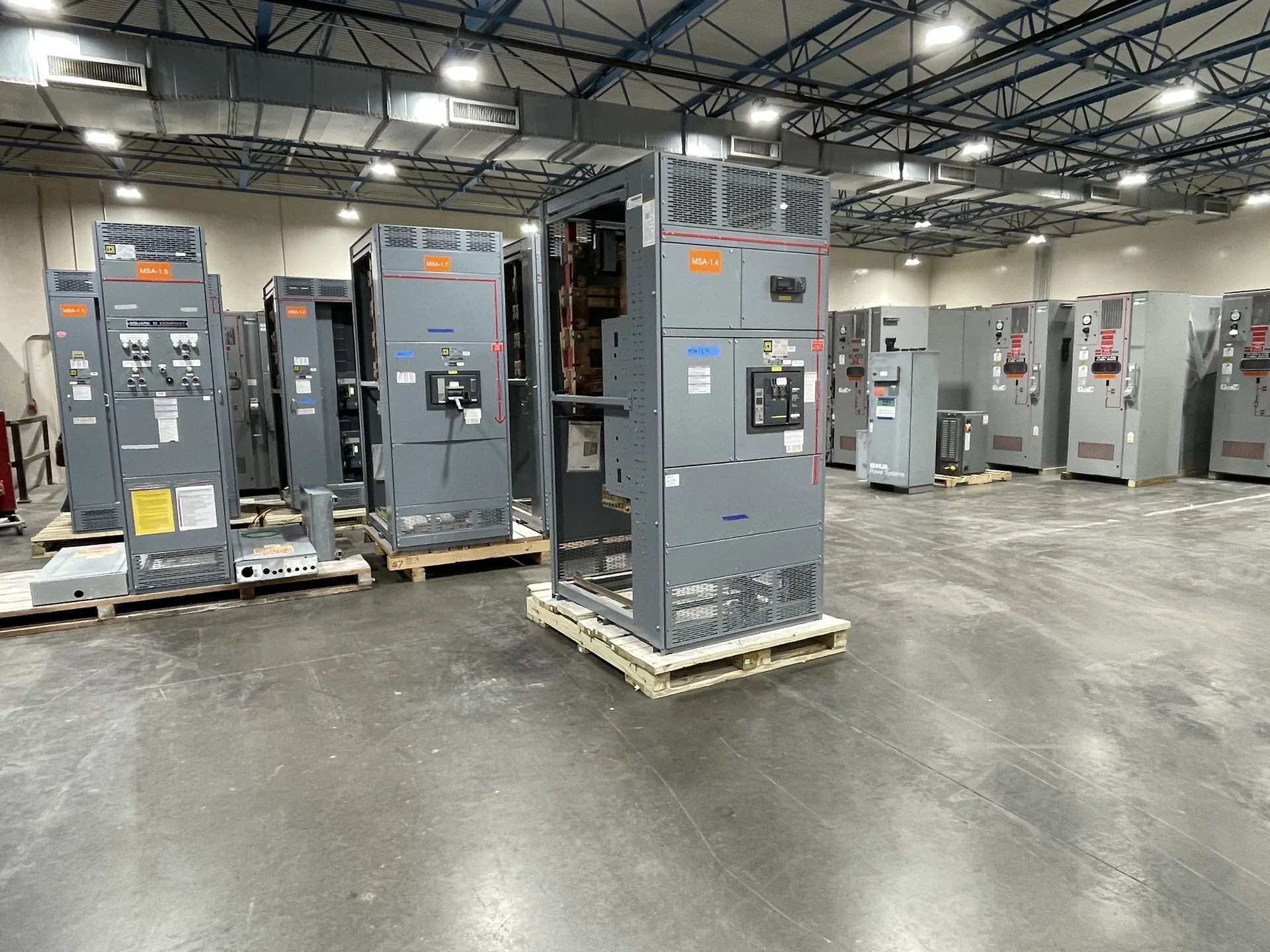
Consider a hypothetical low-voltage switchboard shipment in which one crate arrives with a punctured side and a crushed lower corner. The receiving team photographs the crate before unloading, records the package number and delivery exception, and captures the switchboard section label and the damaged area after the crate is opened under authorized site procedures. The approved elevation drawing shows that the affected section contains a door and instrument compartment; the one-line and device schedule identify the section’s function. These records make it possible to ask focused questions about enclosure alignment, internal components, and any evidence of movement or contamination.
If the damage appears limited to a replaceable exterior panel, the team might compare a documented repair proposal with replacement of the affected section, subject to manufacturer and engineering review. If impact indicators or inspection reveal possible bus-support movement, the decision changes: cosmetic repair is not enough to establish suitability, and further evaluation may be needed before acceptance. This is not a claim outcome or a recommendation for a particular project. It illustrates why the evidence should show both the external impact and the internal condition, while the design authority determines what inspection, testing, repair, or replacement is appropriate.
Build a complete handoff record
A practical claim file should join shipping evidence to design and field records. Include the bill of lading, packing list, delivery receipt, package identifiers, dated photographs, carrier notices, and a timeline of custody and handling. Add the approved-for-construction drawings and revision identifiers, relevant submittal documents, equipment nameplate information when safely accessible, and an annotated drawing or sketch locating the damage by lineup section. A receiving or inspection report should distinguish direct observations from assumptions and identify the observer, date, conditions, and any limits on access.
For subsequent work, preserve the written technical disposition, repair or replacement authorization, records of parts used, inspection findings, and any required test results or acceptance documents. Keep superseded and revised records traceable rather than silently replacing them. The handoff should state what remains unresolved, who has decision authority, and whether the equipment is held from installation or operation pending review. In Dallas–Fort Worth or anywhere else, the same discipline helps owners, contractors, carriers, engineers, and manufacturers work from a common record; it does not imply a local manufacturing facility or determine responsibility for freight damage.
Scope the conclusion and the quote request
A documented shipment condition supports evaluation, but it cannot by itself determine the cause of damage, responsibility under freight terms, hidden internal condition, code compliance, or fitness for service. Those conclusions depend on the specific equipment, evidence, contract documents, inspection findings, and applicable requirements. Ratings and standards must be checked against the ordered design, and final settings, work practices, testing decisions, and code interpretation must be referred to qualified professionals. Do not treat an illustrative scenario or a general guide as an engineering disposition.
When requesting new replacement or custom-built equipment, provide the one-line diagram, approved or current design drawings, equipment type and configuration, nominal system voltage and required equipment rating, specified short-circuit rating, device and accessory schedule, enclosure and environmental requirements, shipping split, destination, requested schedule, and any applicable standards or U.S.-origin clauses. Identify whether the request is for a complete lineup, a section, or a replacement component, and disclose the documented damage and review status. New equipment can be built to project requirements, but component availability, scope, ratings, standards, and lead time are confirmed for each order; a shorter lead time may be a goal, not a guarantee.
Specifications & planning
Review the details that matter for your application. Final specifications and availability should be confirmed for your project.
| Evaluation factor | Useful record or decision input |
|---|---|
| Shipment identity | Bill of lading, packing list, crate marks, and section identifiers |
| Physical condition | Dated context and close-up photographs; packaging retained for review |
| Design baseline | Approved drawings, revision history, equipment schedule, and specified ratings |
| Disposition | Written engineering/manufacturer review, authorized repair scope, and required records |