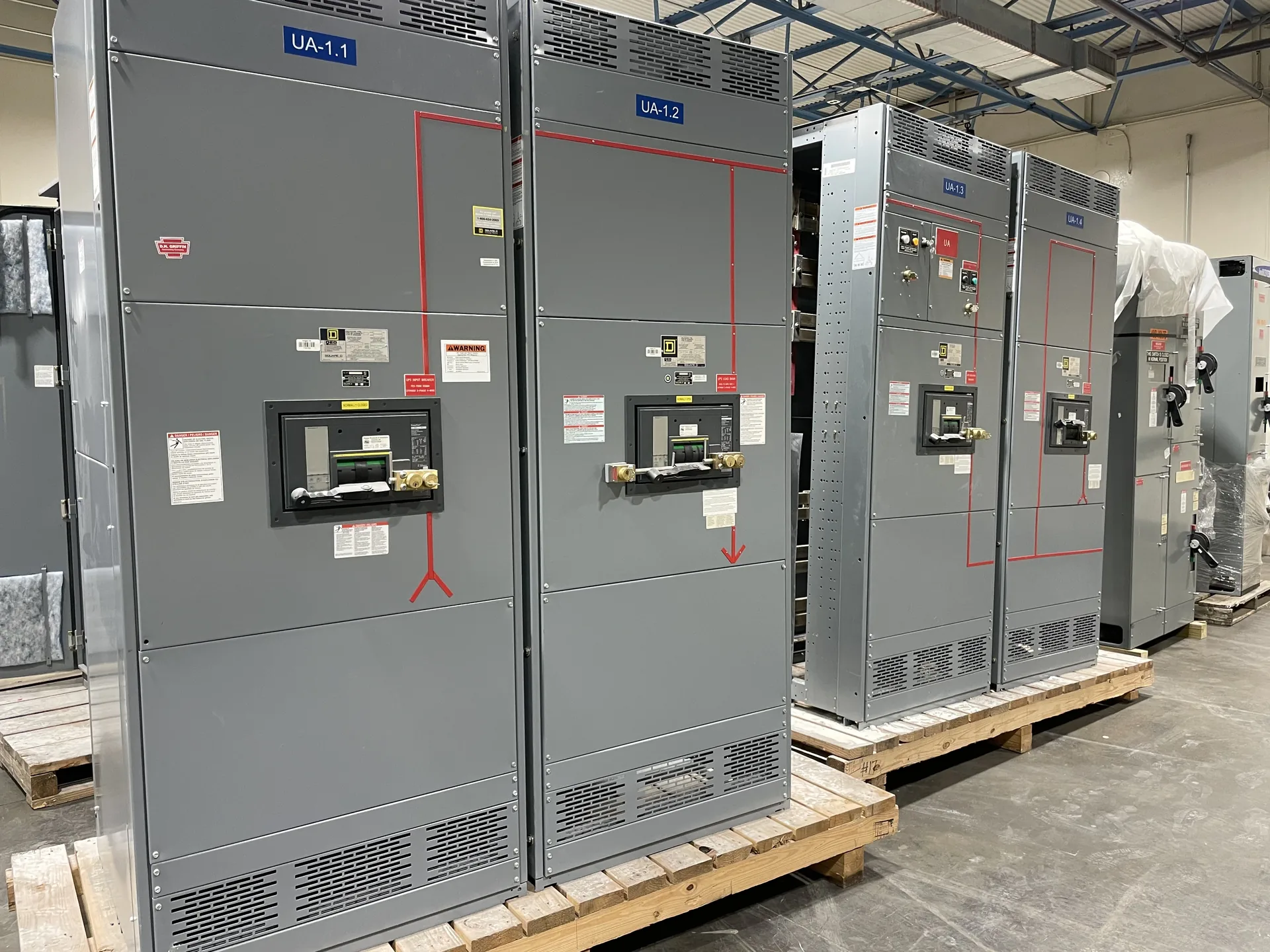
Power distribution, with purpose.
Power resilience on an education campus begins with deciding what must remain available, for how long, and under which operating conditions. Those answers shape the switchgear, source-transfer arrangement, and interfaces with generators or other power sources. A useful plan distinguishes instructional continuity from life-safety and other code-governed functions; it does not assume every building or load has the same classification.
Set load priorities before selecting equipment
Campus teams should identify loads by function and consequence of interruption, then confirm which loads are required by the applicable codes and authorities having jurisdiction. A typical review may consider fire alarm and emergency lighting, designated communications, IT rooms, laboratory support, refrigeration, access control, elevators, and selected heating or cooling. These examples are not a determination that any load belongs to a particular legally defined emergency system. Classification depends on the adopted codes, building use, design, and authority review.
For each proposed essential load, record its connected and demand load, starting characteristics, acceptable interruption, operating duration, and dependencies. A communications room may rely on cooling and network equipment elsewhere; a campus water system may need controls and motor loads together. Grouping loads by function helps reveal those dependencies and limits the risk of a resilience plan that preserves a panel while overlooking the equipment needed to make it useful.
Choose how sources transfer and loads recover
The one-line diagram should show normal and alternate sources, transfer equipment, distribution paths, and the boundary between essential and nonessential loads. Automatic transfer may suit loads that cannot wait for operator action, while manual transfer can be appropriate for selected loads when the operating plan allows time and trained staff are available. The designer must determine the arrangement from the load’s function, required response, source characteristics, and applicable requirements rather than treating one transfer method as universal.
Transfer is only part of the sequence. Review whether loads restart together or in stages, whether motor inrush could challenge the alternate source, and how controls behave during a brief interruption. A plan that reconnects every large load at once can produce an avoidable demand spike or unstable operation. Coordination among transfer controls, generator controls, protective devices, and building-management systems should be documented and verified by the responsible design and commissioning teams.


Illustrative scenario: a phased campus recovery
Consider a hypothetical campus with an administration building, a science wing, and a central technology room. During an outage, the planning team proposes restoring designated life-safety functions first, then network and communications equipment, followed by selected science support and comfort loads. The scenario is a planning example, not a completed project or a recommendation that these loads have a particular code classification. The design team would verify required systems and permitted connections against the site’s actual conditions.
The discussion may reveal that the technology room depends on a cooling unit with a long restart delay, or that a science-area exhaust fan has a significant motor-starting demand. Those findings can change the load grouping, transfer sequence, alternate-source capacity, or distribution path. Stakeholders should test the proposed sequence against outage duration, staffing, building occupancy, seasonal conditions, and recovery priorities, then document what remains intentionally unavailable.
Bring operational and regulatory stakeholders together
Facilities and electrical engineers need input from campus operations, IT, life-safety personnel, building administrators, and, where applicable, the utility and authorities having jurisdiction. Each group sees a different failure consequence: IT may identify dependencies between racks and cooling, while operations may know which buildings can be closed or which equipment cannot tolerate a restart. Early review can prevent a procurement specification from locking in a transfer scheme before these dependencies are understood.
The owner’s engineer and authorities having jurisdiction determine applicable code requirements and classifications; a switchgear manufacturer cannot assign those classifications through product selection. The design professionals also establish protection, grounding, coordination, arc-flash, and commissioning requirements for the project. Keep these approval boundaries explicit in specifications and submittals, particularly when an essential-load concept crosses between buildings or interacts with fire alarm, generator, or building-control systems.
Balance resilience goals with equipment tradeoffs
More loads on an alternate source can improve continuity, but they also affect source capacity, distribution size, protective-device coordination, space, and cost. Selective load shedding can preserve high-priority functions when available capacity is constrained, though it adds control logic and requires clear operating assumptions. Separate essential distribution can improve visibility and maintenance planning, while additional transfer points or feeders may increase complexity. The project team should compare these choices against the interruption consequences the owner is actually trying to reduce.
Specifications should identify system nominal voltage separately from equipment maximum rating and state required continuous current, short-circuit rating, enclosure conditions, bus arrangement, incoming and outgoing provisions, metering, controls, and interface points. Confirm ratings and component availability for the specific order. UL 891 applies to low-voltage switchboards when applicable; it is not a general listing for medium-voltage gear. Any standards, listing, or U.S.-origin requirements must be confirmed for the selected assembly and procurement.
Prepare a quote package that supports review
A purchaser seeking new custom-built switchgear should provide the latest one-line diagram, load schedule, source and transfer concept, available fault-current information, site and environmental conditions, and required submittal details. Include preferred delivery timing as a project goal, the applicable standards and documentation requirements, and any known utility or authority constraints. For a Dallas–Fort Worth campus or a project elsewhere in the United States, clear delivery destination and receiving constraints help define the equipment and logistics discussion without presuming a local manufacturing facility.
A manufacturer can use those inputs to assess a proposed assembly, identify open questions, and develop a quotation for new equipment using American components where specified and available. Shorter lead time can be a goal, not a guaranteed date; configuration, component availability, and engineering review affect timing. Final design approval, code interpretation, protection settings, installation, and commissioning remain with the parties responsible for those project decisions. Resolve assumptions before release so the delivered equipment matches the approved design.
Specifications & planning
Review the details that matter for your application. Final specifications and availability should be confirmed for your project.
| Evaluation factor | Decision to document |
|---|---|
| Load priority | Function, interruption tolerance, dependencies, and required operating duration |
| Transfer approach | Automatic or manual operation, source sequence, and recovery timing |
| Alternate-source limits | Capacity assumptions, motor starting, and load-shedding approach |
| Procurement basis | Required ratings, standards, interfaces, and project-specific approvals |