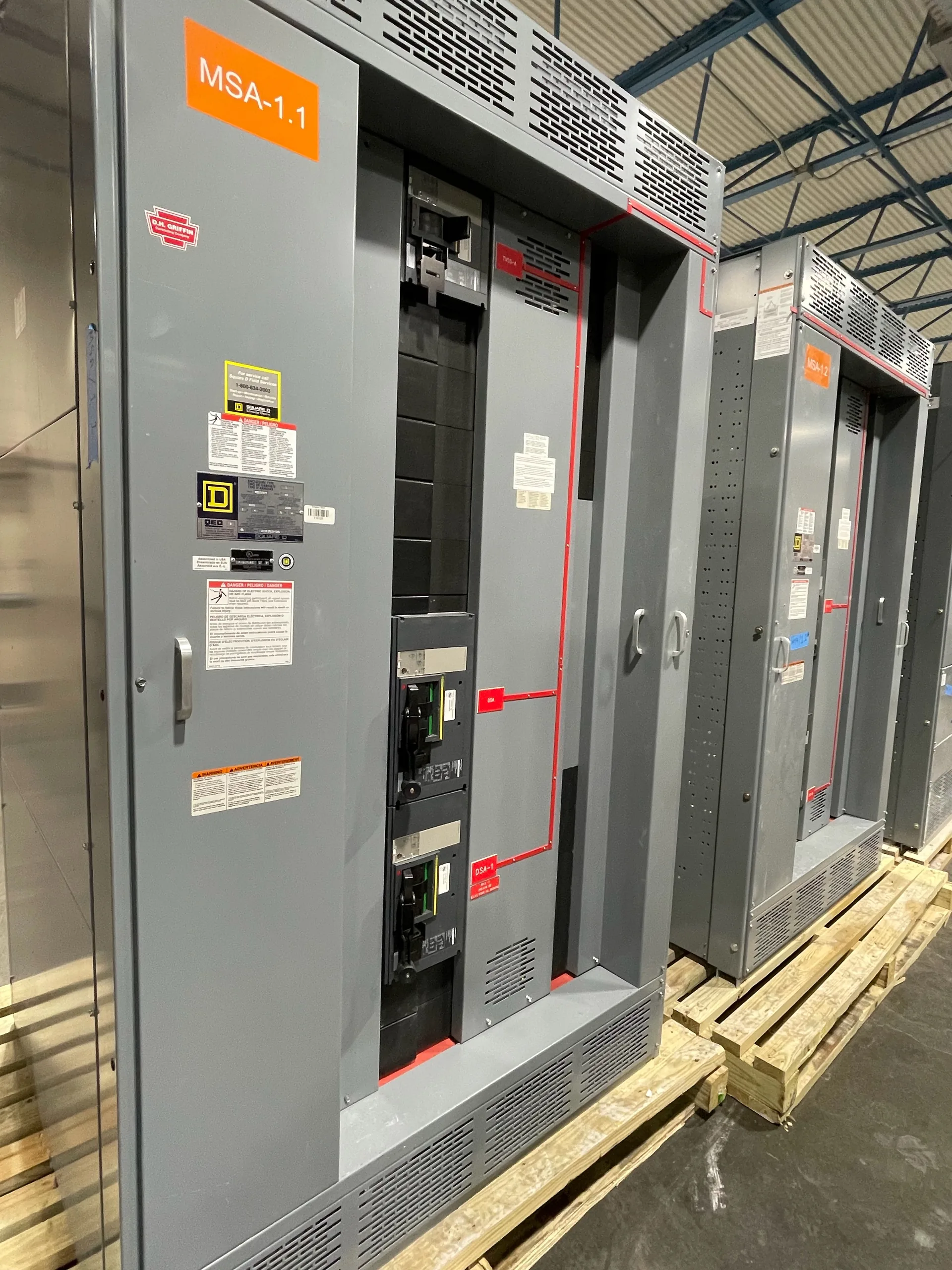
Power distribution, with purpose.
Utility switchgear inspection and witness requirements are project controls, not assumptions that come automatically with an equipment order. The purchaser, utility, engineer, manufacturer, and any designated inspector should agree in writing on what will be reviewed, which tests may be witnessed, how results will be judged, and what records are required for release. Clear decisions made before fabrication help prevent late changes, disputed acceptance, and schedule delays.
Define the inspection scope before design release
Begin with the governing specification, purchase order, drawings, and applicable utility standards. Identify the equipment boundary: for example, whether the inspection covers a low-voltage switchboard, medium-voltage switchgear, protective relays, control wiring, or only specified supplied components. State the required design reviews, document submittals, inspection stages, and final test evidence. Requirements can differ between a utility-owned installation and customer equipment connected to a utility system, so the project documents should resolve which party has approval authority.
Distinguish review from approval and witnessing from acceptance. A reviewer may check drawings without authorizing a design change; a witness may observe a test without assuming responsibility for the result. The project should name the authorized representatives, identify required notice periods, and describe how comments are resolved. Do not assume that a utility’s general practices automatically apply to a particular order. Confirm applicable standards, equipment ratings, and inspection obligations against the current project specification before the manufacturer prepares its quotation or releases drawings.
Choose witness points that address real project risk
Potential witness points may include a drawing or design review, inspection of specified components or workmanship, and selected routine production tests. The right scope depends on the consequences of a defect, the complexity of the assembly, the purchaser’s quality plan, and whether the relevant feature can be verified later. A hold point generally requires written release before work proceeds; a witness point allows work to continue under defined conditions if the notified party does not attend. Those terms should be explicit rather than left to interpretation.
Witnessing every activity can add travel, coordination, and schedule burden without improving assurance proportionally. Conversely, omitting a review of a critical interface can leave problems to be found during field integration. Agree on which tests are witnessed, which are documented for review, and which are not part of the acceptance plan. Identify test setup, applicable procedure or standard, acceptance limits, recording method, and retest rules. For custom builds using American components, confirm component availability and the evidence available for the selected configuration; do not treat a component’s documentation as proof that the complete assembly meets every project requirement.


Set acceptance criteria and preserve usable records
Acceptance criteria should be measurable and tied to the specified design and test method. Depending on equipment type and scope, project documents may address construction against approved drawings, wiring checks, mechanical operation, dielectric or insulation tests, protective-device settings, functional checks, and labeling. Not every test applies to every assembly, and equipment class matters: UL 891 applies to low-voltage switchboards, not as a general listing for medium-voltage switchgear. Confirm the required standard and the exact assembly’s status rather than relying on a broad product description.
Agree on the record package before testing so the results are useful at turnover. It may identify approved drawing revisions, test procedures, calibrated-instrument information where required, measured results, observed exceptions, corrective actions, and final disposition. Define who signs each record and how revisions or nonconformances are tracked. A witness signature should indicate only the role assigned by the project documents; it should not imply broader certification or transfer engineering responsibility. Ratings, short-circuit capability, system nominal voltage, equipment maximum rating, and standards compliance all require project-specific confirmation.
Coordinate stakeholder inputs and approval boundaries
The purchaser should collect utility requirements, the engineer’s one-line diagram and control intent, site and integration constraints, and the owner’s documentation needs. The utility may control interconnection or protection requirements, while the purchaser or engineer may approve equipment design and the manufacturer may confirm what can be built and tested. The inspector’s authority should also be defined. If these roles are unclear, conflicting comments can arrive after drawings are approved or materials are committed.
Establish a formal route for deviations, substitutions, and changes to acceptance criteria. A witness cannot authorize a design departure unless the project grants that authority. Likewise, the manufacturer’s drawing response should not be treated as approval of site protection settings or system coordination unless those services are explicitly within the agreed scope. For a purchaser in Dallas–Fort Worth or elsewhere, remote review and in-person attendance are coordination choices to settle with the relevant parties; serving a region does not establish a local manufacturing facility or a particular inspection arrangement.
Use a hypothetical scenario to test the plan
Consider a hypothetical utility project specifying a custom switchboard with protective controls and a witness requirement for selected factory tests. Before the order, the purchaser asks the utility, engineer, and manufacturer to review the proposed test matrix. They discover that the specification names a witness point but does not identify the test procedure, attendance notice, or acceptable record format. Clarifying these items before fabrication is more practical than debating them when a test date is approaching.
The parties could then document which tests require attendance, which may proceed after a stated notice period, the applicable acceptance limits, and who can release a hold point. If a test fails, the agreed process would identify how the issue is recorded, corrected, and retested, and who approves the disposition. This example is illustrative only, not a completed project or a promise that any particular test, record, or witness service is included in a manufacturer’s standard scope.
Prepare a quote request that exposes open decisions
For a useful quotation, provide the equipment type and quantity, one-line diagram, system nominal voltage, requested equipment ratings, protective and control requirements, applicable specifications, and the required delivery destination and schedule. Include the proposed inspection and test clauses, witness-point definitions, notice periods, acceptance criteria, record submittal list, and names or roles of approving parties when known. Flag unresolved requirements rather than assuming they can be settled after order placement. These inputs help identify scope gaps and determine whether requested components and documentation are available for the specific build.
A manufacturer can evaluate a new custom assembly against the information supplied and clarify proposed scope, submittals, testing, and schedule goals. The purchaser should obtain project-specific confirmation of ratings, short-circuit values, component availability, standards, and any U.S.-origin requirements before approval. A shorter lead time may be a goal, not a guarantee; witness coordination and late approvals can affect release and delivery. Final acceptance remains governed by the purchase documents and the authority assigned to each project stakeholder.
Specifications & planning
Review the details that matter for your application. Final specifications and availability should be confirmed for your project.
| Evaluation factor | Project decision to document |
|---|---|
| Witness scope | Tests or inspections requiring attendance, versus records-only review |
| Acceptance basis | Applicable procedure, measurable limits, and retest disposition |
| Approval authority | Who may approve drawings, release holds, and accept deviations |
| Records | Required reports, drawing revisions, signatures, and closeout format |