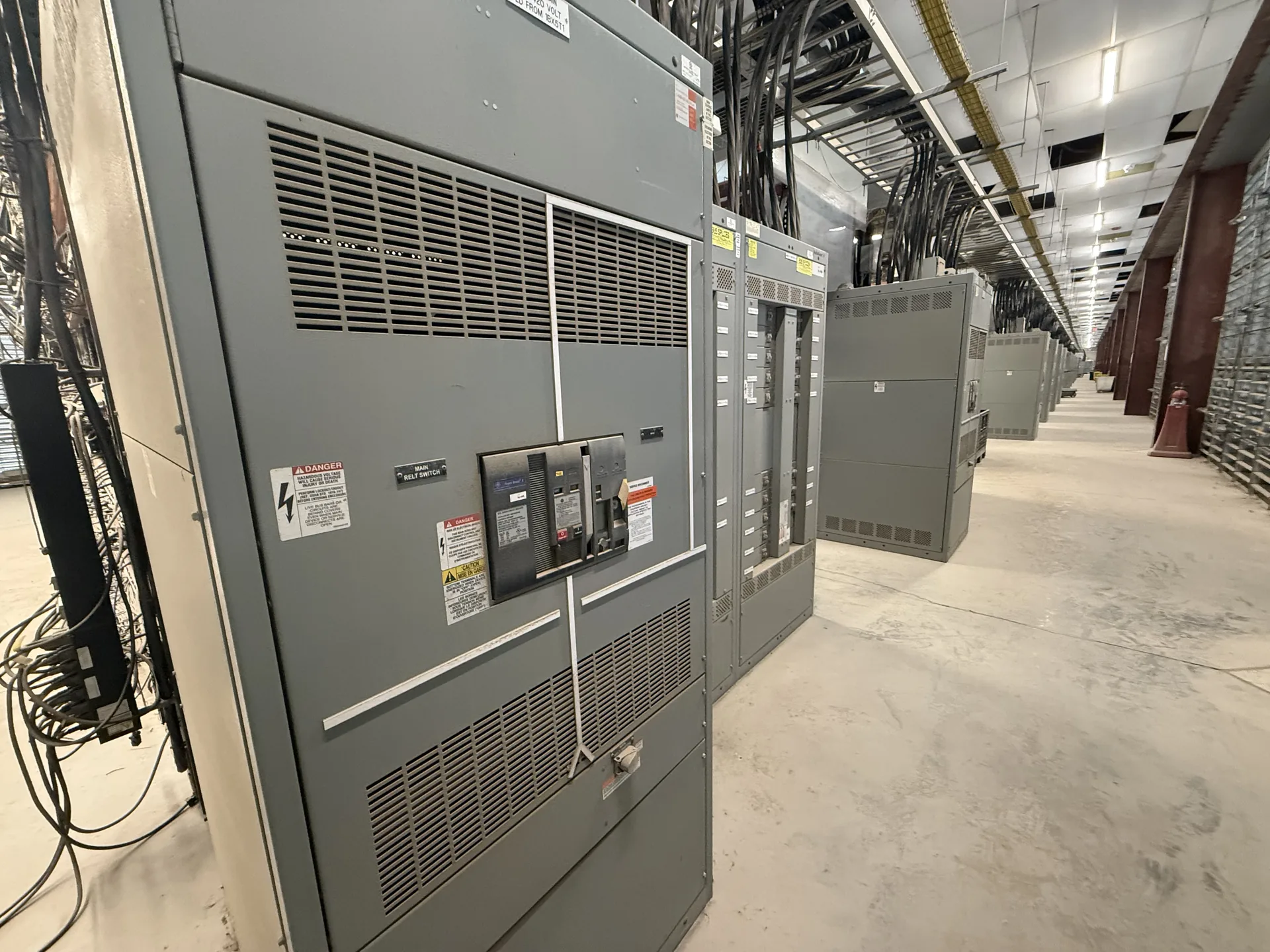
Power distribution, with purpose.
Copper and aluminum can both serve as switchgear bus materials, but they are not drop-in substitutes. Choosing between them means evaluating the complete current path: conductor dimensions, connection design, enclosure conditions, temperature limits, short-circuit duty, and interfaces with terminals and other metals. A sound comparison starts with the application and its governing requirements, not material price alone.
Compare conductivity in the actual assembly
Copper has higher electrical conductivity than aluminum by volume, so an aluminum bus generally needs a larger cross-section to achieve comparable electrical performance under otherwise similar conditions. That does not make copper automatically suitable or aluminum automatically undersized. The required conductor geometry depends on continuous current, arrangement, surface condition, spacing, ventilation, enclosure temperature, and the assembly’s design limits. A material comparison without these conditions can give a misleading impression of ampacity.
For a quotation, provide the system’s nominal voltage, required continuous current, phase and neutral arrangement, grounding approach, and applicable short-circuit duty and duration. Identify whether the bus serves a main, distribution, tie, or other function, and share any governing specifications or existing design constraints. System nominal voltage is not the same as an equipment maximum rating; the required voltage ratings and performance criteria must be confirmed for the specific order.
Account for conductor mass, space, and support
Aluminum is substantially lighter than copper for a given volume, which can reduce conductor mass. But comparable electrical performance may require a larger aluminum section, affecting clearances, bends, support spacing, and the room available for barriers and cable terminations. Copper’s higher density also has consequences: a compact bus can still place considerable load on supports and connection hardware. Neither material’s weight or size should be judged apart from the actual geometry.
Supply available switchgear dimensions, bus routing, connection locations, enclosure or compartment constraints, and any requirements for future extensions. If an existing lineup sets fixed interfaces, include current drawings and identify dimensions that are verified in the field versus assumed. A proposed material change can require revised supports, insulation, hardware, and clearances; it should be treated as an engineering change, not as a simple substitution of one stock bar for another.


Specify joint preparation and connection details
Reliable bus joints depend on prepared contact surfaces, suitable joining hardware, controlled contact pressure, and a design appropriate to the selected material. Aluminum forms an oxide layer that can affect electrical contact, while copper joints also require proper surface condition and fastening. Preparation methods, compounds where specified, plating, fastener materials, and assembly controls should follow the approved design and applicable instructions. A joint detail developed for copper should not be presumed valid for aluminum.
Identify every major interface, including bus-to-bus splices, breaker or switch terminals, transformer connections, cable lugs, and transitions between dissimilar conductors. Component terminal material, geometry, and permitted conductor types must be confirmed rather than inferred from appearance. Drawings for review should show joint locations, contact faces, hole patterns, hardware, and transition details. The manufacturer can evaluate the requested design scope, but project-specific methods and capabilities must be validated before work is represented as available.
Manage galvanic compatibility at transitions
When dissimilar metals are electrically connected, moisture and other environmental conditions can promote galvanic corrosion, especially at exposed interfaces. The risk depends on the metals, their relative areas, joint construction, enclosure conditions, and protection measures. A copper-to-aluminum connection therefore needs an intentional transition design suited to its environment; simply tightening the two conductors together is not an adequate specification.
Describe indoor or outdoor use, expected humidity or corrosive exposure, enclosure conditions, and any required finish or protective treatment. Mark all places where the proposed bus meets equipment terminals or conductors of a different material. The transition arrangement, compatible components, and maintenance expectations should be reviewed for the particular application. This is especially important when modifying existing equipment, where an undocumented terminal material or prior repair can change the interface assumptions.
Evaluate thermal design and fault duty together
Bus temperature is influenced by electrical losses, conductor dimensions, joint resistance, ambient conditions, enclosure ventilation, proximity to other heat sources, and operating duty. Copper’s conductivity may reduce conductor losses for a comparable geometry, while a larger aluminum section can alter spacing and airflow. The joint can become a thermal concern even when the straight bus section appears adequate. A material decision must therefore be checked in the assembly configuration, not by comparing conductivity figures alone.
Provide ambient and operating conditions, loading expectations, enclosure details, and required short-circuit withstand criteria. Include available studies or specifications that define temperature-rise limits and protective-device clearing assumptions, if applicable. Required ratings and standards depend on the complete assembly and order; they cannot be guaranteed from a conductor-material choice. UL 891 applies to low-voltage switchboards, not generally to medium-voltage switchgear, and any applicable assembly requirements must be confirmed for the specific design.
Set cost expectations and define the quote package
Material cost is only one part of the comparison. Conductor quantity, fabrication complexity, joint preparation, transition components, supports, finish, and design review can change the total. Copper may support a more compact arrangement, while aluminum’s lower weight and material considerations may be attractive in a design that accommodates its larger section and connection requirements. There is no universally lower-cost choice without a defined design and current component availability.
For a useful quote, send the one-line diagram, bus schedule or preliminary dimensions, required ratings, connection and terminal information, environmental conditions, specifications, delivery destination, and requested documentation. Expected outputs may include a material and interface clarification, reviewed or proposed drawings, and an order-specific scope of supply; exact deliverables should be agreed before release. The manufacturer builds and supplies new equipment, including custom builds, with shorter lead time as a goal rather than a guarantee. Dallas–Fort Worth buyers and customers elsewhere should confirm ratings, standards, component availability, domestic-origin requirements, and schedule for each order.
Specifications & planning
Review the details that matter for your application. Final specifications and availability should be confirmed for your project.
| Evaluation factor | Copper consideration |
|---|---|
| Conductivity | Higher conductivity by volume |
| Mass and space | Higher density; assess support loads |
| Connections | Confirm surface, hardware, and terminal compatibility |
| Transitions | Review dissimilar-metal interface protection |