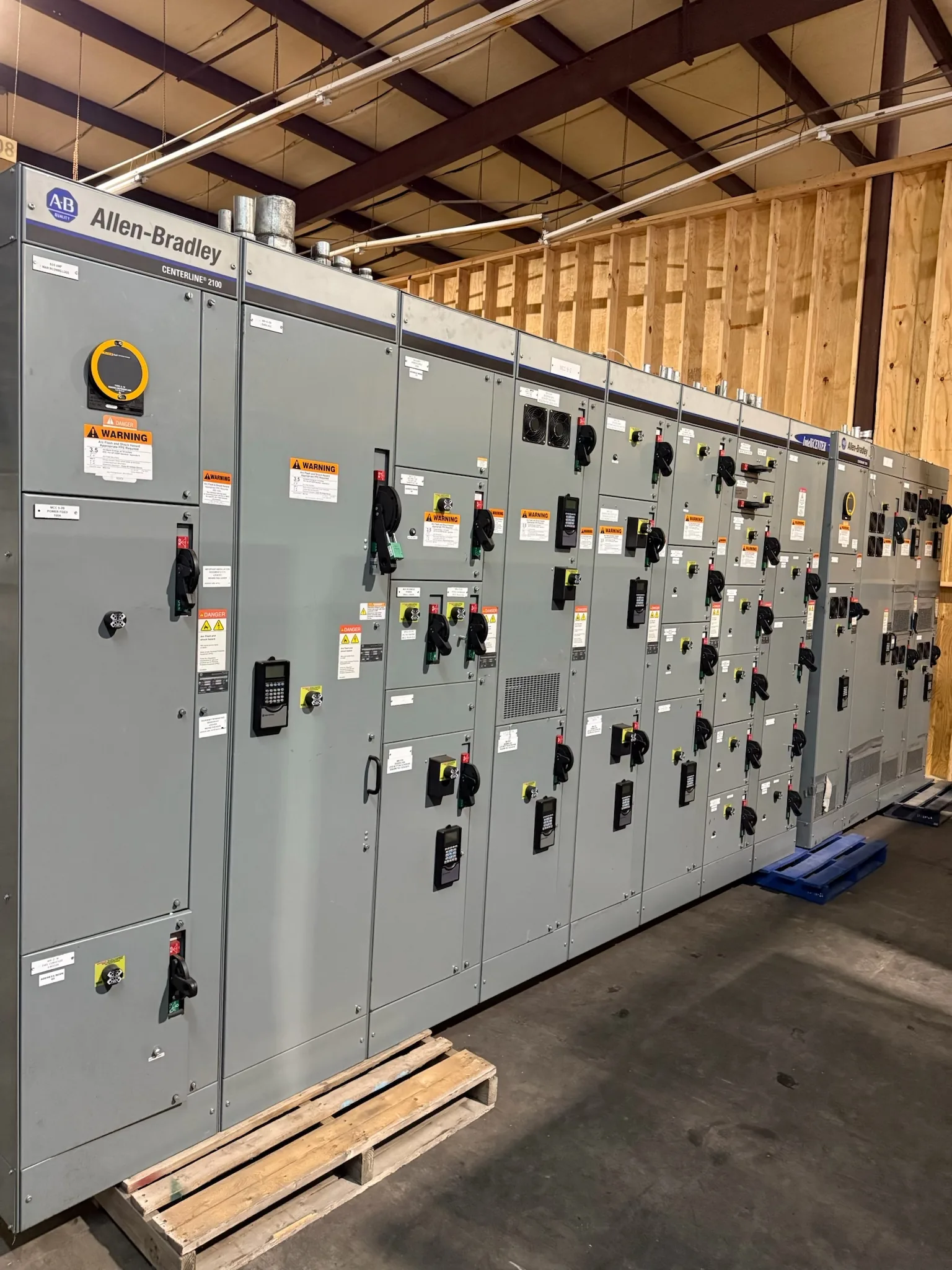
Power distribution, with purpose.
Equipment integration is the work of defining how protective devices, metering, communications, and customer-supplied systems fit together inside a switchgear assembly. Clear decisions early help prevent incompatible components, ambiguous wiring responsibilities, and late drawing changes. Proposed integration capabilities must be verified for the specific order; the project team should confirm equipment scope, component availability, standards, and approvals before release.
Define the operating intent before selecting devices
Begin with the one-line diagram and the intended operating sequence. Identify which breakers or switches need protection, where metering is required, and whether the assembly must support functions such as transfer, load shedding, or interlocking. A device should not be selected only because it appears on a prior project’s bill of materials: its sensing inputs, trip outputs, control voltage, available settings, and physical fit must suit the present design.
For a quote, provide the latest one-line, equipment schedule, applicable specifications, system nominal voltage, frequency, and available fault-current information. Identify the required equipment maximum rating and short-circuit rating separately from nominal system voltage. Protection settings and coordination studies may be preliminary, but label them as such and state who will finalize them. Ratings and design suitability require project-specific engineering review.
Resolve device and control interfaces
Integration depends on more than placing a relay, meter, or control switch on a drawing. The team needs to establish current- and voltage-transformer requirements, terminal locations, control power, trip and close circuits, status contacts, and any required test or isolation provisions. Confirm whether device settings are supplied by the purchaser, developed by a consultant, or established by another responsible party; unclear ownership can delay testing and document approval.
Check that panel space, cutouts, wiring routes, heat considerations, and access for maintenance are compatible with the chosen devices. A change from one model to another can affect dimensions, terminal arrangements, wiring diagrams, settings files, and procurement timing. American components can be considered where specified and available, but origin requirements and the acceptability of each component must be confirmed for the order rather than assumed.


Specify communications and external system boundaries
For communications, define the purpose first: local indication, supervisory monitoring, remote operation, event records, or integration with a building or plant control system. Then identify the required protocol, network topology, point list, data ownership, and interface location. State whether the switchgear scope includes devices and internal wiring only, or also requires network hardware, configuration files, gateway functions, or coordination with a customer’s system integrator.
Document what crosses the equipment boundary. A purchaser may supply network addresses, point names, control-system standards, cybersecurity requirements, and the contact responsible for acceptance testing. The manufacturer’s proposed scope should identify included and excluded interfaces so that neither party assumes the other is providing cables, programming, protocol mapping, or field commissioning. Any communications feature or integration capability remains subject to technical review and confirmation for the selected equipment.
Coordinate sourcing and control changes
A sourcing interface is a design interface as well as a purchasing one. If the project specifies a preferred breaker, relay, meter, or accessory, provide exact manufacturer and model information, approved alternates if any, and any restrictions on substitution. Component availability can change during a project, so the quote and submittal process should identify which selections are firm, which remain pending, and who may approve an alternate without changing the intended function.
Use a documented change process after design inputs are submitted. Record the revision, reason, affected drawings and components, schedule implications, and the person authorized to approve it. A seemingly minor request—such as adding a communication point or changing a meter—can affect enclosure layout, wiring, testing, and procurement. Shorter lead time may be a goal, but no schedule should be treated as guaranteed until scope, component availability, and approvals are reviewed.
Make approval and inspection handoffs explicit
A practical submittal package for review may include arrangement drawings, one-lines, elementary and wiring diagrams, bills of material, device data, and clearly marked interface points. The project team should check that these documents agree with the specification and the latest design inputs. Identify the purchaser’s approval authority and the required review status before fabrication release; silence, informal comments, or an untracked email should not be mistaken for formal authorization.
Agree on inspection and test handoffs before they become schedule-critical. Define which checks are required, who witnesses or reviews them, what records are expected, and how open items are resolved. A manufacturer may propose drawing reviews, inspection points, and documentation for a specific order, but actual processes and scope must be validated. UL 891 applies to low-voltage switchboards where applicable; it does not establish a general listing for medium-voltage equipment. Confirm standards and any required assembly status for the ordered design.
Prepare a complete, reviewable quote package
Customers in Dallas–Fort Worth and elsewhere can improve quote accuracy by sending consistent, revision-controlled documents and naming a technical contact who can answer interface questions. Include the one-line, specification, equipment schedule, fault-current basis, device preferences, communications requirements, control-power assumptions, and any required U.S.-origin or procurement provisions. State delivery destination and requested timing, while recognizing that shipment scope and timing depend on the reviewed order.
A manufacturer can evaluate a custom new-equipment build and propose an integration approach, subject to confirmed capability, engineering review, and component sourcing. Before order release, the purchaser should resolve deviations, approve the final submittal, and confirm ratings, interfaces, standards, and responsibilities in writing. This approval role matters: integration is successful when the delivered configuration matches an agreed design, not merely when individual devices have been selected.
Specifications & planning
Review the details that matter for your application. Final specifications and availability should be confirmed for your project.
| Evaluation factor | Decision to document |
|---|---|
| Protection devices | Function, sensing inputs, control power, and settings responsibility |
| Communications | Purpose, protocol, point list, and system-boundary owner |
| Sourcing | Specified models, permitted alternates, and approval authority |
| Change control | Revision tracking, affected documents, and release approval |