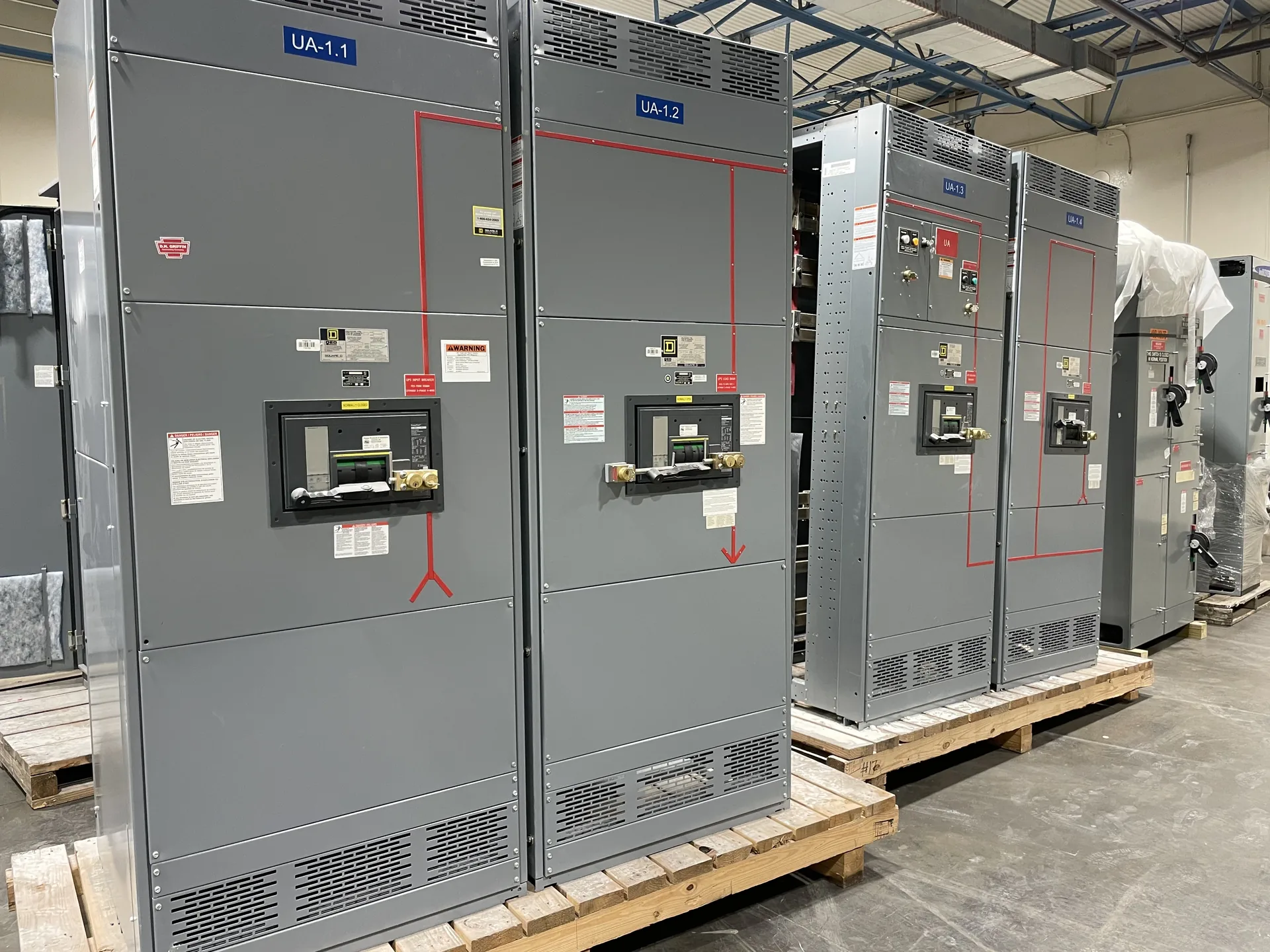
Power distribution, with purpose.
Factory testing is most useful when the project team agrees in advance what will be inspected, what evidence will be recorded, and who can accept the results. For a new switchboard or switchgear order, define those points against the approved drawings, specifications, and applicable standards rather than assuming a standard test package fits every design.
Set the acceptance basis before the build
Quality assurance starts with the documents that govern the order. The purchaser should provide the electrical one-line diagram, equipment schedule, specifications, applicable codes and standards, and any owner or utility requirements. Identify the nominal system voltage separately from the equipment’s maximum rating, and state the required continuous-current and short-circuit ratings. These values determine design and verification needs; they should not be inferred from a project description or from a similar installation.
The project team should also agree on acceptance criteria: which drawings require approval, what constitutes an inspection hold point, which test results must be recorded, and how deviations will be reviewed. Requirements can differ between low-voltage switchboards and medium-voltage equipment. UL 891 applies to low-voltage switchboards, not as a general listing for medium- or high-voltage switchgear. Applicable standards, assembly status, component availability, and any U.S.-origin requirements must be confirmed for the specific order.
Turn specifications into inspection checkpoints
A useful inspection plan links each requirement to observable evidence. Before assembly, that may mean reviewing approved drawings, bills of material, device schedules, and component identification. During assembly, checkpoints can address enclosure construction, barriers, bus arrangement and supports, wiring routes, terminal markings, and mechanical operation. The plan should identify the drawing revision in use so a later change does not leave inspectors checking against an outdated layout.
Inspection depth should reflect project risk and the consequences of a defect. A control-wiring interface shared with a building-management system may need a different review from a nonfunctional label detail, while an unusual compartment arrangement may merit purchaser review before it is closed up. Any proposed in-process inspection, witness point, or hold point should be assigned an owner and notice period. Whether these activities can be supported on a particular order must be verified before they are promised.


Choose electrical tests for the design
Electrical testing should be selected for the equipment type and the approved specification, not described as a single universal factory test. A project plan may call for continuity checks, insulation-resistance testing, dielectric testing where applicable, or verification of wiring and protective-device connections. The test method, limits, instrument requirements, and recording format should be settled with engineering before testing; test values and acceptance thresholds must not be invented after the fact.
Short-circuit performance is a design and rating matter, not something established by a routine production test on each completed assembly. Confirm the required rating, the basis for that rating, and any conditions or qualifications in the applicable documentation. For low-voltage switchboards, the purchaser should identify any required UL 891 documentation or other specified evidence. For medium-voltage classes such as 5 kV, 15 kV, 27 kV, and 35 kV, confirm the applicable equipment standards and verification separately; do not treat UL 891 as the governing listing.
Verify functions and system interfaces
Functional checks establish whether the assembled equipment behaves as intended under the test conditions. Depending on the design and agreed scope, checks can include breaker or switch operation, mechanical and electrical interlocks, control circuits, indication, metering, alarms, and trip or close logic. The approved elementary diagrams and control schematics are the reference. Any externally supplied relay settings, communication mapping, or control power assumptions should be available in a controlled, reviewable form before the related checks are scheduled.
Interfaces often cause avoidable test delays. Confirm who supplies control power, current- and voltage-transformer inputs, external permissives, network devices, and simulated signals, and identify what can be safely simulated at the factory. A factory functional check cannot prove every site condition or substitute for commissioning against the installed system. The purchaser’s engineers should review the limits of the test setup and decide which field interfaces need separate verification after delivery.
Agree on witnessing, records, and release
A witness test is valuable only when its scope and decision authority are clear. The purchaser should name the reviewer, define whether attendance is optional or a hold point, and set a reasonable review window. Before the test, share the procedure and acceptance criteria; during it, record the equipment identification, drawing revision, instruments or methods as required, results, exceptions, and disposition. If a purchaser cannot attend, the team should agree whether a documented test record is sufficient for release.
The final quality package may include approved drawings, inspection records, applicable electrical and functional test reports, and a list of open items or approved deviations. Its exact contents depend on the contract and order. The manufacturer’s proposed capabilities, test resources, and documentation format must be validated for the specific build before publication or commitment. The project team retains an essential role: it reviews the evidence, resolves exceptions, and authorizes acceptance under the purchase agreement.
Provide quote inputs that make testing actionable
For a useful quote, send the one-line diagram, equipment schedule, specifications, required standards, and the intended application, along with ratings, enclosure and environmental requirements, and the preferred delivery schedule. Include control schematics, device lists, communication requirements, and any owner-specific inspection or documentation clauses that affect testing. If requirements are still preliminary, label them clearly so the proposed scope can identify assumptions instead of silently treating them as final.
Also state whether purchaser review, factory witnessing, third-party inspection, special test records, or a defined approval hold point is required. Identify the organization authorized to approve drawings and accept test results, and flag any domestic-content or American-component requirements for confirmation. These inputs help the manufacturer propose a quality plan for new equipment, identify unanswered engineering questions, and work toward a shorter lead time without promising a schedule before design, components, and inspection obligations are verified.
Specifications & planning
Review the details that matter for your application. Final specifications and availability should be confirmed for your project.
| Evaluation factor | Decision input |
|---|---|
| Ratings and standards | Nominal voltage, equipment rating, short-circuit requirement, and applicable standards |
| Inspection scope | Drawing reviews, in-process checkpoints, witness or hold points, and responsible reviewers |
| Test evidence | Required electrical and functional checks, acceptance limits, and report format |
| Release authority | Named purchaser approver, exception process, and conditions for shipment release |