Power distribution, with purpose.
A factory test report is useful only when it answers a practical question: does the assembled switchgear match the approved design, and what evidence supports that conclusion? Inspection and testing can reveal wiring errors, incorrect components, workmanship issues, and functional problems before shipment. They cannot establish every condition the equipment will face in service. Buyers should define the required checks, acceptance criteria, witnesses, and records early so the test scope fits the application rather than relying on the phrase “factory tested.”
Set the acceptance basis before assembly
Begin with the approved drawings and purchase specification, not a generic test checklist. Identify the switchboard or switchgear arrangement, system nominal voltage, equipment ratings, protective devices, control power, incoming and outgoing connections, and any special interlocks. State which document governs if the drawings and specification differ. This matters because an inspection can confirm a build against an agreed reference, but it cannot resolve an unnoticed conflict in the reference itself.
Define acceptance criteria for items that could otherwise be judged differently, such as wiring identification, component substitutions, door alignment, labeling, and required functional checks. For a low-voltage switchboard, UL 891 may apply where the particular assembly and order requirements support it; it is not a general standard for medium-voltage equipment. Confirm the applicable standards, requested documentation, short-circuit ratings, component availability, and any U.S.-origin requirements for the specific order.
Separate visual inspection from electrical checks
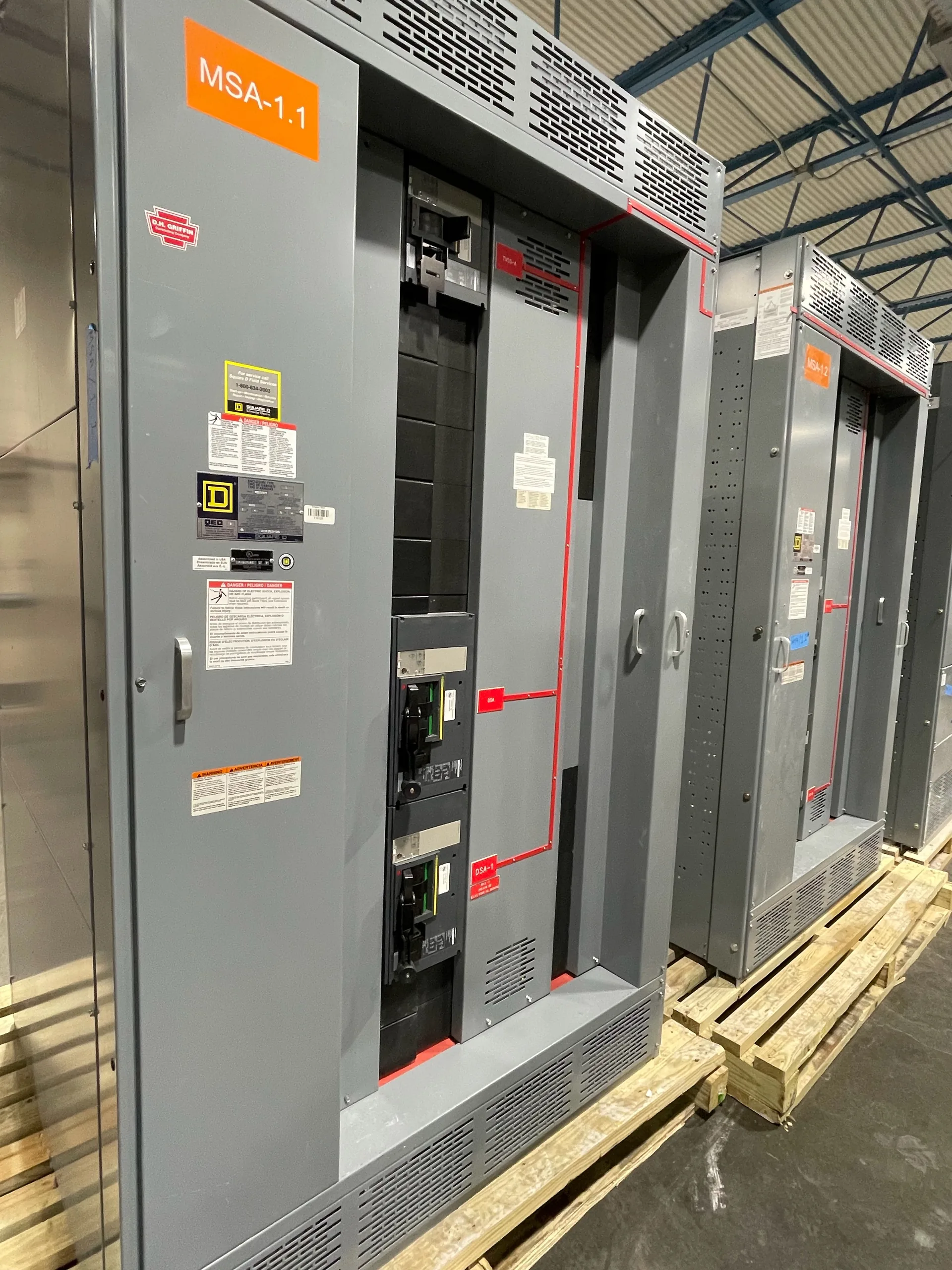
A visual and mechanical inspection checks features that are readily observable: installed components against the bill of material, enclosure condition, bus and barrier arrangement, labels, nameplates, fasteners, wire routing, terminations, and drawing correspondence. The inspector should record discrepancies and their disposition rather than treating a clean appearance as proof that the assembly is electrically correct. Inspection depth should be agreed in advance, particularly where customer-supplied devices or late design changes affect the build.
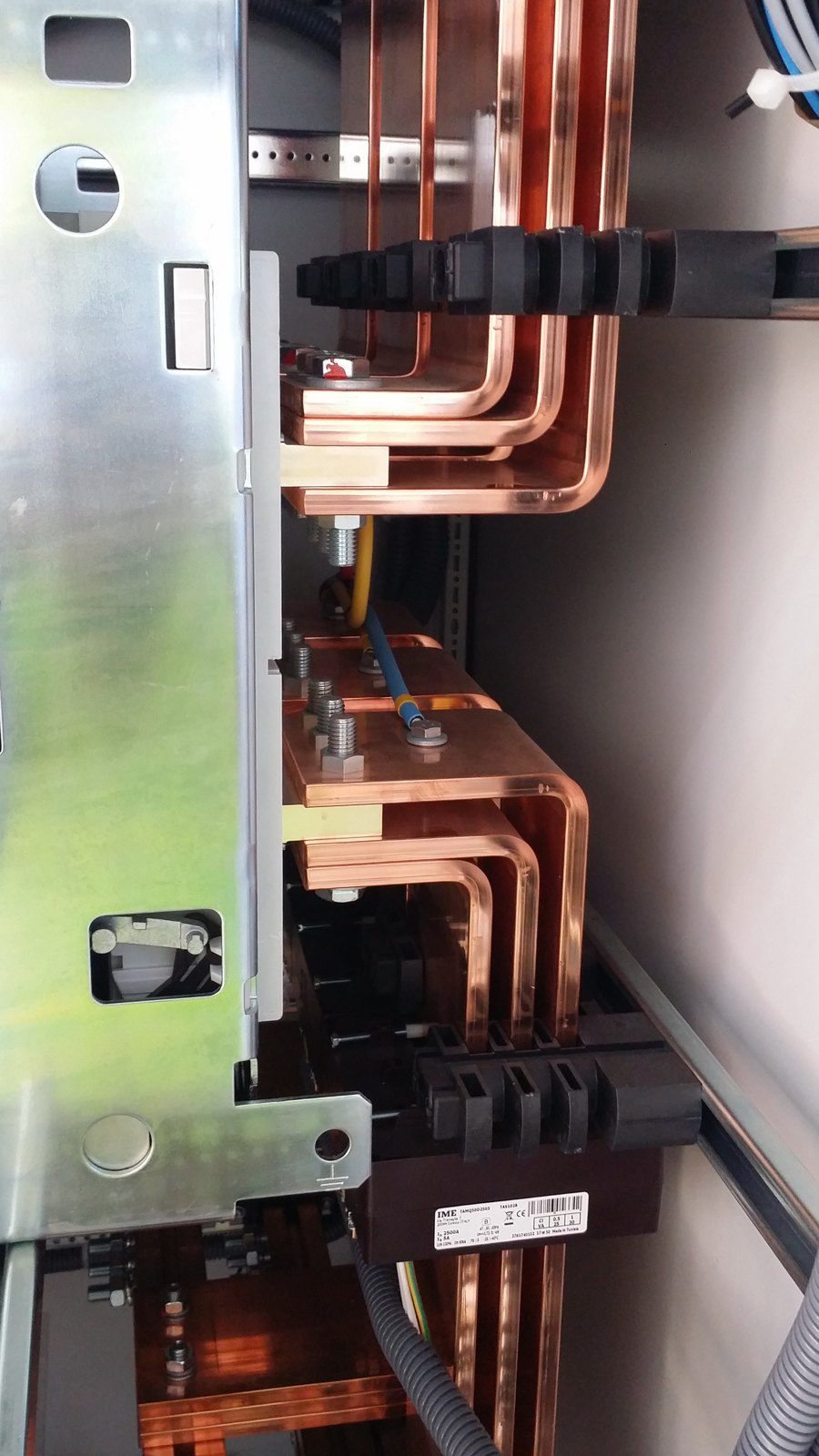
Electrical checks may include continuity or wiring verification, grounding-path checks, and operation of control circuits and specified interlocks. The exact scope depends on the design, equipment type, approved procedure, and applicable requirements. A successful control check demonstrates the functions exercised under the test conditions; it does not prove that every field cable, external relay, communications network, or upstream and downstream device will work as a complete system.

Specify functional tests around real interfaces
Functional testing is most meaningful when the specification identifies the signals and sequences to exercise. For example, clarify whether breaker status, trip and close commands, permissives, alarms, or transfer logic are to be checked, and identify the test points or simulated inputs. If control power comes from an external source, state what can be supplied at the factory and what must be simulated. These details prevent a test from being described broadly while leaving key interfaces unexamined.
Protection settings and coordination require particular care. A factory can verify device identity, wiring, and settings against approved information when those checks are included in the scope. A test using a simulator or secondary injection, if specified, evaluates the tested device and setup within defined limits; it does not by itself validate system coordination, sensor accuracy across all conditions, or performance with the customer’s complete installation. The purchaser should identify who supplies final settings and who approves them.
Make the report traceable and useful
A useful report identifies the assembly and its drawing revision, test date, procedures used, test equipment where relevant, results, exceptions, and corrective actions. It should distinguish checks performed from checks omitted or not applicable. When readings are recorded, include units and the applicable acceptance limit; a bare “pass” may not be enough to support later troubleshooting or an owner’s quality record. Agree whether records are delivered electronically, with the shipment, or through a specified review process.
Witness and hold points also need explicit timing. A purchaser may request notice before a defined test, review of records before release, or approval of a deviation. These requirements can affect the production schedule, so they belong in the quote package rather than arriving after assembly is underway. A witnessed test documents what was observed at that time; it does not transfer design responsibility or guarantee performance after transport, installation, or changes made in the field.
Understand what factory results do not prove
Factory results apply to the tested assembly, configuration, procedures, and conditions recorded in the report. They do not automatically establish site acceptance, correct installation, suitability for every fault level, or continued condition after shipping and storage. Ratings and test scope must be interpreted against the actual equipment documentation. In particular, system nominal voltage and equipment maximum rating are distinct values and should not be substituted for one another in a specification or report.
Some performance questions require separate engineering evidence or field verification. A routine inspection is not the same as a design or qualification test, and a limited operational check is not a complete commissioning program. If a project requires special environmental, seismic, arc-related, or other performance evidence, state the applicable requirement and ask what documentation can be provided for that exact design. Do not infer a test or listing from a manufacturer’s general product description.
Provide a complete package for a meaningful quote
For a quote, provide the one-line diagram, equipment schedule, specifications, control schematics, layout constraints, requested standards, ratings, and the desired inspection and test matrix. Include breaker and relay details, external interface points, customer-furnished components, report format, witness requirements, and any required origin documentation. Note the delivery destination and schedule needs, including whether shipment serves a Dallas–Fort Worth project or another location; serving that region does not imply a local manufacturing facility.
The manufacturer builds custom switchgear assemblies using American components, with shorter lead time as a goal rather than a guarantee. A clear test scope helps evaluate labor, component availability, documentation, and schedule before the order is finalized. All ratings, short-circuit capabilities, standards, component substitutions, U.S.-origin requirements, and any requested UL 891 applicability must be confirmed for the specific design and order. Identify unresolved requirements so they can be reviewed before drawings are approved.
Specifications & planning
Review the details that matter for your application. Final specifications and availability should be confirmed for your project.
| Evaluation factor | Purchaser should define |
|---|---|
| Inspection basis | Approved drawings, revisions, and governing specification |
| Functional scope | Signals, interlocks, sequences, and simulated interfaces to check |
| Acceptance evidence | Limits, readings, exceptions, and corrective-action records |
| Witness and release | Notice period, hold points, and required approval before shipment |