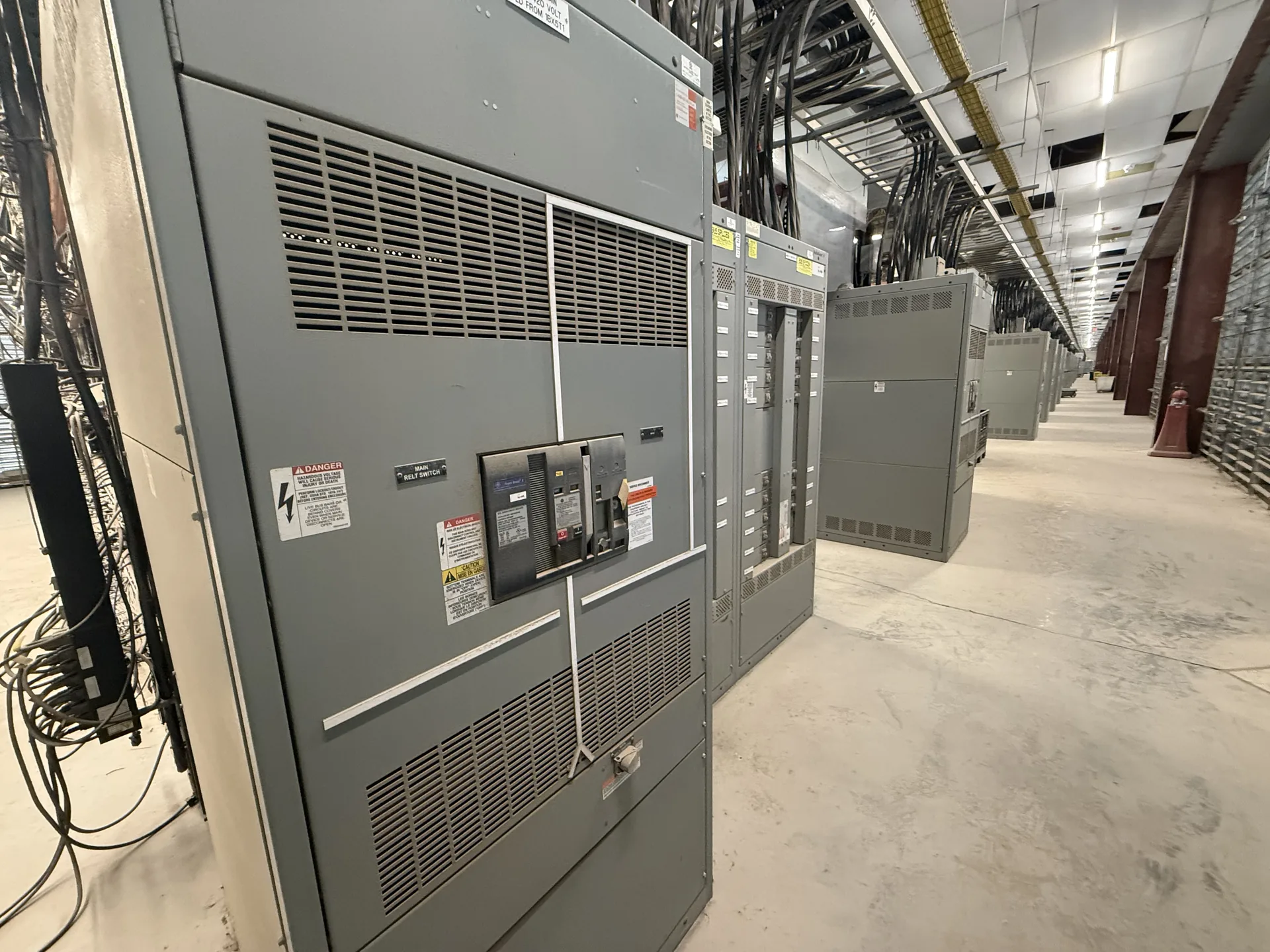
Power distribution, with purpose.
High-voltage switchgear projects begin with a scope question: what voltage class, switching function, and system boundary must the equipment serve? A feasibility review can identify mismatches between the one-line diagram, utility requirements, site conditions, and procurement standards before a purchaser commits to a design. For projects in Dallas–Fort Worth or elsewhere in the United States, provide the available engineering information so the proposed new equipment can be evaluated against the actual application—not an assumed rating or generic product description.
Define what “high voltage” means for the project
The term high voltage is used differently across industries and specifications. In U.S. power-distribution work, 5 kV, 15 kV, 27 kV, and 35 kV are normally medium-voltage classes; a project may use “high voltage” informally for equipment in these ranges, while a utility or transmission specification may reserve the term for higher system voltages. Confirm the nominal system voltage, grounding method, and required equipment maximum rating rather than relying on the page title or a single voltage label.
Equipment maximum rating is not interchangeable with system nominal voltage. The appropriate insulation level and switching duty depend on the system and the governing specification. A review should establish whether the requested scope is a switchgear assembly, switching device, control package, or a broader substation interface, and where the supplier’s scope ends. That distinction helps prevent a quote from omitting necessary components or implying that separately specified equipment is included.
Make feasibility review document-led
A useful initial review compares the one-line diagram with the equipment schedule, load and fault information, and the utility or owner’s written requirements. Key questions include the number and function of incoming and outgoing circuits, bus arrangement, metering and protection needs, transfer or sectionalizing duties, and whether future expansion is expected. For replacement work, existing drawings and interface dimensions can reveal constraints that are not apparent from a voltage designation alone.
The review also considers physical and operational conditions: indoor or outdoor installation, ambient conditions, altitude where relevant, available footprint, cable entry and termination approach, access for maintenance, and the intended operating sequence. Missing or conflicting inputs do not necessarily rule out a project, but they should be resolved or recorded as assumptions before design proceeds. Treating assumptions as confirmed requirements creates avoidable risk in equipment selection, interfaces, and schedule planning.


Separate equipment scope from system interfaces
Switchgear does not operate in isolation. The purchaser should identify upstream and downstream equipment, grounding and bonding arrangements, control-power sources, communications expectations, and the division of responsibility for protective relays, meters, instrument transformers, and cabling. For a utility interface, specify the utility’s approved requirements and coordination process; for an industrial or institutional system, identify the owner’s protection philosophy and any existing relay or supervisory-control conventions.
Physical interfaces deserve the same attention as electrical ones. Confirm cable type and termination requirements, phase arrangement, entry direction, conduit or bus connections, clearances, and any limits imposed by the room or enclosure location. A layout that appears electrically suitable may not be buildable at the site if cable bending space, access, or connection locations are overlooked. Where field dimensions are uncertain, label them as preliminary and arrange for the responsible project team to verify them before release for manufacture.
Apply the right standards to the actual equipment
Standards must match the equipment type and voltage class. UL 891 applies to low-voltage switchboards; it is not a general listing for medium-voltage or high-voltage switchgear, and it should not be used as shorthand for an entire project’s compliance. Applicable requirements may instead depend on the specified equipment class, governing industry standards, utility rules, owner criteria, and the project’s jurisdiction. Identify the required standards and editions in the procurement documents and confirm how they apply to the proposed scope.
Likewise, do not infer a particular assembly’s listing, certification, short-circuit capability, or compliance from a general product description. Ratings, component availability, applicable standards, and U.S.-origin requirements must be confirmed for the specific order. If a contract requires domestic content or particular component sourcing, state the requirement and its documentation expectations early. That allows feasibility to be assessed against the actual procurement condition instead of leaving a consequential qualification to the final submittal stage.
Prepare information for a useful quote
A purchaser seeking a quote for new equipment should provide the latest one-line diagram, equipment schedule, project specification, and the requested quantity and delivery destination. Include nominal voltage and grounding details, required continuous and short-circuit ratings if established, bus and circuit configuration, protection and metering scope, enclosure conditions, and known utility or owner standards. Drawings showing room layout, cable access, and connection interfaces help identify physical constraints; mark preliminary information clearly so it is not mistaken for an approved design.
Also describe the project phase, desired submittal and delivery milestones, and any required alternates or exceptions. If fault data, relay settings, or interface decisions are still pending, identify who will provide them and when. A complete, candid package supports a meaningful scope and feasibility review and helps surface long-lead or nonstandard components early. Custom builds using American components may be considered where the specification and availability permit; shorter lead time is a goal, not a guarantee, and timing depends on the confirmed design and order requirements.
Plan procurement for Dallas–Fort Worth and beyond
For a Dallas–Fort Worth project, site and utility requirements still govern equipment selection; regional service does not imply a local manufacturing facility or a particular utility approval. Share the delivery point, receiving limitations, site access constraints, and any restrictions on shipment size or unloading so logistics can be evaluated alongside the electrical scope. Nationwide shipments require the same coordination, with the destination and receiving arrangements confirmed for the specific order.
Before purchase, reconcile the proposed scope, ratings, standards, interfaces, and commercial milestones with the project documents. A clear record of open items helps the engineering and procurement teams distinguish confirmed requirements from assumptions and identify decisions that could affect design or delivery. Final ratings, short-circuit capability, components, standards, and origin conditions remain subject to review and confirmation for the specific order. This disciplined check is especially valuable when “high voltage” in a request may refer to a different equipment class than the project specification intends.
Specifications & planning
Review the details that matter for your application. Final specifications and availability should be confirmed for your project.
| Evaluation factor | Information to confirm |
|---|---|
| Voltage terminology | System nominal voltage, equipment maximum rating, and specified equipment class |
| Fault and switching duty | Required ratings and source data, subject to engineering review |
| Interfaces | Circuit arrangement, terminations, controls, protection, and site constraints |
| Procurement conditions | Applicable standards, origin requirements, components, and delivery milestones |