Power distribution, with purpose.
Outdoor switchgear enclosures protect electrical distribution equipment while placing it closer to the loads and utility interfaces it serves. Selecting one involves more than choosing a cabinet: exposure, access, internal heat and moisture, equipment ratings, and field connections all affect how the installation performs over time.
What an outdoor enclosure does in a distribution system
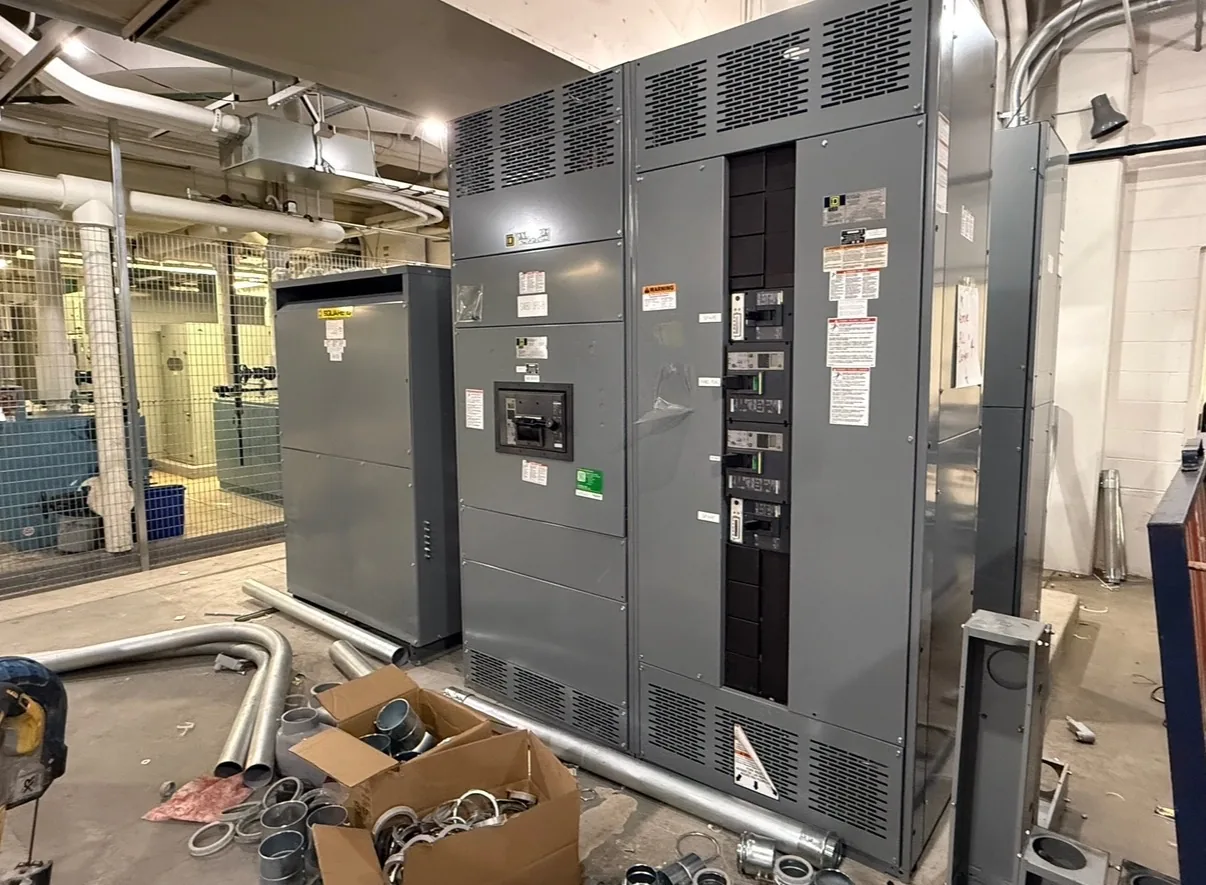
Outdoor switchgear is an assembly of switching and protective equipment housed for installation outside a building. Depending on the design and application, it may distribute power between an incoming source and downstream feeders, provide a point for isolation, or support coordination between utility, transformer, and facility systems. The enclosure is part of that system, not a substitute for specifying the electrical equipment inside it.
Project documents should identify the system’s nominal voltage and the equipment’s required maximum voltage rating as separate facts. They should also define continuous current, available fault current, required short-circuit rating, grounding arrangement, and the protective devices or switching functions involved. Actual configuration and component availability require engineering review for the specific order; a general description of outdoor switchgear does not establish a particular rating or listing.
Assess weather exposure at the actual installation point
An outdoor enclosure may face wind-driven rain, dust, airborne contaminants, sunlight, temperature swings, or water from nearby roofs and paving. The site’s exposure can differ from broad regional climate assumptions: an installation beneath an overhang, beside a roadway, or near process equipment can encounter conditions that change the enclosure and accessory requirements. Dallas–Fort Worth projects should be evaluated against the actual site layout and exposure rather than treated as one uniform environment.
Specify the intended enclosure rating and the conditions it must address, then confirm that the proposed construction and penetrations suit that requirement. Cable entry locations, conduit hubs, doors, seams, lifting features, and field modifications can affect protection. A rating should not be inferred from appearance or from a component installed inside the enclosure. The final selection and any applicable standards should be confirmed for the complete assembly and the specific order.


Plan for condensation, temperature, and internal heat
Moisture can form inside a closed enclosure when air temperature changes and surfaces cool below the air’s dew point. Water may also enter through poor drainage, unsuitable openings, or installation details. Condensation can contribute to corrosion, insulation degradation, and unreliable operation, so it deserves attention even when direct rain is excluded.
The design review should consider daily temperature variation, solar heating, internal losses, humidity, and whether the equipment will be energized continuously or remain idle for periods. Depending on the application, engineering may consider drainage, controlled ventilation, heaters, thermostats, or other moisture-management measures. Each option has tradeoffs: ventilation can introduce dust or humid air, while heating requires an appropriate auxiliary supply and control strategy. No single measure is suitable for every site.
Make access and service space part of the layout
Outdoor gear needs a workable approach for delivery, operation, inspection, and future maintenance. Review door swing, aisle and working clearances required by the applicable design, nearby walls or fences, overhead obstructions, and the path for removing or replacing components. The site plan should also show vehicle access, unloading constraints, the foundation, and any barriers that could obstruct operation or emergency response.
Operators and qualified service personnel need safe, practical access without relying on an improvised route through landscaping or restricted areas. Consider whether snow, standing water, site traffic, security fencing, or adjacent equipment could limit access in service conditions. Shipping dimensions and handling details should be coordinated with the intended delivery route and installation plan; do not assume a configuration will pass through a gate or fit a pad without checking drawings and site measurements.
Coordinate electrical interfaces and possible configurations
Outdoor assemblies may be engineered in different arrangements to suit a project, such as a freestanding enclosure or equipment integrated with related distribution components. These are engineering possibilities, not a verified catalog of standard products or guaranteed configurations. The purchaser should identify the incoming and outgoing conductors, cable direction, termination approach, grounding and bonding needs, control wiring, metering requirements, and any interface to transformers or adjacent switchgear.
A complete specification should also state the one-line diagram, feeder count and function, operating sequence, protection requirements, control voltage, and desired compartment or access arrangement. Confirm which items are included in the proposed scope and which are by others, including foundations, external conduits, utility connections, and field wiring. Ratings, component availability, standards applicability, and any U.S.-origin requirements must be checked for the specific order rather than assumed from a preliminary concept.
Prepare project information for a new-equipment quote
For a useful quote, provide the one-line diagram, nominal system voltage, required equipment maximum rating, continuous-current and short-circuit requirements, protective-device details, and applicable project specifications. Include the site exposure, desired enclosure rating, ambient conditions, condensation concerns, installation location, foundation or mounting information, and available access dimensions. Drawings, control schematics, utility requirements, and a requested delivery destination can help identify interfaces and constraints early.
A U.S. manufacturer can review custom-build possibilities using those project inputs, including American components where specified, and may pursue a shorter lead time as a goal; timing and component availability are not guaranteed. UL 891 applies to low-voltage switchboards, not generally to medium-voltage equipment, so applicability must be established for the actual assembly. Customers in Dallas–Fort Worth and elsewhere can request new equipment for review and shipment; no specific rating, listing, delivery date, or standards compliance should be presumed before order-specific confirmation.
Specifications & planning
Review the details that matter for your application. Final specifications and availability should be confirmed for your project.
| Evaluation factor | Information to confirm |
|---|---|
| Electrical basis | Nominal system voltage, equipment maximum rating, current, and fault duty |
| Weather exposure | Site conditions and required enclosure protection; confirm by engineering review |
| Moisture and heat | Temperature variation, humidity, internal losses, and condensation approach |
| Installation access | Delivery route, clearances, door swing, foundation, and service approach |