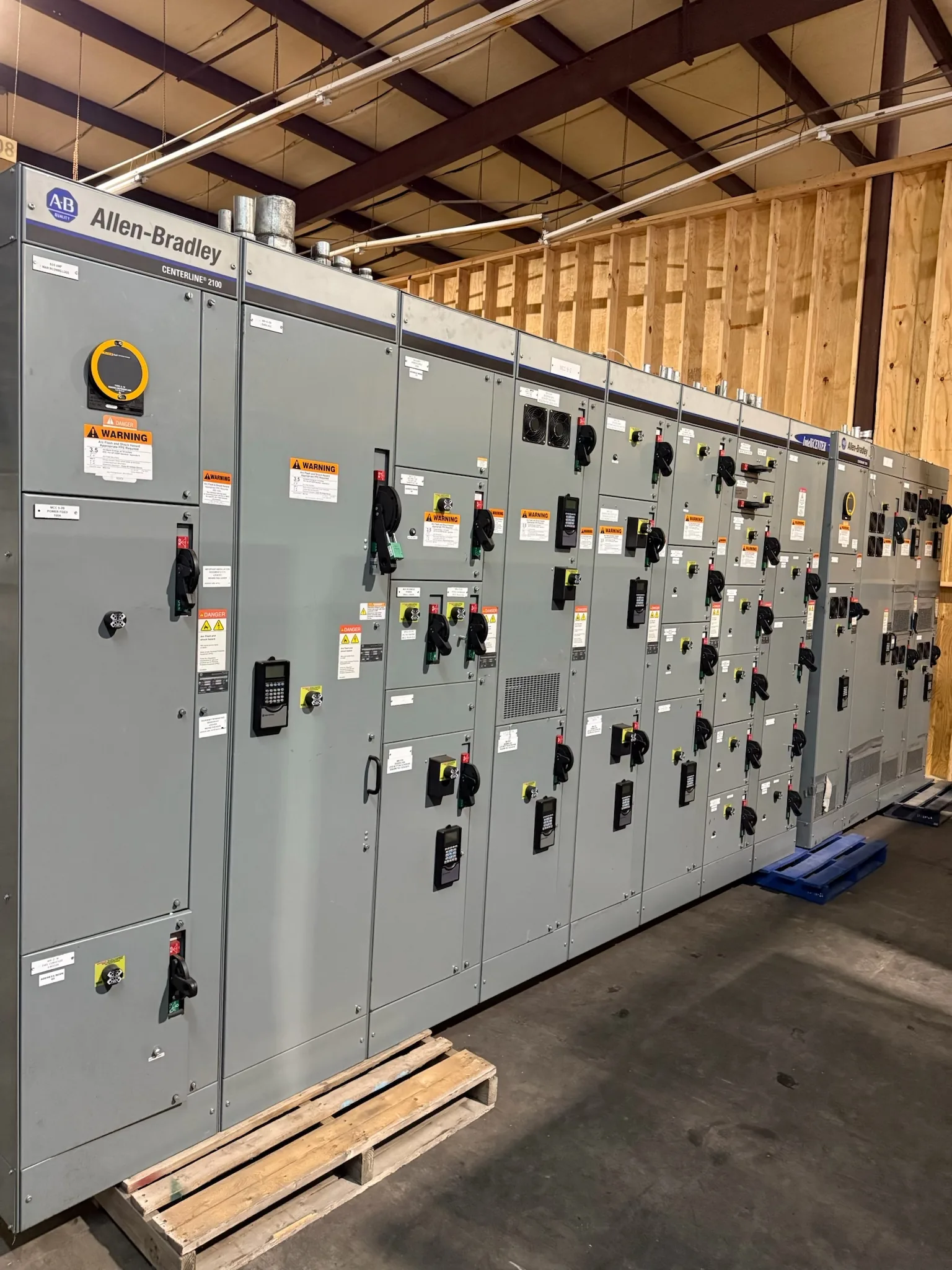
Power distribution, with purpose.
A useful switchgear quote starts with a clear picture of the application, not just a voltage or equipment name. Share the available drawings, electrical requirements, operating conditions, and procurement constraints so the manufacturer can assess the requested scope and identify open decisions before quotation.
Define the equipment boundary
Describe what the quotation should include and where the equipment connects to the rest of the electrical system. Identify whether you need a low-voltage switchboard, medium-voltage switchgear, or a defined lineup within a larger project. Note the source and load connections, incoming and outgoing feeder count, bus arrangement, and any required metering, protective relays, control power, or auxiliary compartments. A one-line diagram is especially useful because it shows how the requested assembly fits into the distribution system.
Clarify what is outside the requested supply as well. Existing transformers, downstream panels, cable, field wiring, installation, commissioning, and other contractor work can affect interfaces without being part of the equipment quote. Marking the boundary on a drawing—or explaining it in plain language—helps prevent gaps between equipment supplied and work expected from others. If the scope is still developing, identify assumptions that should be carried into the quotation rather than treating them as settled requirements.
Send ratings and load information
Provide the system nominal voltage, frequency, phase, and grounding arrangement, along with the requested equipment ratings when known. Keep nominal system voltage distinct from the equipment maximum voltage rating. For fault-duty evaluation, submit available short-circuit information at the connection point and state any required short-circuit rating or duration. If the available fault current has not been established, say so; it should not be guessed from the nominal voltage or a general facility description.
Load schedules make feeder and bus requirements easier to evaluate. Include connected loads, expected demand, motor or other significant load characteristics, future feeder allowances, and any known operating or expansion plans. Identify whether load data is measured, calculated, or preliminary. These details can influence the configuration and component selection, while incomplete data may require explicit assumptions or follow-up engineering review before a firm equipment specification can be established.


Include drawings and physical constraints
Current drawings help translate an electrical requirement into a buildable assembly. A one-line diagram is the starting point; control schematics, panel schedules, equipment specifications, and relevant site plans can resolve further questions. Note drawing numbers and revision dates, and identify which documents govern if they conflict. If a project specification includes preferred products or language written for another application, flag it so the quotation can address deviations or clarifications transparently.
Provide available installation dimensions and access constraints, including the intended indoor or outdoor setting, room clearances, cable entry direction, overhead limits, shipping route, and restrictions on moving or positioning the equipment. Environmental conditions such as temperature, moisture, dust, corrosion exposure, or elevation may affect design choices. These details matter even when the final arrangement remains subject to engineering review; a lineup that meets the electrical intent may still be unsuitable if its footprint or cable interfaces do not fit the site.
Explain interfaces, controls, and standards
Describe how the assembly must communicate and coordinate with adjacent equipment. Identify required control voltages, remote signals, communication protocols, protective-device functions, interlocks, and metering outputs where applicable. Specify the intended connection points and any existing equipment that must be accommodated. If a utility, engineer, or owner has issued interface requirements, include the applicable documents rather than relying on a general description of the facility.
State the governing project specifications, applicable standards, and any documentation or country-of-origin requirements. UL 891 applies to low-voltage switchboards; it is not a general listing for medium-voltage or high-voltage switchgear. Do not assume that a particular standard, rating, component, or U.S.-origin requirement applies automatically across every configuration. Ratings, short-circuit capability, component availability, standards, and origin requirements must be confirmed for the specific order and its final design.
Set commercial and schedule expectations
For a useful commercial proposal, identify the project stage, requested quotation date, anticipated release date, delivery destination, and any milestone or submittal deadlines. Explain whether the request is budgetary or intended for a purchase decision, and note any bid forms, required exceptions, or document formats. A target date is planning information, not a promise of availability: component supply, design completion, approvals, and final scope can all affect a project schedule.
Custom builds and American components may be relevant to the requested design, but the specific configuration and component availability must be reviewed for each order. Shorter lead time can be a goal, not a guaranteed outcome. For customers in Dallas–Fort Worth as well as purchasers elsewhere in the United States, provide the actual delivery destination and any receiving limitations; service to a region does not establish that manufacturing or installation occurs there.
Make open questions visible
A quote request can proceed while some information is pending if those gaps are clearly identified. Separate confirmed requirements from preferences, preliminary values, and decisions awaiting an engineer, owner, or utility. Point out conflicts between drawings and specifications, and state which party will resolve them. This gives the quotation a sound basis and makes it easier to distinguish a priced requirement from an assumption that could change scope or cost.
Before submission, check that the requested lineup, ratings, feeder count, controls, physical constraints, and commercial dates tell a consistent story. Include a contact role for technical clarifications through the appropriate purchasing channel, without placing sensitive site information in an unrestricted document. A well-bounded request supports a more accurate project-specific review and helps both parties identify what must be confirmed before an order can be finalized.
Specifications & planning
Review the details that matter for your application. Final specifications and availability should be confirmed for your project.
| Evaluation factor | Useful information to provide |
|---|---|
| Electrical basis | Nominal voltage, system configuration, load data, and available fault information |
| Configuration | One-line diagram, feeder count, bus arrangement, metering, and protection needs |
| Physical fit | Indoor or outdoor conditions, dimensions, cable entry, access, and shipping constraints |
| Commercial basis | Quote purpose, requested dates, delivery destination, and procurement requirements |