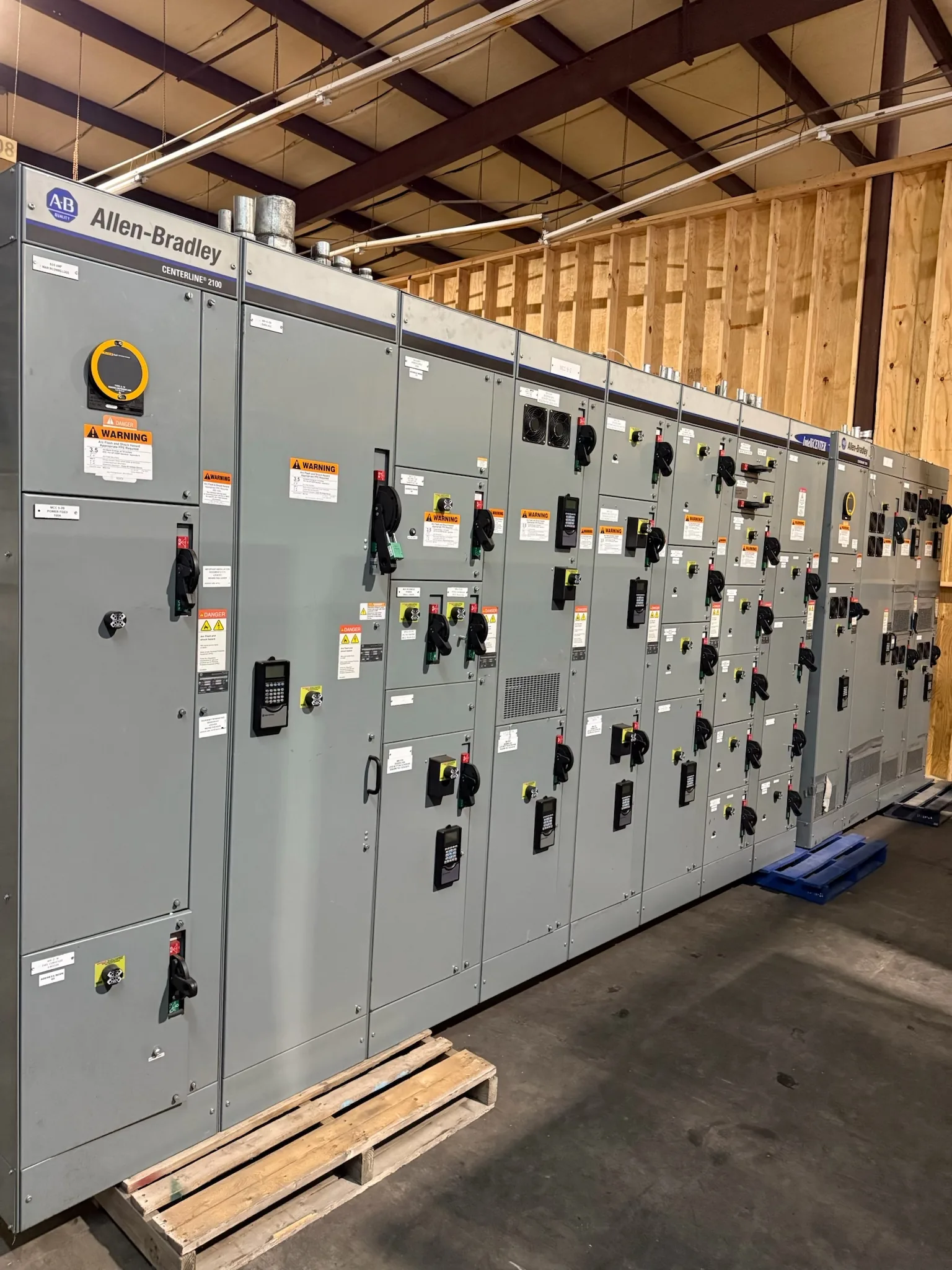
Power distribution, with purpose.
In a 120/208Y V, three-phase, four-wire system, the neutral is an active circuit conductor—not merely a grounding path. Its current depends on how line-to-neutral loads are distributed across phases and on the harmonic content of those loads. Sound switchboard planning therefore starts with actual load information, not an assumption that the neutral carries little current. The guidance below supports specification development; the responsible engineer must review the application and determine final ratings and settings.
Understand what the neutral carries
In a wye system, 120 V loads connect from a phase conductor to neutral, while 208 V loads typically connect phase to phase. For balanced, linear, single-phase loads on all three phases, the fundamental-frequency currents partially cancel in the neutral. Uneven phase loading reduces that cancellation, so the neutral carries the resulting imbalance. A lightly loaded phase on one branch of a panel does not, by itself, establish the neutral current for the whole assembly; the calculation depends on the connected loads, their operating patterns, and where they are supplied.
Treat the neutral as a designed current-carrying conductor and specify its intended rating or construction basis rather than relying on a generic “standard neutral” assumption. A project may have substantial line-to-neutral loads, significant imbalance, or harmonic-producing equipment that changes neutral heating. The designer should identify applicable continuous-load treatment, conductor and termination requirements, ambient and enclosure conditions, and any project-specific derating. Final selections must be checked against the actual equipment design and applicable requirements.
Allocate loads with operating patterns in mind
Phase allocation is a practical control on avoidable imbalance. The load schedule should identify each 120 V circuit, its phase assignment, estimated demand, and expected duty cycle, alongside 208 V loads and three-phase loads. Equal circuit counts are not necessarily equal electrical loading: a few high-demand receptacle or heating circuits can outweigh many lightly used circuits. Where loads cycle or operate at different times, document the assumptions used to estimate coincident demand instead of treating nameplate totals as simultaneous operation.
Allocation also has to remain usable after the installation is commissioned. Reserve capacity, spare ways, future equipment, and anticipated circuit changes can shift the balance over time. A design that balances only the initial schedule may leave little room for later additions. For a custom switchboard or distribution assembly, provide the latest panel schedules and identify loads that are expected to grow or operate together. The responsible engineer can then assess phase distribution and whether monitoring or a commissioning check is appropriate.


Account for nonlinear loads and harmonics
Electronic power supplies, LED drivers, computers, and other nonlinear loads draw current in pulses rather than as a smooth sinusoid. In many three-phase, four-wire systems, triplen harmonic components—especially the third harmonic and its multiples—can add in the neutral instead of canceling as the fundamental components do. As a result, a system with apparently balanced phase currents may still experience meaningful neutral current. The amount depends on equipment characteristics, diversity, operating conditions, and the harmonic spectrum; it should not be inferred from load labels alone.
Ask for manufacturer data or a documented engineering estimate where nonlinear loads are material, such as anticipated concentrations of electronic equipment. Consider neutral-conductor heating, termination capacity, enclosure temperature, and the behavior of associated protection and monitoring components as an integrated design question. Harmonic mitigation or filtering may be relevant in some applications, but it is not a universal remedy and can introduce its own coordination and maintenance considerations. Select any approach only after the responsible engineer evaluates the system.
Specify metering that answers the right question
Metering can help distinguish phase imbalance from harmonic-related neutral loading, but only if the measurement scope is specified. State whether the project needs phase currents, neutral current, voltage, demand or energy data, and harmonic information, and identify where measurements should be taken. A meter that reports phase current alone may not reveal neutral conditions. Likewise, a neutral-current reading without context about load operation or measurement location may be difficult to interpret.
Coordinate instrument transformers or sensors, meter inputs, communications, display requirements, and the intended monitoring point with the switchboard design. Confirm that the selected devices are suitable for the required current range and installation arrangement, and clarify whether readings are for local observation, building controls, or another interface. Monitoring can support operational decisions, but it does not replace conductor sizing, protection review, or an engineering assessment of abnormal readings.
Prepare a quote package and review basis
For a useful quote, supply the one-line diagram, system nominal voltage and configuration, source and available fault-current information, load schedule, panel schedules, expected demand, and the planned phase allocation. Identify the neutral design expectation, nonlinear-load types and estimated proportions, metering functions, enclosure conditions, space constraints, and required interfaces. Include applicable project standards and any US-origin or component requirements. These inputs help determine what can be built and what needs clarification; they do not establish final ratings without engineering review.
A manufacturer serving Dallas–Fort Worth and shipping nationwide can use a complete, coordinated submittal to evaluate a custom new-equipment build and work toward a shorter lead time, subject to component availability and order details. Ask for the proposed scope, assumptions, exclusions, and review points to be explicit. Confirm system voltage, equipment maximum rating, short-circuit rating, neutral provisions, applicable standards, and metering details for the specific order. UL 891 applies to low-voltage switchboards where applicable; it should not be treated as a blanket qualification for every assembly or voltage class.
Specifications & planning
Review the details that matter for your application. Final specifications and availability should be confirmed for your project.
| Evaluation factor | Information to confirm |
|---|---|
| Load profile | Line-to-neutral and phase-to-phase loads, demand assumptions, operating schedules |
| Neutral basis | Expected imbalance, nonlinear-load data, conductor and termination design assumptions |
| Metering scope | Measurement location, phase and neutral quantities, harmonic-data needs, interfaces |
| Order review | System nominal voltage, equipment maximum rating, fault-current basis, standards and component requirements |