Power distribution, with purpose.
Choosing a switchgear manufacturer for a Dallas–Fort Worth project is not simply a matter of finding a nearby name. Confirm who will build the equipment, what the quoted scope actually includes, how design decisions will be documented, and whether the shipment can reach the site under its access and schedule constraints. A manufacturer may serve DFW without operating a local factory; verify the facts that affect your project rather than assuming proximity.
Verify where the work happens
Ask the prospective supplier to distinguish its manufacturing role from sales, engineering coordination, assembly, and third-party services. Find out where the switchgear will be built and where design review, inspection, and final testing will take place. A company’s service area or shipping coverage does not establish that it has a manufacturing facility in Dallas–Fort Worth. Request a written explanation of the actual production and support arrangement for the quoted order.
Location matters for more than travel distance. It can affect shipment routing, freight handoffs, inspection access, and how schedule changes are communicated. Ask whether the quoted party controls the build or is coordinating with another manufacturer, and who is accountable for resolving a design question. Treat statements about domestic components or U.S. origin as order-specific: request the applicable sourcing documentation and confirm that it satisfies the project’s procurement requirements.
Match manufacturing capability to the one-line
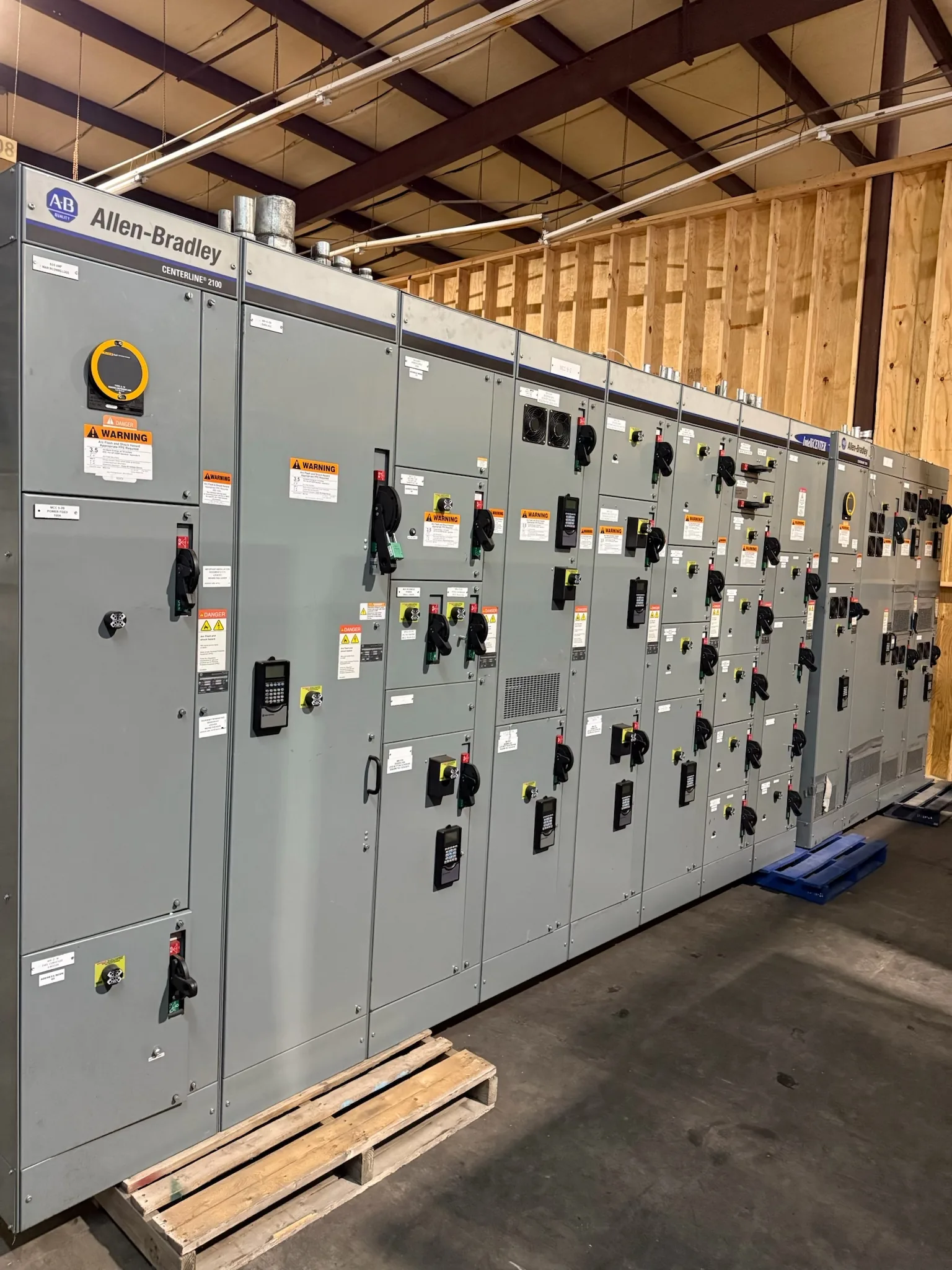
Provide the one-line diagram and identify the equipment type before comparing capability claims. A low-voltage switchboard, medium-voltage switchgear lineup, and distribution panel have different design boundaries, component requirements, and applicable standards. Ask the manufacturer to confirm which portions it will engineer and build, including incoming and feeder sections, bus arrangements, metering, protective devices, and any transition or tie sections. Custom-build capability should be confirmed against the actual drawings and bill of material, not inferred from a broad product description.
State system nominal voltage separately from the equipment’s maximum rating, and identify the required continuous-current and short-circuit ratings. Call out source characteristics, grounding method, available fault current, protection requirements, and any coordination or arc-energy study assumptions. Clarify whether breakers, relays, meters, control wiring, and communication interfaces are included or furnished by others. Ratings, component availability, standards, and any requested UL 891 assembly must be reviewed for the specific configuration; UL 891 applies to low-voltage switchboards, not medium-voltage equipment.


Use documents as evidence, not promises
A credible proposal should make its design basis reviewable. Request a scope-specific quotation, preliminary arrangement, bill of material or equipment schedule, stated ratings, exceptions, and a list of information still needed. Ask what drawing package will be submitted for approval and what changes require revised pricing or schedule review. For standards or listing expectations, require the manufacturer to identify what applies to the proposed equipment and provide supporting documentation when applicable; do not treat a general capability statement as proof that a particular assembly is listed or compliant.
Agree on the records needed at turnover before the order is released. Depending on the project, these may include approved and as-built drawings, device data, test records, operating or maintenance information, and component origin documentation. Ask how revisions are controlled and how the purchaser will know that approved changes reached production. This is especially important when the gear must fit an existing lineup, match a utility interface, or connect to field-installed controls. Engineering review should resolve those interfaces before fabrication rather than leave assumptions for the site team.
Test communication and schedule realism
Ask who will own technical questions after award, how submittal comments are tracked, and when the purchaser must provide decisions. A useful communication plan names the review milestones and identifies which party approves dimensions, device selections, control points, and exceptions. Shorter lead time may be a goal, but it is not a guaranteed delivery date. Request a project-specific schedule with its assumptions, including drawing approval, component procurement, required customer-furnished items, testing, and freight handoff.
For a DFW delivery, describe the actual receiving conditions rather than assuming a standard truck can reach the destination. Share the delivery address privately during quoting, receiving hours, unloading responsibility, access limits, staging space, and any restrictions on truck size or delivery appointments. Confirm the shipment configuration, estimated dimensions and weights when available, packaging expectations, and who arranges unloading. A schedule is only useful if it accounts for site readiness and the transfer of responsibility from carrier to receiver.
Compare proposals with a worked hypothetical
Consider a hypothetical facility in DFW replacing a low-voltage distribution lineup while retaining upstream equipment. Manufacturer A offers a shorter stated schedule but has not confirmed the tie-section dimensions or whether the existing control interface is included. Manufacturer B gives a more conservative schedule, identifies those items as open, and submits a drawing-review milestone before production. The purchaser should not choose on schedule language alone; first compare scope completeness, interface risk, documented assumptions, and the evidence each proposal commits to deliver.
The decision could change if Manufacturer A closes the gaps with approved interface drawings, a confirmed component list, and a schedule that includes the purchaser’s review time. Conversely, Manufacturer B’s complete proposal is not automatically acceptable if its shipment plan cannot meet the site’s receiving constraints. Record unresolved issues as explicit exceptions, assign an owner, and obtain written closure before release. This comparison is an example only, not a customer project or a claim about either manufacturer.
Prepare a clear quote handoff
A focused quote package helps a manufacturer identify feasibility and avoid pricing hidden assumptions. Supply the one-line, project specification, equipment schedule, required nominal and maximum voltage information, continuous and short-circuit requirements, protective-device and metering needs, control schematics or points list, and applicable studies. Include enclosure and environmental requirements, cable-entry direction, room layout and working clearances, interface drawings for existing gear, requested standards or sourcing provisions, documentation expectations, and the target approval and delivery dates.
Ask the supplier to return a scope boundary that says what is included, excluded, furnished by others, and still subject to engineering review. Identify the party responsible for field measurements, site installation, connections, commissioning, and permits; do not assume those services are part of an equipment quote. Before purchase, reconcile open technical questions, approved drawings, shipment and unloading responsibilities, and the schedule basis in writing. This creates an actionable handoff from purchasing to engineering and receiving without relying on a location claim or an unverified promise.
Specifications & planning
Review the details that matter for your application. Final specifications and availability should be confirmed for your project.
| Evaluation factor | Evidence to request |
|---|---|
| Manufacturing location | Written description of where the quoted equipment is built and tested |
| Technical fit | Scope-specific drawings, ratings, components, and documented exceptions |
| Project communication | Named review milestones, revision control, and open-item ownership |
| Shipment constraints | Shipment assumptions, receiving limits, and unloading responsibility |