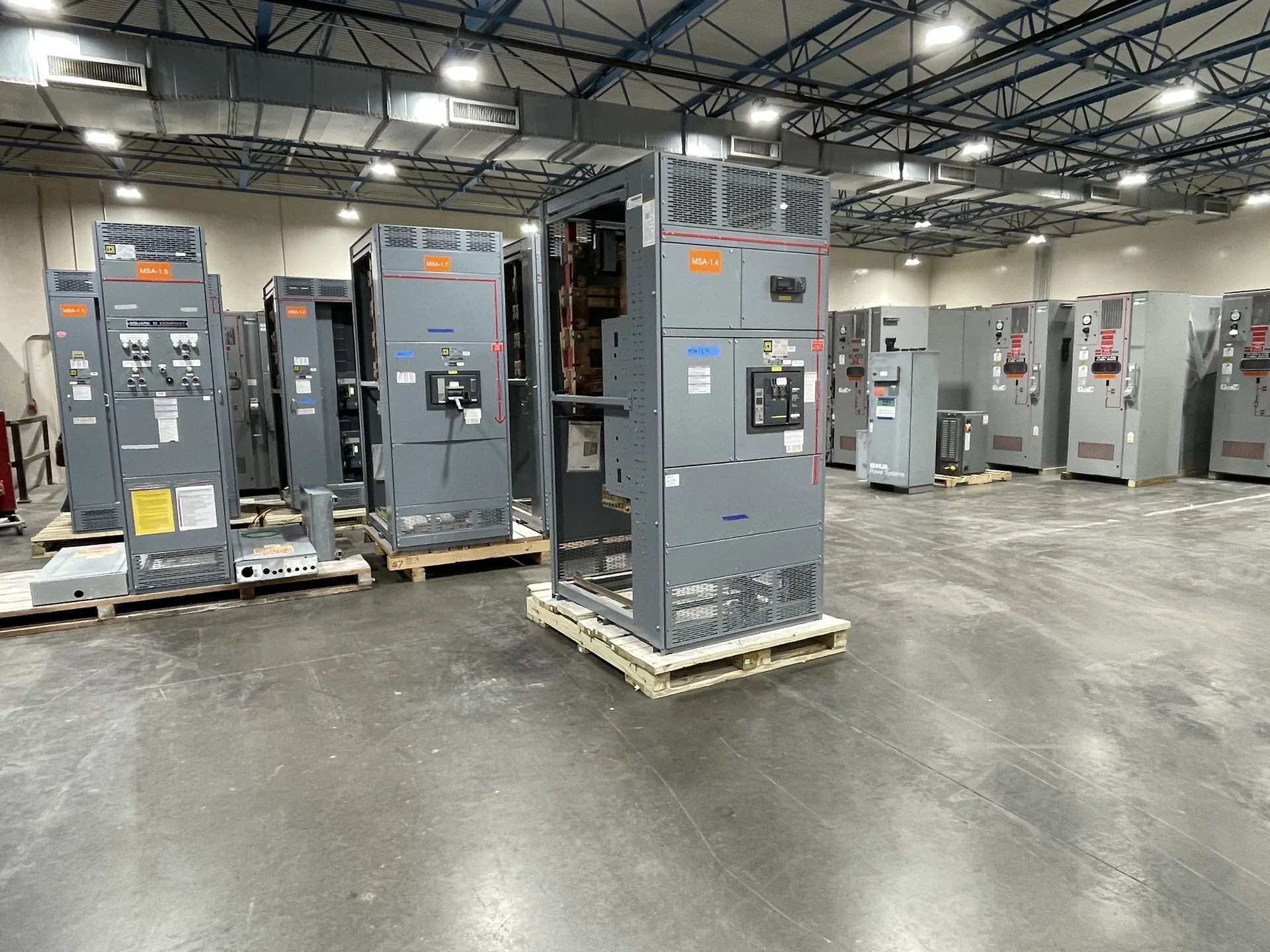
Power distribution, with purpose.
A low switchgear quote is not necessarily a low-cost solution if it excludes required components, assumes different ratings, or leaves coordination work to the buyer. Compare proposals against one common basis of design, then document what each supplier has priced, assumed, and left open.
Establish one technical comparison basis
Before evaluating totals, align each proposal to the same one-line diagram, load requirements, and project specification revision. Check system nominal voltage separately from equipment maximum rating, and compare continuous current, short-circuit ratings, frequency, phase, bus arrangement, and enclosure requirements. A proposal that names the nominal system voltage but omits the equipment rating or available fault-current basis is not yet comparable.
For low-voltage switchboards, confirm whether the proposed assembly is specified and offered as UL 891 equipment where the project requires it. Do not apply UL 891 as a general benchmark for medium-voltage switchgear. For medium-voltage classes such as 5 kV, 15 kV, 27 kV, or 35 kV, compare the applicable equipment class and project standards instead. Ask suppliers to identify deviations and state which ratings and standards they have actually confirmed for the proposed configuration.
Expose scope gaps and interface work
Compare the line-item scope, not just the equipment name. One proposal may include main and feeder devices, metering, protective relays, control power, surge protection, internal wiring, and a defined lineup arrangement, while another may include only a basic assembly. Record quantities, device functions, accessories, and any stated exclusions. Check whether transition sections, incoming cable provisions, grounding, neutral provisions, barriers, and spare spaces match the design intent.
Define the boundaries between switchgear, transformers, distribution equipment, controls, and field work. Confirm who supplies interconnecting conductors, cable terminations, external control wiring, settings, and required coordination information. Do not assume equipment pricing includes delivery unloading, placement, installation, commissioning, or site acceptance testing; those services must be explicitly included and verified. For a Dallas–Fort Worth project or a shipment elsewhere, clarify delivery destination, receiving constraints, and responsibility for site access without assuming a supplier has a local facility.


Separate approval assumptions from firm scope
Approval requirements can affect engineering effort, submittals, and schedule. Compare what each supplier assumes about engineer-of-record review, utility review, shop drawing comments, protection settings, and resubmittals. Ask which documents are included, such as outline drawings, wiring diagrams, bills of material, and equipment data, and when they are expected. A proposal that says “standard submittals” without defining the package leaves room for different interpretations.
Identify unresolved technical inputs that could change the build: utility fault-current data, transformer impedance, grounding method, load studies, environmental conditions, cable entry direction, and room clearances. Note whether the proposal treats these as confirmed facts or buyer-supplied assumptions. Request a written list of exceptions and open items, with the responsible party and decision date. Approval language should not be mistaken for a promise that an unreviewed design will meet every project requirement.
Price options and commercial terms on equal footing
Request separately stated prices for meaningful options rather than accepting a single bundled total. Depending on the design, options may include alternate metering, communications interfaces, additional protective functions, spare devices, special enclosure features, or revised cable-entry arrangements. Compare each option against the same description and quantity, and determine whether selecting it changes the base scope. Treat any option affecting ratings, protection, or physical fit as subject to engineering review.
Normalize the commercial terms as carefully as the technical content. Compare quotation validity, payment milestones, taxes, freight, delivery point, cancellation terms, warranty language, and treatment of changes after drawing approval. Ask whether stated schedule is an estimate or a commitment, what event starts the schedule, and how approval delays or late buyer information are handled. A shorter lead time may be a goal, not a guarantee; verify the specific schedule and component availability for the order.
Work through a hypothetical choice and handoff
Suppose Proposal A has the lower total but excludes metering and leaves cable-entry orientation open, while Proposal B includes the specified metering and shows the required entry arrangement. Do not select A solely on its headline figure. First obtain the cost and schedule effect of adding the same metering, confirm whether its proposed layout fits the room and feeder approach, and price any required revision. If those answers remain conditional, compare both proposals using an explicit allowance or mark the unresolved item as a decision risk rather than treating it as included.
For a useful quote review, send the current one-line diagram, equipment schedule, specification and addenda, available fault-current information, load and protection requirements, site environmental conditions, and delivery constraints. Include required approval documents, preferred options, and the date by which a firm proposal is needed. A new-equipment manufacturer can then identify feasible scope, confirm project-specific ratings and component availability, and work toward a shorter lead time without implying guaranteed timing. The handoff should end with a written comparison matrix, accepted exceptions, selected options, and a named owner for each open technical or commercial item.
Specifications & planning
Review the details that matter for your application. Final specifications and availability should be confirmed for your project.
| Evaluation factor | What to align |
|---|---|
| Ratings | Nominal voltage, equipment rating, continuous current, and short-circuit basis |
| Scope | Devices, accessories, internal features, exclusions, and field interfaces |
| Approvals | Submittal package, review assumptions, deviations, and open inputs |
| Commercial terms | Options, freight, validity, payment, warranty, and schedule basis |