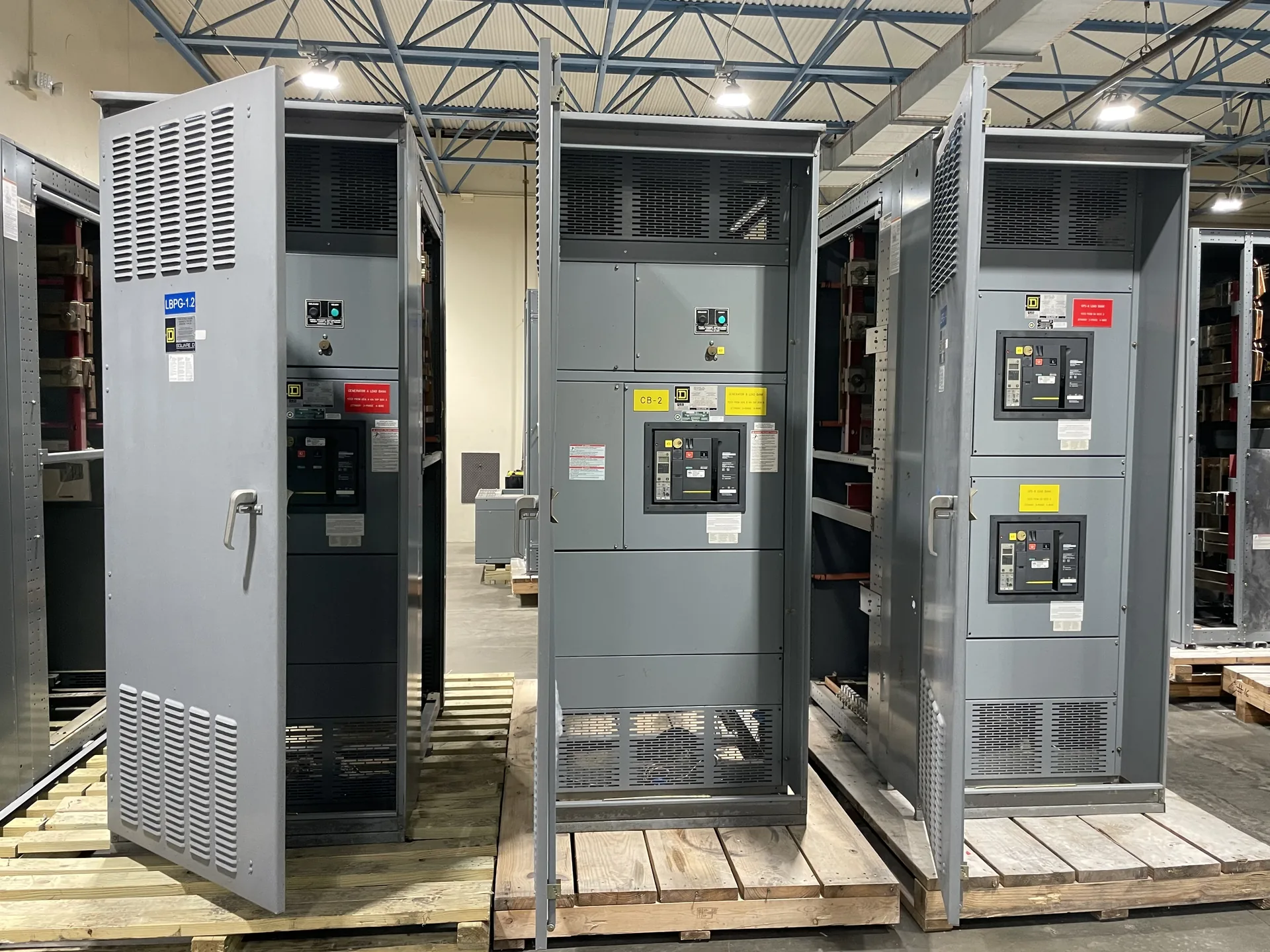
Power distribution, with purpose.
A switchgear quote is useful only when both parties agree on what the equipment price includes—and what remains with the purchaser, engineer, contractor, utility, or another supplier. Before requesting a quote for new equipment, define the installation interfaces, studies, testing, delivery terms, taxes, and future-change assumptions. This scope review helps prevent a low initial number from concealing work that must still be designed, purchased, or coordinated.
Set the equipment boundary before comparing prices
Describe the proposed assembly and where the quoted supplier’s responsibility ends. Provide the one-line diagram, system nominal voltage, frequency, phase and wire configuration, service arrangement, main and feeder requirements, available fault current, and the intended installation environment. Identify whether the request is for a low-voltage switchboard, medium-voltage switchgear, or another assembly; a nominal system voltage alone does not establish the equipment rating. Specify required continuous-current and short-circuit ratings, enclosure conditions, entry direction, and applicable project standards, subject to engineering confirmation.
Ask the manufacturer to identify the equipment and components included, along with exclusions such as upstream or downstream equipment, field cabling, conduits, bus duct, protective devices not shown, and utility work. For low-voltage switchboards, UL 891 may be relevant when the project specification calls for it and the proposed assembly is eligible; it is not a general listing for medium-voltage equipment. Confirm standards, ratings, component availability, and any U.S.-origin requirements for the specific order rather than assuming they apply automatically.
Assign installation and engineering interfaces
A quote for manufactured equipment does not by itself establish who will receive, unload, position, anchor, join, connect, or energize it. State whether the purchaser expects equipment supply only or is requesting other defined work, and have the proposal say what is and is not included. Clarify who provides foundations, housekeeping pads, seismic or anchorage design, room ventilation, working clearances, cable terminations, interconnecting conductors, grounding connections, and coordination with the electrical contractor.
Identify the design authority for the one-line, protection scheme, coordination, arc-flash assessment, and final equipment settings. Some studies may require utility data, upstream protective-device information, and verified field conditions that are not available when a quote is prepared. Unless explicitly included and confirmed, treat these as separate engineering scope. For a Dallas–Fort Worth project or a site elsewhere, the same rule applies: establish responsibility for local permitting, site access, contractor coordination, and utility interfaces without assuming the equipment manufacturer performs installation.


Make studies and testing explicit deliverables
List each study or engineering document required, its intended use, and who supplies the inputs. Examples include short-circuit, coordination, arc-flash, load-flow, and grounding studies, but the project engineer should determine which are necessary. A quote should distinguish calculation or document preparation from equipment design, relay programming, field verification, and revisions after approved drawings. If study results could change device selection or ratings, resolve that dependency before treating the equipment scope as final.
Describe factory and field testing separately. Specify requested inspection records, routine production tests, witness or hold points, test procedures, and the party responsible for travel, scheduling, and acceptance criteria. Commissioning, startup, site acceptance testing, and troubleshooting are not interchangeable with factory tests and should not be presumed included. Request written confirmation of the exact tests offered for the configured assembly; the purchaser’s engineer should review requirements against the project specification and applicable standards.
Compare delivery, taxes, and commercial exclusions
Delivery scope can materially affect the project schedule and cost. Provide the destination, receiving hours, site restrictions, delivery access, required arrival window, and whether the site can accept a truck or needs special coordination. Ask the proposal to state the shipping basis, packaging assumptions, freight responsibility, unloading responsibility, and whether storage, redelivery, or inside placement is excluded. Shorter lead time may be a goal, but manufacturing schedule, component availability, drawing approval, and transport must be confirmed for the particular order; do not treat an estimate as a guarantee.
Clarify whether quoted amounts include freight, insurance, sales or use taxes, duties, permits, and other charges, and identify which party determines tax treatment. Confirm how changes, cancellation, storage, and schedule delays are handled commercially. A quote should state its validity period and the assumptions behind its price without implying that an unverified tax exemption or delivery condition has been accepted. Compare proposals on a consistent delivered-and-ready-for-installation basis only when each explicitly supports that boundary.
Price future changes and close the handoff
Future expansion can be a design requirement, not a vague promise of spare capacity. State expected future feeders, load growth, available physical space, spare compartments or provisions, and any required bus or interrupting-capacity margin. Ask the engineer to confirm what can be provided in the initial assembly and what would require replacement, field modification, or a later engineered addition. Do not assume that an unused space, spare device position, or present rating makes a future change compatible or compliant.
For example, a hypothetical facility expects to add a production line in three years. The buyer can compare a quote for today’s load with a reviewed option that includes a defined future feeder provision. The decision should weigh initial cost, space, electrical ratings, protection coordination, and the risk that later equipment or components may differ—not assume the option guarantees future availability. Before award, hand off the approved one-line, load and fault data, scope matrix, study and test requirements, delivery conditions, tax assumptions, and named responsibility for each exclusion. Request written clarification of open items so procurement, engineering, and the installer work from the same boundary.
Specifications & planning
Review the details that matter for your application. Final specifications and availability should be confirmed for your project.
| Evaluation factor | Define or verify before award |
|---|---|
| Equipment boundary | Assembly type, project ratings, included devices, and explicit exclusions |
| Studies and testing | Required documents, inputs, test scope, witness points, and responsible party |
| Delivery and taxes | Destination, freight and unloading terms, schedule assumptions, and tax treatment |
| Future changes | Defined provisions, engineering review, compatibility assumptions, and later-work responsibility |