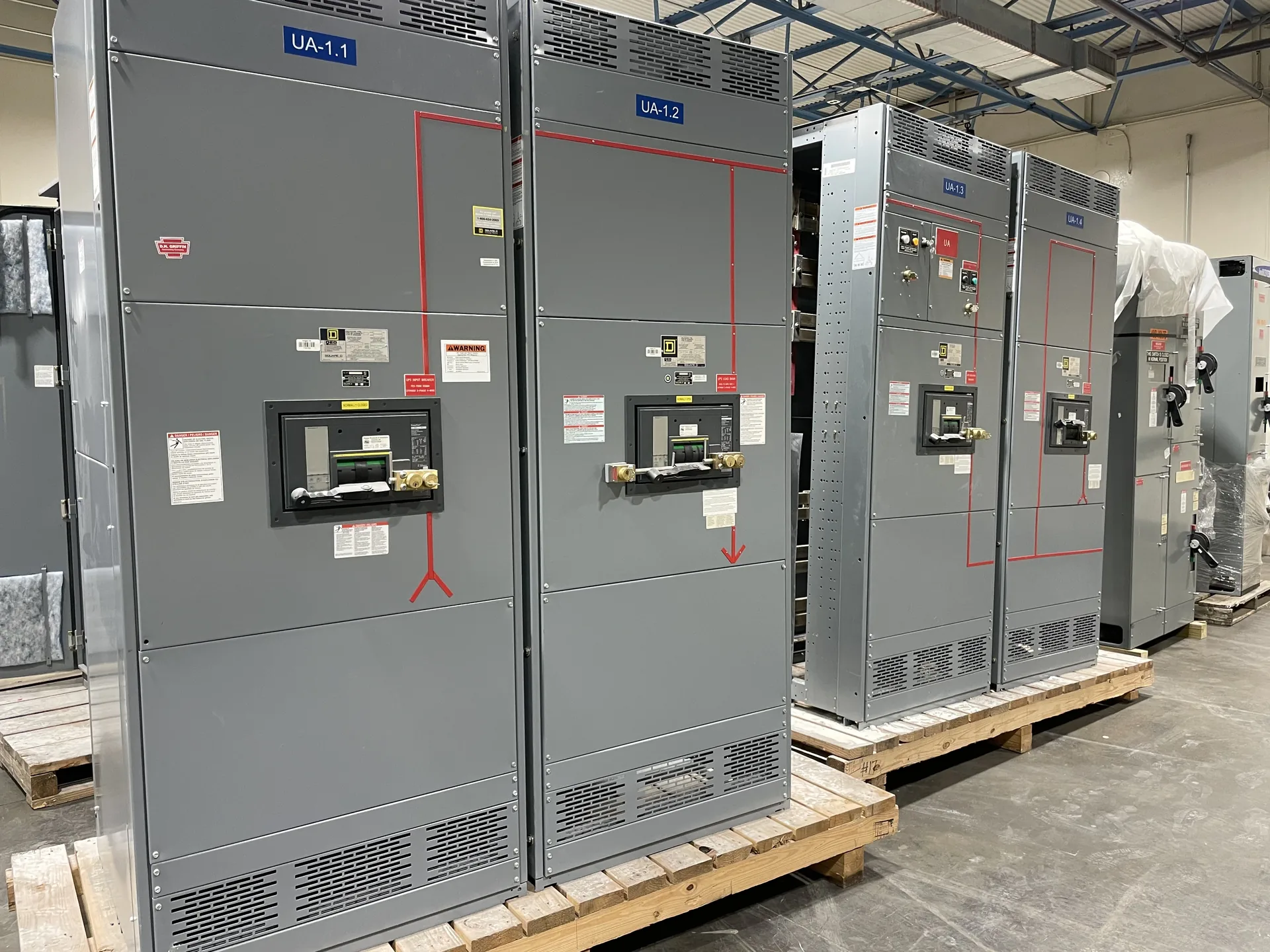
Power distribution, with purpose.
A capacity upgrade starts with evidence, not a larger ampere number. Before buying new switchgear to support additional load, determine what the existing assembly and its connected system can actually accommodate. Load history, bus nameplate details, available physical space, and current fault-study results each answer a different question; none alone establishes a safe or practical upgrade. A disciplined assessment helps define whether to add a section, replace equipment, or reconsider the load plan.
Establish the real load and its growth pattern
Collect interval demand data and equipment-level records where available, then compare measured peaks with the existing switchgear’s documented ratings. Distinguish short-duration peaks, seasonal variation, and sustained demand; a brief maximum reading does not by itself show that the assembly can carry a new continuous load. Confirm how loads operate together, including standby sources, load shedding, and planned changes to operating schedules.
Build a forecast around specific additions rather than a single percentage allowance. Record each future load’s expected demand, voltage, phase, starting or inrush behavior, duty cycle, and required date. For a Dallas–Fort Worth facility anticipating new production equipment or building loads, this evidence can help separate near-term needs from a later expansion. Treat forecasts as assumptions to verify with the project team, not as measured capacity.
Check the physical arrangement before choosing a scope
Inspect the lineup drawings and field conditions for usable section space, access, cable entry, working clearances, anchorage, and room to move or replace equipment. An empty-looking compartment is not necessarily a suitable location for additional protective devices or a new section. Existing construction, bus configuration, barriers, ventilation, and the route to the electrical room can constrain an extension or require a broader replacement scope.
Document the existing manufacturer and model, lineup dimensions, section sequence, connection points, and any available original drawings. Note obstructions and interfaces with transformers, feeders, generators, transfer equipment, and downstream distribution. If dimensions or drawings are incomplete, state that clearly in the request for quotation; a supplier should not assume physical compatibility from photographs or a panel schedule alone.


Read the nameplate and verify the bus limits
Provide clear nameplate photographs and transcribe the assembly’s manufacturer, model, nominal system voltage, equipment maximum rating where marked, frequency, bus ampere rating, and short-circuit or withstand information. These values describe different limits. A nominal system voltage is not the same as the equipment’s maximum rating, and a higher bus ampere rating does not establish that breakers, conductors, or the complete lineup can serve a proposed load.
Identify the ratings of the main device, feeder devices, bus, and any relevant connected equipment rather than relying on one headline number. Record signs of alteration or missing labels and request engineering review where documentation conflicts with field conditions. Proposed ratings, component availability, applicable standards, and any U.S.-origin requirements must be confirmed for the specific order; do not presume that an existing assembly’s markings transfer to a new or extended lineup.
Revisit fault current and protection coordination
Obtain the latest available short-circuit study and one-line diagram, including utility or transformer data used in the analysis. A capacity addition can change the electrical configuration or operating sources, while a utility change, transformer replacement, or added generator can affect available fault current. Ask the engineer to verify the study assumptions at the proposed connection point and determine whether the equipment’s short-circuit rating and protective-device duties remain adequate.
Review coordination and protection implications as part of the same scope discussion. New feeder devices, changed trip settings, or altered source arrangements can affect selectivity and protection of downstream equipment. Do not treat a breaker’s interrupting rating as proof that the complete switchgear assembly has an adequate short-circuit rating. Qualified electrical professionals should conduct and approve the required studies and field work; this planning page is not an energized-work procedure.
Use a worked hypothetical to choose a direction
Suppose a facility records a peak demand below its existing main rating and plans to add a process line. The proposed line’s expected demand appears to fit within the apparent margin, but the bus nameplate, a crowded lineup, and an older fault study have not yet been verified. The defensible decision is not to order a larger main immediately. First confirm coincident demand, the assembly and device ratings, physical extension options, and fault conditions under the intended operating arrangement.
If those checks support an extension, the buyer can request a defined new section or feeder scope with identified interfaces and engineering review. If the bus or fault-duty evidence is inadequate, or there is no viable space, replacement or a revised load plan may be more appropriate. This is an illustrative decision path, not a customer project or a conclusion about any particular installation; actual feasibility depends on the site records and engineering assessment.
Send a complete handoff for a useful quotation
For a quotation, supply the one-line diagram, load history, future-load schedule, equipment nameplate data, lineup drawings and dimensions, latest fault and coordination studies, and photographs that show the assembly and surrounding access. State the requested scope, target in-service window, delivery destination, operating constraints, and whether drawings or specified standards are required. Identify missing or uncertain information so assumptions can be called out rather than silently carried into a proposal.
A U.S. switchgear manufacturer can use that package to discuss a custom new-equipment build, American components where specified and available, and a shorter lead time as a goal rather than a guarantee. Define whether the request is for a new lineup, an extension, or replacement, and clarify that field installation, study work, demolition, and commissioning are separate unless specifically confirmed. UL 891 applies to low-voltage switchboards where applicable; it is not a general designation for medium-voltage switchgear. Confirm the applicable product type, ratings, standards, and scope for the particular order.
Specifications & planning
Review the details that matter for your application. Final specifications and availability should be confirmed for your project.
| Evaluation factor | Evidence to provide |
|---|---|
| Load margin | Interval demand records and itemized forecast |
| Physical fit | Lineup drawings, dimensions, access and interface notes |
| Nameplate limits | Assembly, bus, main and feeder device data |
| Fault duty | Current one-line diagram and latest fault study |