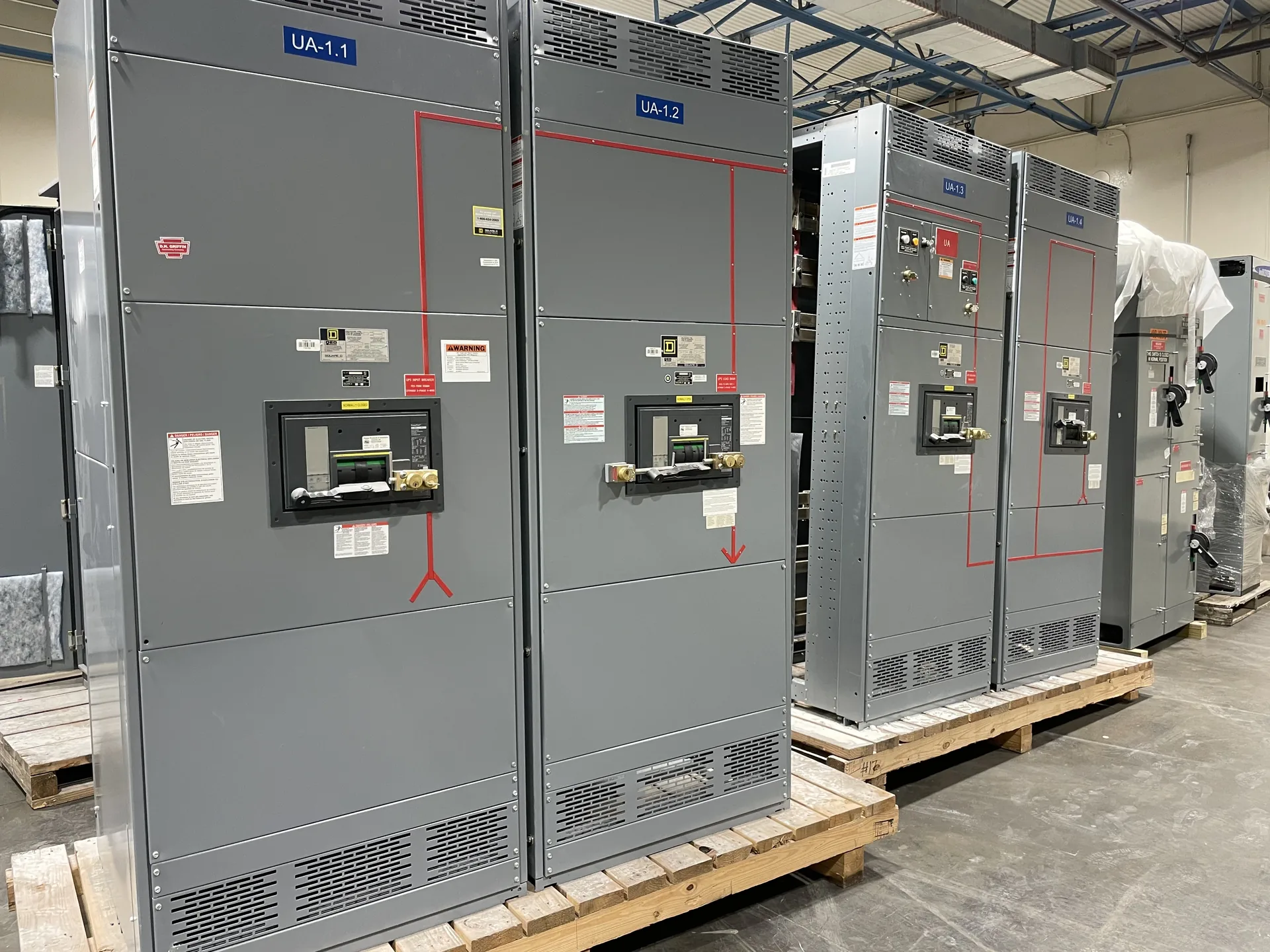
Power distribution, with purpose.
A useful switchgear specification describes what the equipment must do, how it connects to the facility, and what evidence will demonstrate that it meets the project’s requirements. Brand preferences alone cannot settle questions about fault duty, protection, construction, or interfaces. Whether planning a replacement or a new installation in Dallas–Fort Worth or elsewhere, buyers should establish the engineering basis before requesting a quote.
Start with the electrical duty, not a catalog label
Define the system’s nominal voltage and frequency, then identify the equipment class and maximum voltage rating required for that application. These terms are related but not interchangeable: nominal system voltage describes the network, while equipment ratings describe the limits of the selected gear. State the available short-circuit current at the connection point, required withstand or interrupting duty as applicable, and the basis used to calculate it. If the utility or facility study is preliminary, label it accordingly rather than presenting an estimate as a final value.
Describe the source arrangement and operating conditions that affect duty, including transformer data, generator or alternate-source connections, grounding method, and whether sources can operate in parallel. Ask the responsible engineer to confirm assumptions and evaluate credible operating configurations. A specification that gives only a voltage and an ampere value leaves major selection questions unanswered; a specification grounded in the one-line diagram and fault study gives bidders a common technical basis.
Define the assembly and its boundaries
State what the procurement includes and where responsibility transfers to other equipment or trades. Identify incoming and outgoing connections, bus arrangement, feeder count, metering and protection scope, and required provisions for future sections. Clarify whether the supplier is expected to furnish only the switchgear assembly or also specified accessories, control wiring, drawings, and other documented deliverables. Avoid assuming that a familiar product name establishes the same scope across manufacturers.
For low-voltage switchboards, UL 891 may be relevant when the project requires an assembly evaluated to that standard; it is not a general designation for medium-voltage gear. Specify the applicable standards and evidence required for the particular equipment category, then verify the proposed configuration against them. Ratings, construction details, component availability, standards applicability, and any U.S.-origin requirements must be confirmed for the specific order. Do not treat a general statement about a product family as proof that a particular lineup satisfies the project.


Make protection and control requirements testable
Describe protection by function and coordination intent rather than by a preferred brand alone. Provide the required protective functions, trip or relay interfaces, metering points, control power expectations, and any communications protocol or monitoring-system connection. Include the latest coordination study or the information needed to complete one. If settings are to be supplied by the owner or engineer, identify that responsibility and the required format; if they are part of the supplier’s scope, define the engineering deliverable and review point.
Ask how proposed components support the specified functions and what documentation will be furnished for review. A brand name does not establish a device’s rating, compatibility, or coordination with the rest of the system. Conversely, a performance-based specification should not prohibit an acceptable alternative merely because it differs from a named product. Set boundaries for substitutions by requiring comparable ratings, documented interfaces, and engineering approval before acceptance.
Resolve physical, environmental, and connection interfaces
Supply available room dimensions, access and handling constraints, cable or bus connection locations, and the orientation of incoming and outgoing conductors. Identify enclosure location and environmental conditions, including indoor or outdoor placement, ambient conditions, elevation where relevant, and any known exposure that affects construction. Record conduit entry limits, floor or housekeeping-pad details, and restrictions on section width or depth. These inputs can determine whether a technically suitable arrangement can actually be installed and connected.
Coordinate equipment requirements with the electrical one-line, floor plan, cable schedule, grounding design, and upstream and downstream equipment. Flag existing gear that must remain in service or connect to the new assembly, and provide verified interface dimensions and electrical data where available. For projects in Dallas–Fort Worth or shipments elsewhere, delivery planning still depends on the destination, site access, receiving arrangements, and project schedule; location alone does not establish a delivery commitment.
Evaluate proposals against evidence and defined exceptions
Build a compliance review around the same decision points for every proposal. Compare stated ratings and construction with the specification, check that the one-line and connection arrangement match, and review component schedules, drawings, and stated exclusions. Require bidders to identify each deviation and its engineering consequence rather than marking a proposal compliant while leaving assumptions unstated. Keep clarification records so that a later revision does not silently change the agreed scope.
Distinguish required acceptance evidence from preferences. Depending on the project and equipment, evidence may include approved drawings, component data, routine or other specified test documentation, and a clearly defined inspection or witness process. State who reviews submittals, when fabrication authorization occurs, and what constitutes a hold point. A stated test or standard is not proof that a particular assembly has met it; confirm the applicable evidence and acceptance criteria for the actual configuration.
Prepare a quote package that can be engineered
A useful request for quote includes the project specification, one-line diagram, load and feeder schedule, fault-duty basis, physical layout, connection requirements, protection and control scope, and requested documentation. Identify the governing revision, known open engineering questions, required ship-to destination, and target schedule. If a requirement is not yet settled, mark it as an assumption or request a clearly identified option instead of allowing each bidder to resolve it differently.
The manufacturer builds and supplies new equipment, including custom builds using American components, with shorter lead time a goal rather than a guarantee. For a meaningful quote, the buyer should distinguish mandatory requirements from preferences and provide enough information to assess scope, interfaces, and unresolved risks. The proposal and engineering review must confirm capabilities, component availability, ratings, standards, U.S.-origin requirements, and schedule for the specific order before they are treated as commitments.
Specifications & planning
Review the details that matter for your application. Final specifications and availability should be confirmed for your project.
| Evaluation factor | What to establish |
|---|---|
| Electrical duty | Nominal voltage, equipment rating, frequency, and documented fault-duty basis |
| Operating configuration | Sources, grounding, alternate feeds, and credible parallel operation |
| Interfaces | Connection locations, physical constraints, controls, and adjacent equipment |
| Evidence and scope | Applicable standards, required documents, deviations, and acceptance criteria |