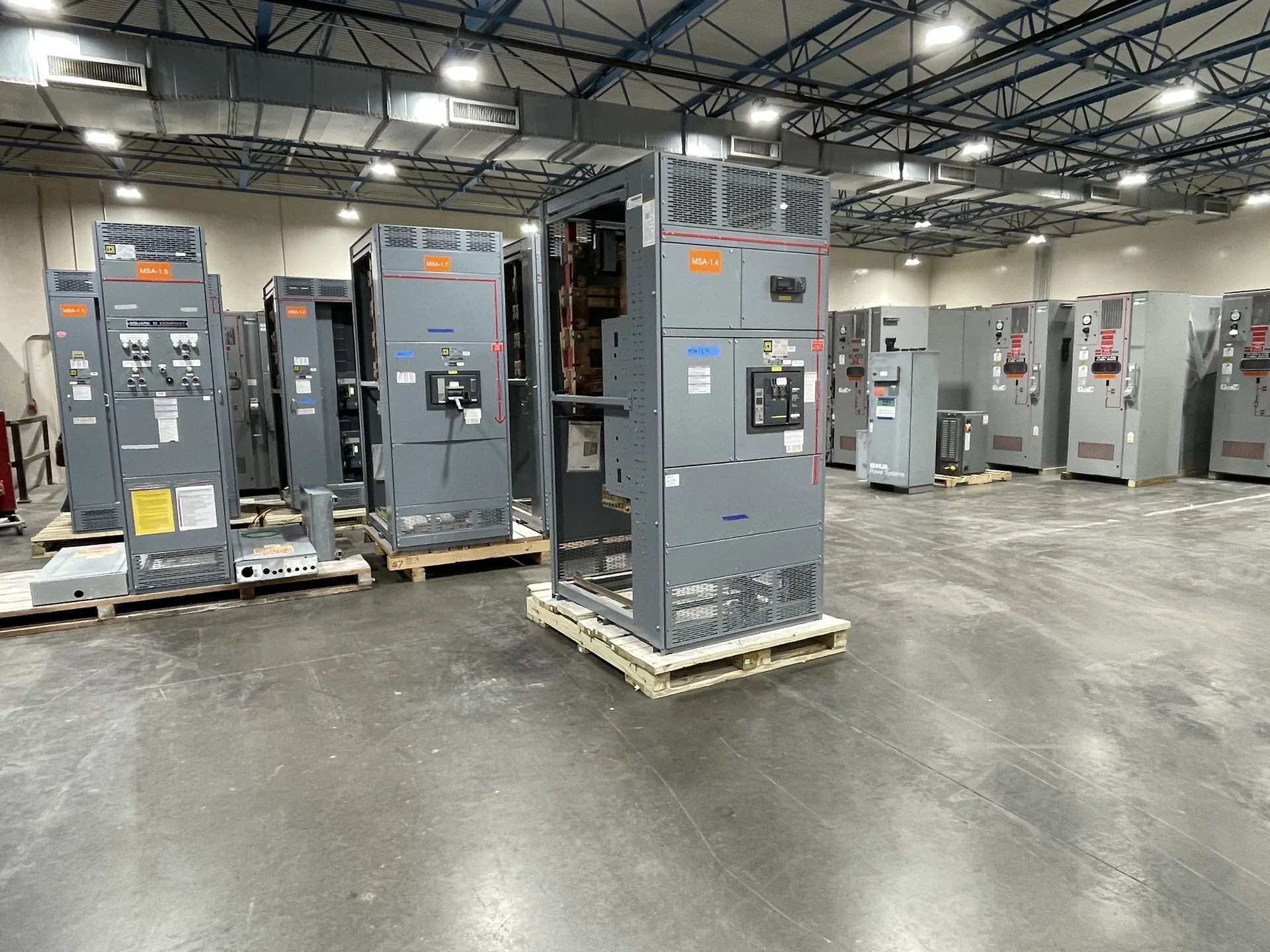
Power distribution, with purpose.
An illustrative switchgear project in Allen might serve a mixed commercial property with offices, retail space, shared services and plans for future tenants. Those uses can create competing demands: protect each feeder selectively, maintain service to unaffected loads when a fault occurs, and leave a workable path for expansion. The equipment choice should follow the project’s electrical study, utility conditions and authority requirements—not a city name or a presumed standard configuration. Confirm current requirements for the actual parcel before establishing a design or requesting a firm proposal.
Start with the property and load picture
Define what the switchgear must serve before settling on an arrangement. For an Allen commercial site, the intake should identify the building’s use, existing and planned tenant areas, major motor or HVAC loads, life-safety and other critical loads, and any separately metered services. Distinguish current demand from the connected-load estimate and forecasted growth. A planned restaurant, larger cooling plant, or additional tenant can change feeder sizing and spare-space needs even when the first-phase demand appears modest.
Provide available one-line diagrams, panel and transformer schedules, service records, and load-study information, noting which documents are current and which are preliminary. Include the service voltage and phase, grounding arrangement, source and transformer details, and known fault-current data if available. Do not assume a nominal system voltage is the equipment’s maximum rating; confirm voltage class and insulation requirements with the engineer and serving utility. Missing or conflicting data should become an explicit design question, not an unspoken assumption in a quote.
Verify permitting and utility conditions for the parcel
Before publication or design commitments, verify official City of Allen permitting and inspection resources for the actual parcel and the project scope. Confirm which department or process applies, what electrical submittals and inspections are required, and whether the work is treated as new construction, a service alteration, or replacement. Requirements can depend on the property, scope, and adopted codes in effect when the permit is submitted, so a general city webpage should not substitute for parcel-specific confirmation.
Identify the electric utility serving the address rather than inferring it from the Allen mailing address. Ask the utility about service characteristics, available fault current, metering and service requirements, point of connection, and any review or outage coordination it requires. These details can affect incoming compartments, metering provisions, protection settings, and the sequence of approvals. Keep utility-confirmed values distinguishable from estimates in the design package, and route unresolved service questions through the project engineer before equipment details are finalized.


Coordinate main and feeder protection across tenants
A mixed-use building benefits from protection that limits an electrical fault to the smallest practical portion of the system. The engineer should evaluate the main protective device against downstream feeder devices using the actual trip curves, device settings, available fault current, and conductor characteristics. Selective coordination is not established merely by choosing a larger main breaker or matching breaker frame sizes. The study must account for the specific devices and operating conditions, including any required coordination time range for the loads and applicable codes.
The design tradeoff is between fault clearing, continuity, equipment withstand, and practical cost. Longer delays or higher settings may improve coordination in some regions of the curve but can increase equipment exposure or conflict with other protection goals. For each tenant or common-area feeder, clarify load criticality, expected fault contribution, and whether metering or isolation needs affect compartment layout. Request the engineer’s protection study and settings basis as design deliverables; do not treat a manufacturer quote as a substitute for that engineering work.
Plan capacity and physical interfaces for growth
Growth planning should distinguish electrical capacity from physical provision. A bus or service sized for projected demand does not automatically provide spare feeder devices, enclosure space, cable landing room, or a practical way to add circuits later. Ask the design team to identify which future loads are included in demand calculations and which are only anticipated. Confirm whether spare positions are fully equipped, space-only, or excluded, and specify the conductor entry direction and termination requirements needed for the site’s routing.
Also compare equipment footprint, access clearances, indoor or outdoor environment, shipping sections, and the path from delivery point to final room. For a constrained commercial site, a larger lineup may support future feeders but complicate access, rigging, or room layout; a compact arrangement may limit later modifications. Review control power, communications, metering, and any interface to building systems alongside the power one-line. All ratings, short-circuit duty, components, applicable standards, and U.S.-origin requirements must be confirmed for the specific order and design.
Prepare a quote handoff that reduces assumptions
A useful quote request includes the project location and delivery destination, required submittal and delivery milestones, current one-line diagram, equipment schedule, service and utility data, and the engineer’s available fault-current and coordination information. State the required system voltage, phase, frequency, bus and feeder arrangement, protective-device preferences or specifications, enclosure environment, metering and control needs, and future provisions. Identify who will approve drawings and resolve technical questions, and flag any jurisdictional or utility review still pending.
The manufacturer’s review can then clarify what is within the requested build scope, what needs engineering confirmation, and which interface details remain open. The company manufactures and supplies new equipment, including custom builds and American components where confirmed for the order; shorter lead time is a goal, not a guaranteed schedule. UL 891 applies to low-voltage switchboards when applicable, not to medium-voltage equipment generally. Confirm whether the specified assembly and components can meet the project’s applicable requirements before relying on any certification, rating, origin, or schedule in procurement documents.
Keep design, approval, and procurement handoffs distinct
A clean handoff assigns each decision to the party qualified to make it. The electrical engineer establishes system design, protective-device coordination, and required ratings; the utility confirms its service conditions; the jurisdiction determines permit and inspection requirements; and the purchaser provides approved specifications and commercial requirements. The manufacturer reviews the requested equipment configuration and identifies questions or exceptions. This separation helps prevent an assumed utility value or preliminary drawing from becoming a purchase-order requirement without review.
For an Allen-area project, schedule the quote around the information that is genuinely available, then update the design basis as parcel, utility, and permit confirmations arrive. Before release, reconcile approved drawings, device schedules, ratings, incoming and outgoing connections, control interfaces, and delivery constraints against the purchase documents. A quote can be refined as decisions mature, but final suitability and timing depend on verified project requirements, component availability, engineering review, and approvals—not a presumed local office, installation history, or guaranteed service territory.
Specifications & planning
Review the details that matter for your application. Final specifications and availability should be confirmed for your project.
| Evaluation factor | What to confirm |
|---|---|
| Parcel authority | Applicable City of Allen permit and inspection path |
| Utility interface | Serving utility, service conditions, metering, fault-current data |
| Protection basis | Engineer-reviewed main and feeder coordination study |
| Growth provision | Forecast loads, spare devices or spaces, physical expansion limits |
| Quote readiness | Approved drawings, ratings, interfaces, delivery needs, open assumptions |