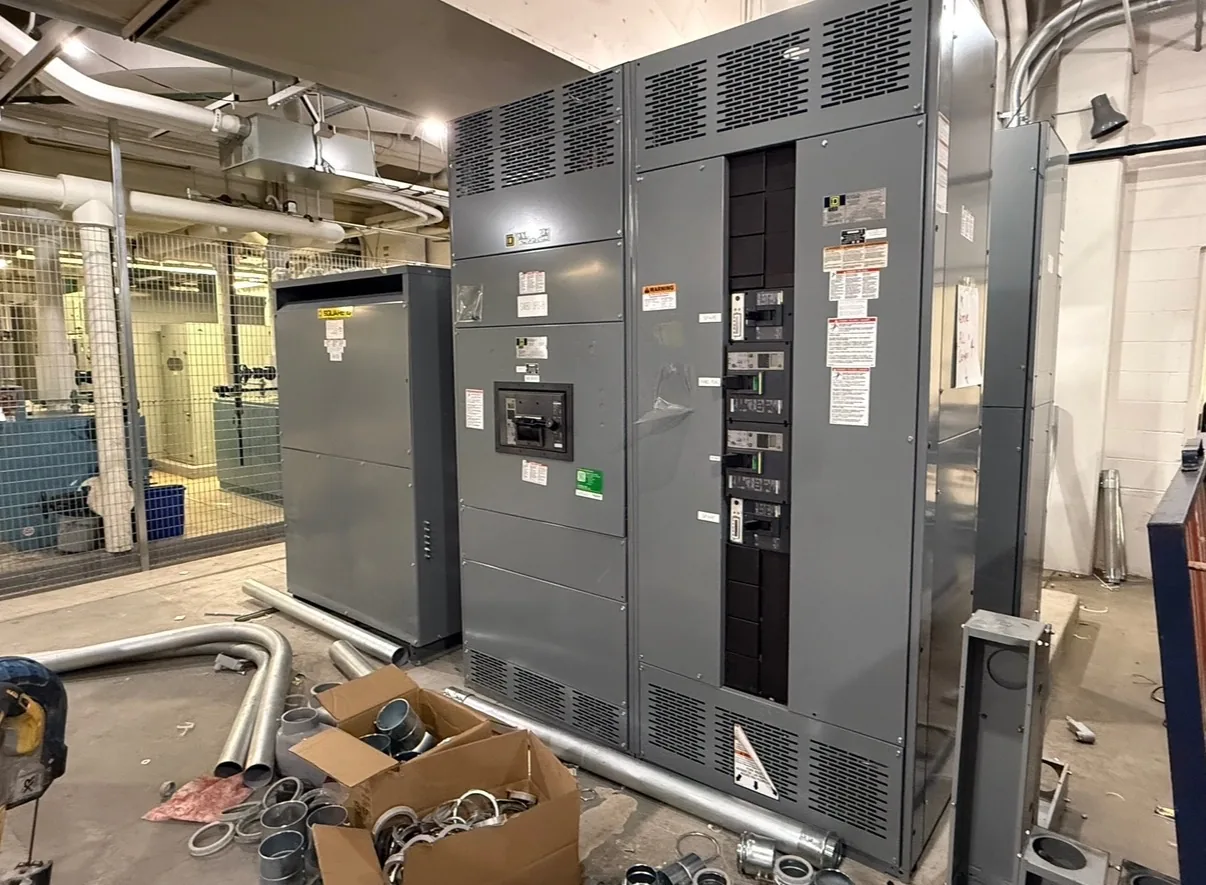
Power distribution, with purpose.
Planning new electrical distribution equipment for a Flower Mound project starts with the building’s actual load, utility service, and delivery constraints—not a catalog description alone. Early coordination helps keep switchgear selections aligned with the design and the realities of getting large equipment to the site.
Start with the service and load picture
Flower Mound projects can range from commercial buildings and campus expansions to industrial spaces and infrastructure upgrades, each with a different electrical profile. Before requesting a quote, identify the serving utility and provide its available service information, including nominal voltage, phase, frequency, grounding arrangement, and any stated fault-current data. A system’s nominal voltage is not the same as the equipment’s maximum voltage rating, so both the service conditions and the required equipment class need to be checked.
Load schedules, one-line diagrams, transformer details, and plans for future expansion help define the switchboard or switchgear lineup. Include present and anticipated loads, major motor or other starting loads, feeder quantities, and required spare capacity. A larger lineup may support future circuits, but it can also increase footprint, weight, and cost. The appropriate balance depends on the project’s operating plan and available electrical-room space.
Match the equipment to the application
The project team should confirm whether the design calls for a low-voltage switchboard or medium-voltage switchgear. These are not interchangeable categories: UL 891 applies to low-voltage switchboards, not generally to medium- or high-voltage switchgear. Voltage classes such as 5 kV, 15 kV, 27 kV, and 35 kV are normally medium-voltage classes in this context. Equipment selection must follow the actual system and design requirements rather than relying on a voltage label alone.
Specify the protective devices and distribution arrangement needed for the application, including breaker or switch types, trip functions, metering, control power, and any required communications or monitoring interfaces. Short-circuit ratings and protective-device coordination require engineering review against available fault current and system conditions. Requested standards, ratings, component availability, and any U.S.-origin requirements must be confirmed for the specific order; they should not be assumed from a general product description.


Coordinate the lineup with the building
Room dimensions are only the first fit check. Provide the electrical-room plan and elevations, door and corridor clearances, equipment orientation, cable entry direction, and the location of nearby walls, columns, ducts, and other services. Indicate the working and service clearances required by the project design and applicable requirements. A lineup that fits on a plan may still be difficult to move into position or connect if access routes, turning space, or overhead obstructions are overlooked.
Resolve interfaces with the electrical contractor, engineer, utility, and other equipment suppliers before release for manufacture. Confirm incoming service termination details, outgoing feeder quantities, conductor entry and bending space, grounding connections, and any required transitions to transformers or bus duct. Drawings and interface data should show who supplies each connection and what information remains subject to engineering review. This reduces the risk of mismatched terminations or field changes after delivery.
Plan delivery around the site
For a Flower Mound delivery, the project team should assess the route from the receiving point to the final room, not just the truck’s approach to the property. Identify the receiving area, unloading method, site access restrictions, gate or dock dimensions, pavement or floor limits, and any planned construction that could block the route. Large electrical assemblies may need to be shipped in sections; the shipping configuration and handling plan should be settled against the access route and installation sequence.
Coordinate the requested delivery window with site readiness, contractor availability, and the sequence of other trades. Confirm who receives and inspects the shipment, where it can be protected from weather and construction activity, and how it will be moved into place. Delivery timing is a planning target, not a guarantee: design approvals, component availability, configuration changes, and logistics can affect the schedule. Share required dates and milestone dependencies early so they can be reviewed realistically.
Prepare a complete quote package
A useful quote request includes the latest one-line diagram, load and feeder schedules, service data, project specifications, and a clear description of the equipment scope. Add available fault-current information, required short-circuit performance, metering and control needs, requested standards, and any origin requirements. If drawings are preliminary, identify what is still changing and when final information is expected. Clear assumptions allow the manufacturer to identify open decisions instead of treating incomplete inputs as settled design requirements.
Include room drawings, cable and bus interfaces, shipping constraints, target delivery milestones, and the project’s submittal or approval process. Note whether the request covers one lineup or multiple coordinated assemblies, and identify equipment that must interface with other suppliers’ products. The manufacturer builds and supplies new equipment, including custom configurations with American components where specified. Shorter lead time is a goal, not a promise; the proposed scope, component availability, ratings, standards, and U.S.-origin requirements all need confirmation for the particular order.
Specifications & planning
Review the details that matter for your application. Final specifications and availability should be confirmed for your project.
| Evaluation factor | Information to confirm |
|---|---|
| Service conditions | Nominal voltage, phase, frequency, grounding, and utility fault-current data |
| Equipment scope | Low-voltage switchboard or medium-voltage gear, lineup arrangement, and feeder needs |
| Performance | Required short-circuit rating and protective-device coordination, subject to engineering review |
| Site delivery | Receiving access, unloading plan, route to electrical room, and requested delivery milestones |