Power distribution, with purpose.
A new-construction project in Frisco needs a switchgear plan that connects the building’s load forecast to its utility service, permit path and construction schedule. Treat the equipment as one part of a coordinated electrical design—not as a stand-alone purchase. The guidance below is for an illustrative project only; the parcel’s jurisdiction, utility, requirements and delivery conditions must be confirmed before design or procurement.
Start with parcel, jurisdiction and utility confirmation
Before selecting equipment, identify the exact project parcel and confirm which authority reviews its building and electrical permits. A Frisco mailing address does not by itself establish the permitting jurisdiction, and a parcel near a city boundary may require additional verification. Consult the City of Frisco’s official permitting resources for the parcel and project type, and confirm whether another authority has review responsibility. Permit procedures, submittal requirements and review sequences can change, so check current official information rather than relying on an older project schedule or a general city reference.
Confirm the serving electric utility for the parcel directly through official utility resources and project-specific coordination. Ask what service voltage and configuration are available, where the point of delivery is expected, and what information the utility needs to evaluate the requested load. Utility service arrangements are not determined by the equipment supplier. Record the utility’s design contacts, required submittals, transformer and metering interfaces, and approval milestones so the electrical engineer can coordinate switchgear requirements with the service plan.
Translate the load forecast into service capacity
For a new building, the initial load schedule is a design basis, not a complete picture of future demand. Provide connected loads and the engineer’s calculated demand, including major motors, HVAC, process equipment, electric vehicle charging, and other significant loads where applicable. Note which loads are continuous, intermittent, or expected to operate together. The engineer should evaluate demand assumptions and applicable code requirements before specifying service capacity; a larger nominal service is not automatically the safest or most economical answer.
Coordinate the electrical system’s nominal voltage, equipment rating, bus arrangement and short-circuit duty as distinct design inputs. The available fault current and protective-device coordination can affect the switchgear configuration, interrupting ratings and upstream interface. Confirm those values from the engineer and utility as the design develops, and have the responsible professionals check compatibility across the service transformer, switchgear, feeders and downstream equipment. Manufacturer capability, component availability and applicable standards must be verified for the actual order.


Reserve future feeders deliberately
Future capacity has two parts: electrical capacity and physical space. A project may need spare feeder positions for planned tenant growth, added mechanical loads or later building phases, but empty compartments alone do not establish that the bus, service or upstream system can support the future demand. Ask the engineer to identify likely additions, their anticipated load and timing, and whether they are firm scope or planning allowances. This helps distinguish installed equipment from provisions that require later engineering or utility review.
A feeder allowance can affect lineup length, breaker selection, bus design, cable routing and room layout. More spare positions may increase initial footprint and cost, while too few can make later expansion disruptive or require replacement equipment. Confirm clearances and access with the electrical-room plan, including working space, cable entry, conduit approach and the intended route for future conductors. Have the engineer state the assumptions behind each allowance so the quotation can describe a defined configuration rather than imply unlimited expansion.
Sequence permits, engineering and procurement
Build the schedule around decisions that depend on one another. Parcel jurisdiction and utility service confirmation inform the electrical design; the design informs permit documents and equipment specifications; and review comments or utility changes may affect the released configuration. The project team should establish who owns each submittal and when design information is sufficiently complete for procurement. Avoid treating a permit filing, utility application or equipment quote as proof that the other approvals are complete.
Coordinate the switchgear submittal with the engineer’s drawings, one-line diagram, load information, protective-device requirements, metering provisions and physical installation constraints. Identify the required submittal format and approval sequence with the project’s design and permitting team. Changes after approval can affect components, dimensions and delivery planning, so route revisions through the engineer and manufacturer for review. Shorter lead time may be a goal, but actual timing depends on the approved design, component availability and order-specific requirements; no schedule should be assumed until confirmed.
Prepare a useful manufacturer quote handoff
A quote request is most useful when it defines the project rather than simply naming a service size. Supply the one-line diagram, load schedule, requested system nominal voltage, bus and feeder details, breaker and protective-device requirements, available fault-current information, metering needs, enclosure and environmental conditions, and the desired future feeder provisions. Include electrical-room dimensions, cable entry direction, utility interface notes and the expected approval milestones. Mark unresolved items clearly so the quotation can identify assumptions instead of treating preliminary values as final.
The manufacturer can review the requested new equipment configuration, custom-build requirements, component basis, documentation and order-specific limitations, with American components specified where the project requires them and their availability confirmed. UL 891 applies to low-voltage switchboards when applicable; it is not a general listing for medium-voltage equipment. Confirm the precise equipment type, ratings, standards and any US-origin requirements for the order. A useful handoff also names the engineer and project procurement contact responsible for resolving technical questions and approving the final submittal.
Coordinate delivery and close the design loop
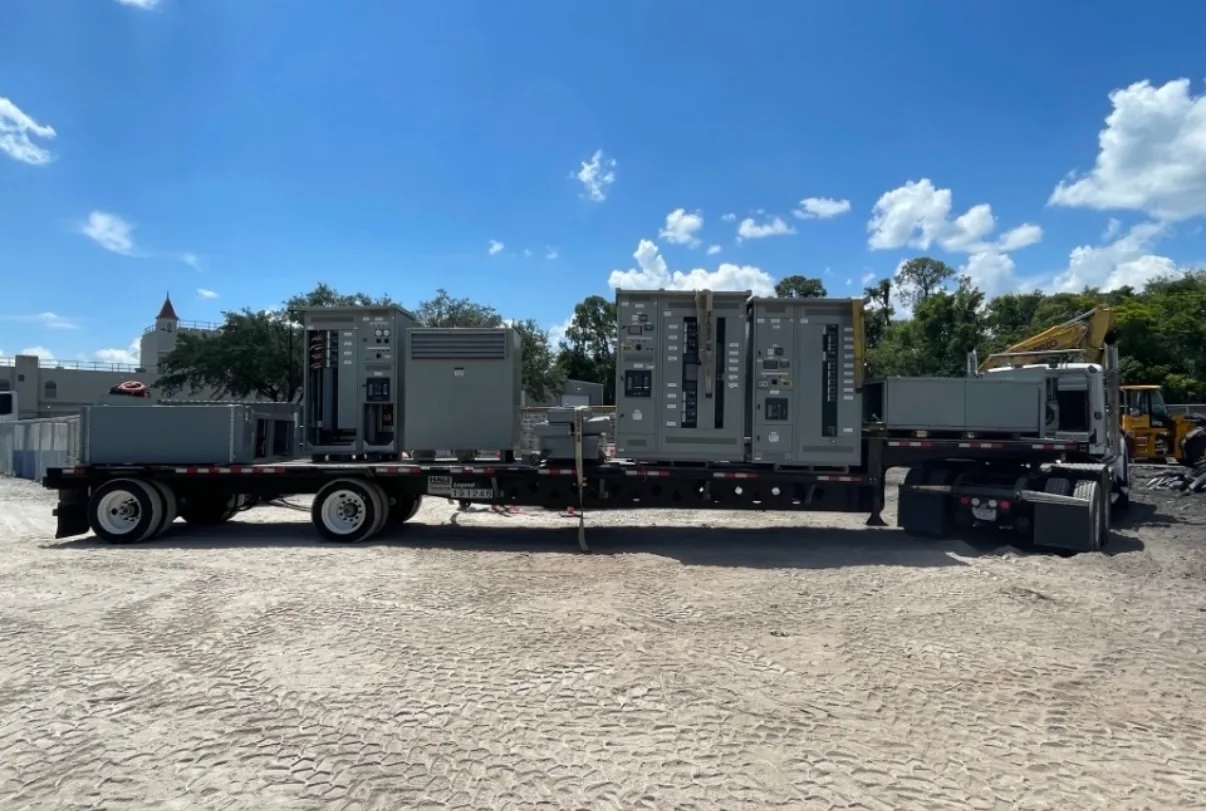
For a Frisco-area job, delivery planning should follow the actual site and construction conditions, not an assumed local facility or installation history. Confirm the delivery address and access constraints, receiving hours, unloading responsibility, staging area, weather protection and whether the lineup can reach the electrical room in its shipping sections. The project team should compare the planned delivery window with room readiness, housekeeping pads, doors, pathways and the sequence for setting and connecting equipment. These details can affect logistics even when the electrical design is settled.
Before release, reconcile the quotation and approved submittal against the engineer’s latest documents, utility requirements and permit comments. Verify ratings, lineup dimensions, feeder allowances, interfaces and all open assumptions in writing. A final review can prevent a mismatch between a planned future circuit and the actual bus or room arrangement. For Dallas–Fort Worth projects, as elsewhere, parcel-specific authority and utility confirmation remain essential; neither city naming nor a preliminary quote establishes jurisdiction, service availability or guaranteed delivery.
Specifications & planning
Review the details that matter for your application. Final specifications and availability should be confirmed for your project.
| Evaluation factor | Project information to confirm |
|---|---|
| Jurisdiction | Parcel-specific permitting authority and current submittal path |
| Utility service | Serving utility, service configuration and point-of-delivery requirements |
| Future feeders | Planned circuits, load assumptions, spare positions and physical space |
| Quote handoff | One-line diagram, ratings, fault-current basis, interfaces and open items |