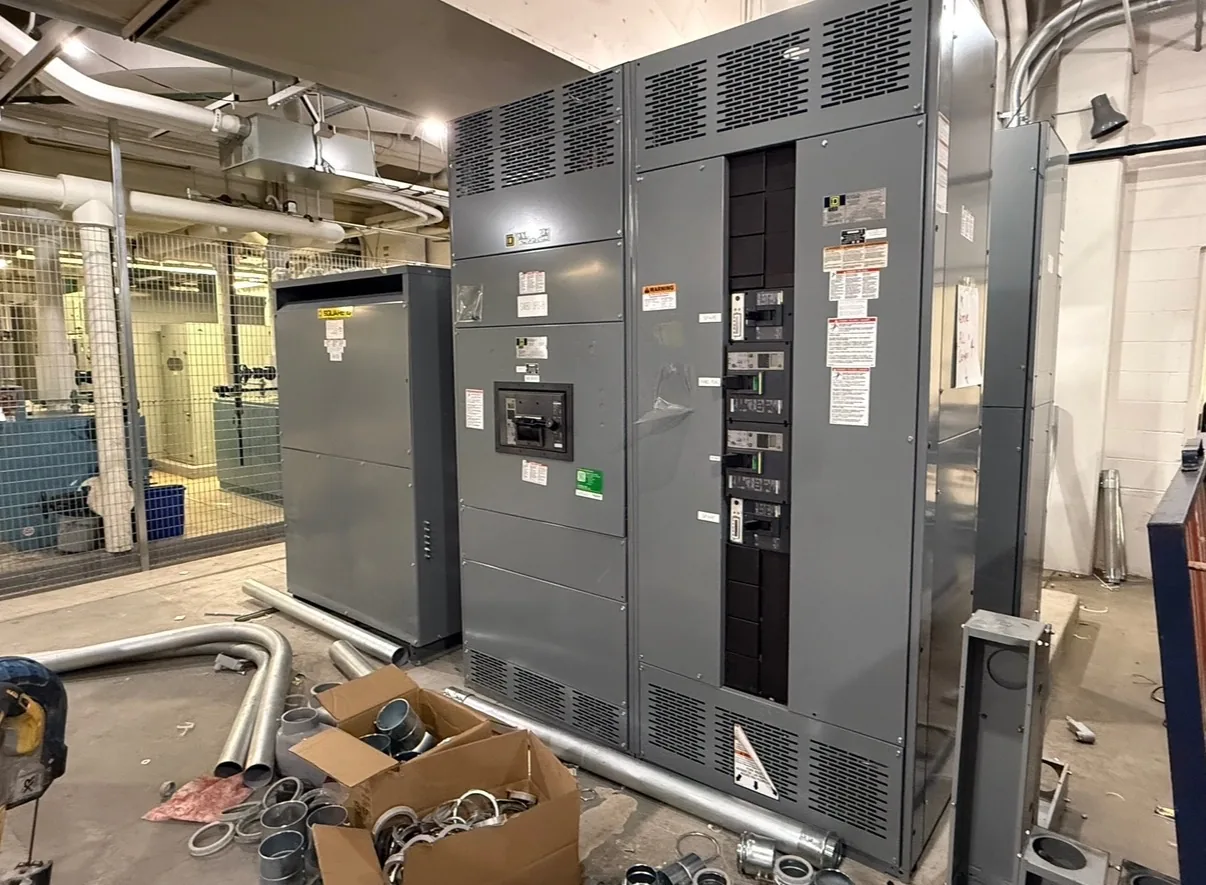
Power distribution, with purpose.
A switchgear project at a Garland industrial site can turn on details that are easy to miss before equipment is specified: which motors must restart first, how long the plant can be offline, and which utility serves the actual parcel. Treat these as early design inputs, not decisions to defer until procurement. The considerations below are intended for project planning; they do not imply a local office, a completed Garland installation, or a guaranteed service territory.
Build the intake around the motor process
For an illustrative Garland plant project, begin with the electrical one-line diagram and a motor schedule that identifies each load’s horsepower, voltage, full-load current, starting method, duty cycle, and required protection. Mark which motors are essential to safe shutdown, which can stop during an outage, and which must restart in a controlled sequence. A feeder design that appears adequate for running current may need a different review when several motors start together or when a process cannot tolerate a long restart.
Also provide the existing gear’s nameplate data and clear photographs of labels where safe and accessible to qualified personnel, along with available fault-current information, grounding arrangement, incoming source details, and known space constraints. Note environmental conditions such as dust, heat, moisture, or corrosive exposure. These inputs help identify whether a new low-voltage switchboard, medium-voltage equipment, or another configuration merits engineering review; voltage class and equipment ratings cannot be selected from a city name alone.
Confirm the parcel’s jurisdiction and utility
Garland mailing addresses do not, by themselves, establish which authority reviews a project or which utility supplies a particular property. Before design assumptions are fixed, verify the parcel boundary and permitting jurisdiction through official City of Garland resources, then confirm the applicable electrical permit path, plan-review requirements, inspection process, and any building or site approvals with the responsible authority. Requirements can depend on the parcel and scope of work, so verify current official guidance rather than relying on a neighboring facility’s experience.
Identify the electric utility from the current bill, service documents, meter information, or direct utility confirmation for that service address. Ask the utility about the service voltage, available fault current, transformer or service changes, metering and protection interfaces, outage request process, and any required review of customer-owned gear. Utility service areas and interconnection requirements should be confirmed for the actual parcel; do not infer them from Garland’s city limits or assume a particular utility based only on a mailing address.


Coordinate plant outages before locking the design
Outage planning should connect the electrical scope to production, maintenance, and safety responsibilities. Establish the permitted shutdown window, advance notice needed by operations, seasonal or shift restrictions, temporary-power expectations, and whether the plant can isolate portions of the system independently. If critical processes depend on uninterrupted power, identify them early and have the facility’s qualified electrical and safety teams determine what continuity measures are appropriate.
A replacement schedule is not just the time to set equipment in place. The project team must account for submittal review, utility coordination, equipment delivery, rigging access, conductor preparation, terminations, testing, and owner acceptance. A mismatch between the planned outage and the actual scope can leave a facility unable to return to service as intended. Agree on who approves switching plans and restoration criteria; do not treat a quote or equipment shipment as a guarantee of installation duration or outage outcome.
Balance feeder protection, starting, and future capacity
Industrial motor feeders require coordination among motor starting characteristics, protective devices, conductors, upstream protection, and the available short-circuit current. Ask the engineer to evaluate starting voltage drop, selective coordination where required, ground-fault protection, and the effect of variable-frequency drives or soft starters on the equipment interfaces. A drive may change feeder protection and harmonic considerations, while across-the-line starting can impose a different demand on the source; neither approach is universally preferable.
Decide whether spare feeder spaces or capacity for planned process expansion justify additional switchboard sections, bus capacity, or a different arrangement. More capacity can increase footprint and cost, while a tightly fitted design may constrain later modifications. Specify system nominal voltage separately from equipment maximum rating, and provide the required continuous current and short-circuit rating for engineering review. Final ratings, component availability, applicable standards, and any U.S.-origin requirements must be confirmed for the specific order.
Prepare a quote handoff that can be reviewed
A useful request for quotation includes the one-line diagram, load and motor schedules, service and utility data, existing-equipment nameplates, site dimensions, cable-entry preferences, environmental conditions, and the desired delivery window. Include the outage target, governing project specifications, required submittals, and the names or roles of the engineer and owner representatives who will review technical questions. If drawings are preliminary, label them clearly and flag open decisions instead of presenting assumptions as approved requirements.
A manufacturer can evaluate a custom new-equipment build from defined inputs and identify questions that affect scope, components, or schedule. UL 891 applies to low-voltage switchboards, not as a general designation for medium-voltage switchgear; ask which standards and documentation apply to the proposed assembly. Shorter lead time may be a project goal, but it is not guaranteed. Confirm lead time, component availability, ratings, and any requested American-component or origin requirements against the final bill of material and order.
Keep the delivery and approval path explicit
For a Garland destination, confirm delivery access and receiving conditions before the equipment configuration is finalized. Share the delivery address with the quoting team through its normal sales process, plus unloading capability, dock or grade-level access, turning or overhead constraints, delivery-hour restrictions, and who will receive and inspect the shipment. These details can affect packaging, section dimensions, shipment planning, and coordination with the facility’s outage schedule. Nationwide shipping capability does not establish that a particular site is accessible or that a delivery date is assured.
Close the handoff by assigning responsibility for technical submittal review, utility questions, permit confirmation, shipping acceptance, and field installation arrangements. The purchaser should verify that the approved drawings match the project’s final electrical design and that the responsible licensed professionals and authorities have addressed installation and inspection requirements. Clear ownership of those decisions helps keep a Garland-area procurement grounded in the parcel’s actual jurisdiction and utility, rather than unverified assumptions.
Specifications & planning
Review the details that matter for your application. Final specifications and availability should be confirmed for your project.
| Evaluation factor | Information to confirm |
|---|---|
| Jurisdiction | Official permit and inspection requirements for the actual parcel |
| Utility interface | Serving utility, service data, fault current, and outage process |
| Motor feeders | Motor schedule, starting method, protection, and restart priorities |
| Delivery and outage | Receiving access, shutdown window, and restoration responsibilities |