Power distribution, with purpose.
An Irving switchgear project serving several buildings is shaped by more than the one-line diagram. Metering boundaries, utility requirements, building-by-building loads, and the route from delivery vehicle to electrical room all affect equipment selection and schedule. This planning guide addresses those decisions for a hypothetical project; it does not imply a local office, completed installation, or guaranteed service territory.
Map Buildings, Loads, and Distribution Boundaries
Start with a site plan showing every building, electrical room, existing source, and proposed connection point. Then establish whether each building will have its own service and main switchboard, or whether a central service will feed distribution equipment across the site. That choice affects feeder quantity and length, metering arrangements, voltage drop, coordination, and how an outage in one area could affect the others. A campus diagram without clear ownership and connection boundaries can conceal major scope gaps.
For each building, provide existing and forecast load information, including major motors, HVAC, process equipment, EV charging, and any planned expansion. Identify demand assumptions, standby generation or other sources, and loads that must remain available during maintenance. The engineer can use those inputs to assess bus and feeder sizing, protective-device coordination, and whether separate sections or distribution paths make operational sense. Avoid sizing from connected load alone when demand, future phases, or operating schedules materially change the expected duty.
Confirm the Parcel’s Authority and Utility Interfaces
Before finalizing a specification, identify the actual parcel, permitting authority, and serving electric utility. Irving projects may require parcel-specific confirmation of which jurisdiction reviews the work and which utility controls service design, metering, and connection requirements. Use official city permitting resources and the utility’s current service-planning materials, then confirm requirements directly for the parcel and project scope. Do not assume a city boundary alone identifies every reviewer or establishes a utility’s approval criteria.
Request the utility’s service voltage, available fault-current information, metering point, approved metering configuration, and any requirements for service disconnects, CT compartments, seals, access, or equipment submittals. Clarify who supplies and installs utility-owned components and who is responsible for customer-owned switchgear interfaces. These details can change enclosure layout, compartment access, bus arrangement, and the information required on drawings. Confirm applicable codes, standards, and review milestones with the authority and utility rather than treating a prior project’s requirements as transferable.


Resolve Metering and Multi-Building Tradeoffs Early
A central service with downstream building feeders may simplify utility metering but can increase feeder length, routing complexity, and the consequence of a central equipment outage. Separate services can improve building-level isolation and accounting, while adding service points, metering coordination, and potentially more utility review. Where tenants or separate operating groups are involved, document who needs revenue-grade or operational submetering and whether readings must be available to a building-management system. Metering requirements should be explicit before compartments and wiring provisions are designed.
Ask the engineer to compare alternatives using the actual one-line diagram, load data, available fault current, and operating priorities. Short-circuit withstand and interrupting ratings, protective-device settings, ground-fault protection, and selective coordination must be evaluated for the specific system and applicable requirements. Keep system nominal voltage distinct from equipment maximum rating, and confirm both for every proposed section and component. If low-voltage switchboards are specified, UL 891 may be relevant; it is not a general listing for medium-voltage equipment. Ratings, standards, component availability, and any U.S.-origin requirements need order-specific confirmation.
Design for Loading-Dock and Electrical-Room Access
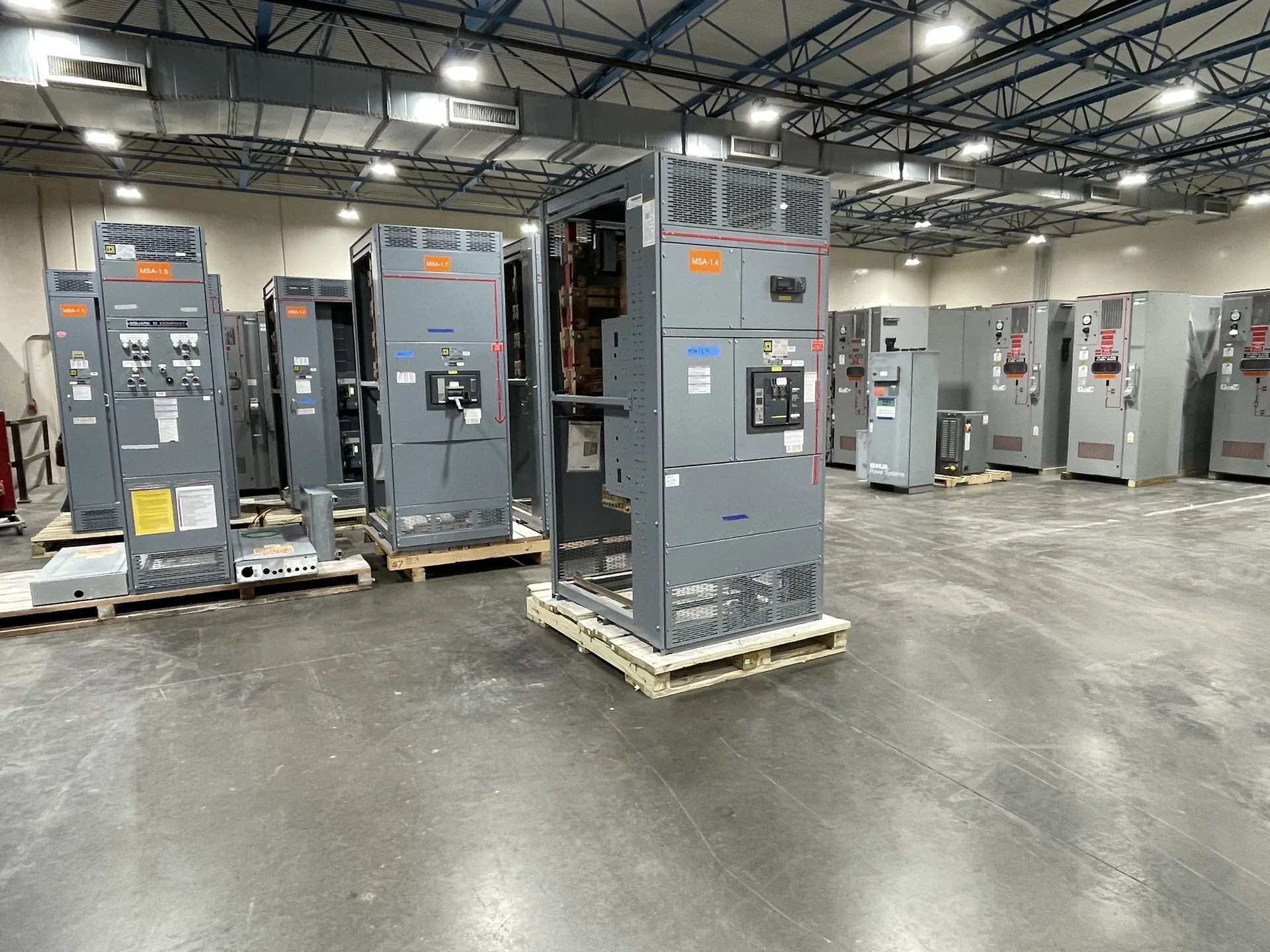
A switchboard that fits the electrical-room plan may still be difficult to deliver. Provide the manufacturer and project team with the delivery entrance, dock or grade-level conditions, truck restrictions, turning and staging limits, elevator details if applicable, and the full path to the final room. Record door, corridor, ceiling, and threshold clearances, plus restrictions on delivery hours or site access. Confirm the largest practical shipping section and handling method with the project’s qualified logistics and installation teams before fixing room dimensions or shipment assumptions.
Sectional construction can help address tight access, but shipping splits introduce field joints and may affect bus connections, alignment, lifting, and reassembly scope. Compare that approach with a larger assembly only after reviewing the route and handling constraints. Also check working clearances, ventilation, cable-entry space, conduit locations, and the ability to remove or service components after installation. Delivery planning is a coordination input, not a promise that a specific truck, dock, or installation method will be available; site restrictions and final handling arrangements must be confirmed for the actual delivery.
Prepare a Quote Package and Clear Handoffs
For a useful new-equipment quote, send the current one-line and site plan, equipment schedule, system voltage, phase and wire details, requested bus and short-circuit ratings, and known utility fault-current data. Include load studies or demand assumptions, metering requirements, protective-device and communications preferences, environmental conditions, enclosure and access constraints, and the project specification. Mark items that are preliminary or awaiting utility confirmation. State the project schedule target and required submittal dates without treating a lead time as guaranteed.
Identify who will answer technical questions, approve drawings, coordinate utility comments, and receive the shipment. The manufacturer can review the requested configuration and discuss a custom build using American components where suitable, with a shorter lead time as a goal rather than a guarantee. Quote review should distinguish included equipment from field connections, utility-furnished items, installation, and commissioning responsibilities; do not assume those services are included. Final ratings, compliance, component availability, origin requirements, and delivery details must be verified against the accepted project documents before an order is released.
Specifications & planning
Review the details that matter for your application. Final specifications and availability should be confirmed for your project.
| Evaluation factor | What to confirm |
|---|---|
| Building distribution | Service boundaries, feeder routes, load assumptions, and future phases |
| Utility metering | Parcel-specific utility rules, meter point, compartments, and responsibilities |
| Electrical ratings | System nominal voltage, equipment rating, fault-current data, and coordination review |
| Delivery access | Route dimensions, staging limits, shipping sections, and handling plan |