Power distribution, with purpose.
A switchgear plan for a hypothetical Plano facility should start with the loads that cannot tolerate an interruption and the space available to serve them. Before requesting a quote, confirm the parcel’s permitting authority and electric utility, then align the one-line diagram, feeder strategy, room layout and delivery constraints. These checks make it easier to compare a new custom-built assembly with the project’s actual requirements without assuming a local office, installation service or fixed service territory.
Identify critical loads and the consequences of an outage
Begin by separating life-safety, process-critical, essential building and ordinary loads. Record each load’s voltage, phase, estimated demand, starting behavior and required continuity, along with whether it is supplied by normal power, standby generation or another source. A medical, data-processing or manufacturing application may prioritize different circuits and transfer arrangements; the equipment schedule and applicable design criteria should establish which loads belong on each bus or section.
For each critical load, define what an interruption means in practice: a brief transfer is acceptable, a controlled shutdown is required, or even a short loss is unacceptable. This distinction affects feeder arrangement, protective-device coordination and whether an alternate source can serve the load under the intended operating conditions. Share known future additions and demand assumptions as well. An undersized basis can force disruptive changes later, while excessive spare capacity can increase footprint and cost without solving a real continuity need.
Choose redundancy that matches operating needs
Redundant feeders are not automatically independent. Two incoming circuits may share an upstream source, route, duct bank or other failure point. The design team should establish where the feeds originate, whether they are normally open or closed, how transfer is controlled, and what operating steps are expected after a fault or maintenance isolation. A second feeder can improve resilience, but only when its source, path and switching arrangement support the intended outcome.
Ask the engineer to document the normal and contingency configurations on the one-line diagram, including tie-breaker positions, interlocks and the loads permitted on each source. Confirm available fault current and protective-device coordination for every relevant configuration; a tie that connects sources can change the short-circuit duty. Equipment voltage class, bus arrangement, ampacity and short-circuit rating must be selected for the actual system and verified for the specific order. Nominal system voltage and equipment maximum rating are related but are not interchangeable labels.


Test electrical-room capacity before equipment is specified
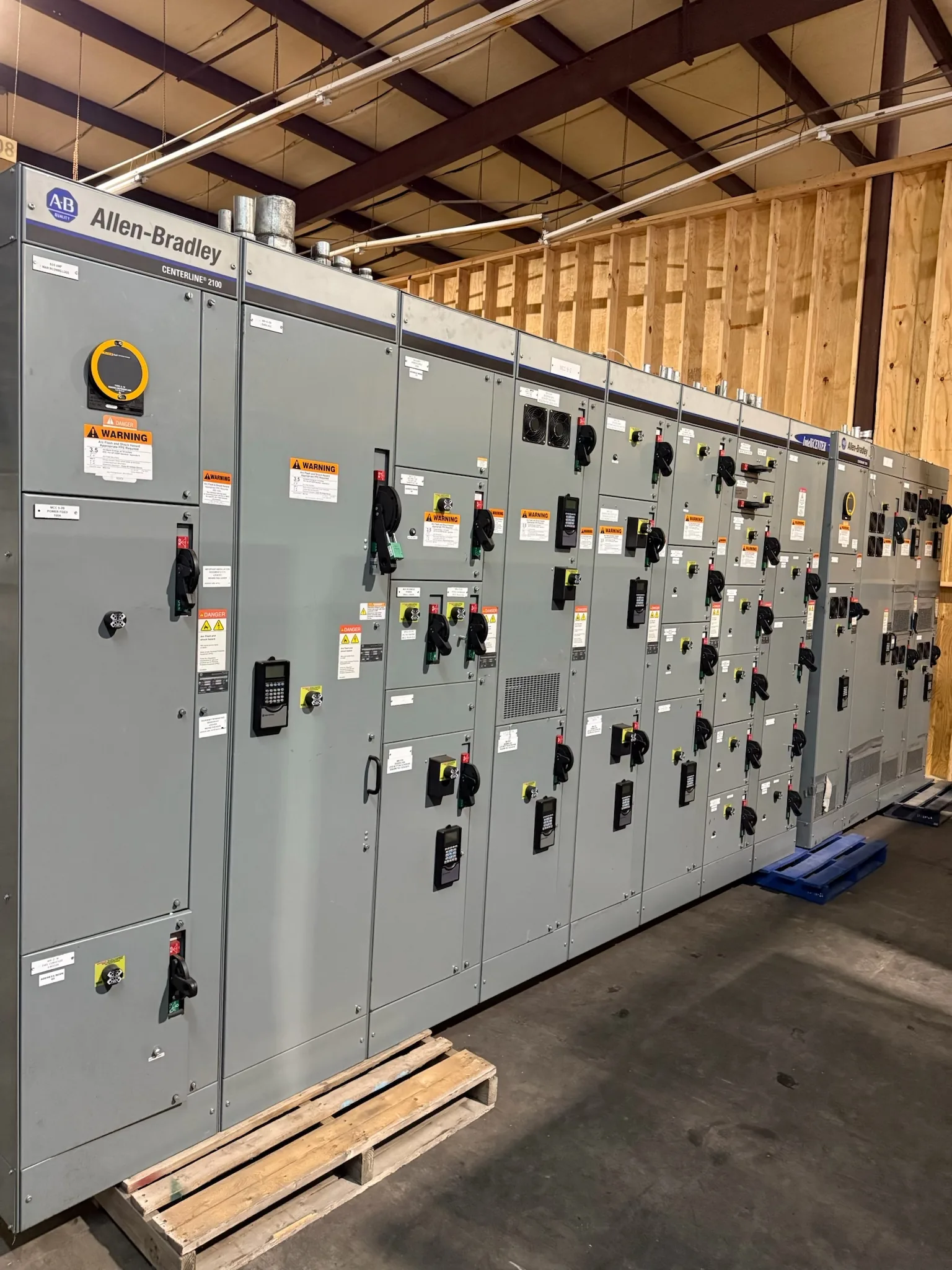
Room capacity is more than the footprint shown on an architectural plan. Compare the proposed lineup dimensions with clear working space, access and egress, door and corridor widths, overhead services, ventilation, cable entry locations and the path for moving equipment into the room. Confirm whether the assembly must be installed in sections and reassembled on site, and whether the building opening and delivery route can accommodate the largest shipping section. These details can constrain layout before a final design is issued.
A compact arrangement may reduce room demands but can make cable routing, maintenance access or future expansion harder. Additional sections or spare spaces may help accommodate planned growth, yet require more wall length and working clearance. Provide current room drawings and dimensions, identify columns and obstructions, and show the intended cable trench, conduit or overhead entry. The design team should verify applicable working-space and access requirements for the actual installation rather than relying on a generic lineup dimension.
Confirm Plano jurisdiction and the serving utility for the parcel
Do not infer permitting jurisdiction from a Plano mailing address. Verify the parcel location and whether the project is within the City of Plano or another authority’s limits, then consult the relevant building-permit resources and current electrical submittal requirements. Permit scope, plan review and inspection processes can depend on the project and property, so confirm them with the authority having jurisdiction before finalizing procurement documents. The city’s official website is a starting point for locating current permit information, not a substitute for parcel-specific confirmation.
Electric service territory also requires parcel-level verification; a city boundary alone does not establish the serving utility. Confirm the utility name, service point, available voltage, metering requirements, fault-current information and any utility-owned equipment interfaces directly with the utility and design team. Ask whether service changes, new capacity or utility review affect the project schedule. Record who owns each interface, because utility requirements can influence incoming sections, metering provisions and the electrical room even when the switchgear supplier does not control those approvals.
Build a quote package that supports a clear handoff
A useful quote request includes the latest one-line diagram, equipment schedule, project specifications, load and feeder data, required voltage and phase, available fault-current information, desired bus and short-circuit ratings, enclosure and environmental conditions, and the planned control and metering interfaces. Include the redundancy sequence, generator or alternate-source details, room drawings, cable-entry preferences and known delivery constraints. Mark items that remain preliminary so they can be reviewed rather than treated as settled requirements.
The manufacturer can review the supplied scope for a new custom build using American components, subject to the particular component’s availability and the project specification. UL 891 applies to low-voltage switchboards where applicable; it is not a general listing for medium-voltage equipment. Request confirmation of the proposed assembly’s applicable standards, ratings, components and any U.S.-origin requirements before award. Shorter lead time may be a goal, not a guarantee, and depends on the finalized design and order-specific supply conditions.
Keep design, purchasing and delivery decisions connected
The quote handoff should identify the engineer of record, purchaser, utility contact and authority having jurisdiction, along with the person authorized to resolve technical exceptions. Track open decisions such as feeder independence, transfer logic, future sections and cable entry alongside the drawing revision used for pricing. A clear revision and approval process reduces the risk that a late change to the room layout or protection scheme is mistaken for the quoted basis.
Before release, reconcile the approved submittal with the one-line, schedules, room access plan and delivery route. Confirm shipping-section dimensions, destination receiving arrangements and the sequence for moving equipment into the building; delivery coordination is distinct from installation, which should be established separately with the project team. For a Plano-area project, these parcel-specific checks are more useful than assuming a nearby office or completed local work. They give the purchaser and supplier a practical basis for discussing scope, schedule and outstanding engineering questions.
Specifications & planning
Review the details that matter for your application. Final specifications and availability should be confirmed for your project.
| Evaluation factor | Information to verify |
|---|---|
| Critical-load continuity | Required interruption tolerance and source arrangement |
| Feeder redundancy | Source independence, routing, transfer logic and fault duty |
| Room capacity | Lineup footprint, access, cable entry and delivery path |
| Local approvals and service | Parcel jurisdiction, permit requirements and serving utility |
| Quote basis | Current drawings, ratings, interfaces and unresolved decisions |