Power distribution, with purpose.
In Dallas–Fort Worth, a project’s utility requirements depend on the exact parcel, service arrangement, and authorities having jurisdiction—not simply the city name or mailing address. Confirm those parties before selecting switchgear or fixing a one-line design. Utility service manuals and project-specific direction can affect the service entrance, metering, protection, and equipment interfaces, so treat early assumptions as provisional until the responsible utility and qualified design professionals verify them.
Start with the parcel, not the city label
A DFW site may be described by a nearby city, an unincorporated area, a development name, or a postal address that does not establish who provides electric service. Municipal boundaries, utility service territories, and permitting jurisdictions are separate questions. Identify the actual parcel using its street address and, when available, parcel or legal description. Ask the property owner, current utility account holder, developer, or local permitting authority for the serving electric utility, then confirm that information directly with the utility before using it as a design basis.
Also determine which authority reviews building and electrical work at that location. A city or county permitting office may have jurisdiction even when its name differs from the address used for the project. Record the utility and authority contacts, the date of confirmation, and any reference documents or correspondence. This simple record helps the owner, electrical engineer, contractor, and equipment supplier work from the same assumptions when a parcel lies near a boundary or a project is divided across multiple addresses.
Use current utility guidance—and request a site-specific answer
After identifying the serving utility, consult its current service requirements, construction standards, metering guidance, and application process. Confirm revision dates and applicability; a document found online may be outdated or intended for a different service type. Published guidance is a starting point, not a substitute for written direction on unusual conditions such as a new service, a capacity change, multiple buildings, a customer-owned transformer, or a proposed service configuration that departs from the utility’s standard arrangement.
For example, a hypothetical warehouse near a DFW municipal boundary could have a mailing address associated with one city while its parcel is served by a different utility and reviewed by another authority. If the project team assumes the nearest utility’s metering arrangement, its switchboard layout may reserve the wrong space or place the service disconnect and metering interface incorrectly. Confirming the parcel, service point, and applicable utility documents before equipment design can prevent redesign; the example is illustrative, not a report of a completed project.


Translate requirements into equipment decisions
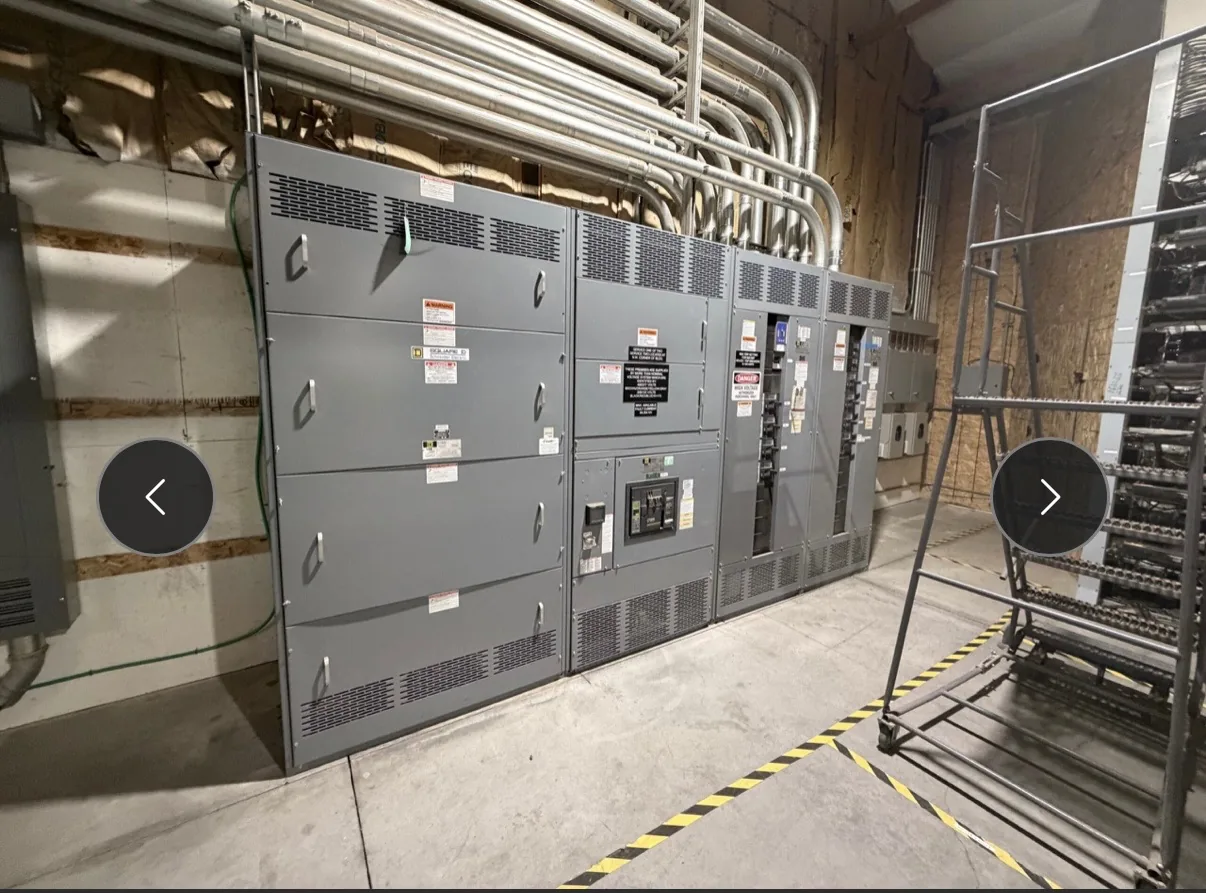
Utility direction can influence the electrical one-line and the division of responsibility at the service point. Resolve the nominal system voltage and phase, service entrance arrangement, metering method and location, transformer ownership, grounding approach, service disconnect requirements, and any utility-access or compartment boundaries with the project engineer and utility. These decisions affect switchboard or switchgear configuration, bus arrangement, incoming and outgoing sections, instrument-transformer provisions, cable entry, physical clearances, and coordination with downstream distribution.
Keep system nominal voltage distinct from an equipment maximum rating, and do not infer a short-circuit rating from voltage alone. Ask the engineer to establish available fault current, required withstand or interrupting ratings, protective-device functions, and coordination assumptions for the actual point of connection. Utility approval of a service concept does not by itself establish that every equipment detail is acceptable, and equipment suitability does not establish utility acceptance. The applicable standards, ratings, components, and any required approvals must be confirmed for the specific order and design.
Gather a usable design and quote package
A useful quote request gives the manufacturer enough information to scope new equipment without treating preliminary assumptions as approved requirements. Provide the project location or parcel identifier, confirmed utility and authority information, current utility documents or written service direction, and the engineer’s latest one-line diagram. Include nominal voltage, phase and wire arrangement, incoming and feeder quantities, load or ampere requirements, available fault current or its status, specified short-circuit rating, metering provisions, protection requirements, and any required enclosure, access, or environmental conditions.
Identify what remains undecided rather than filling gaps with guesses. Note whether the service transformer is utility-owned or customer-owned, where the service point and metering are expected, which party supplies instrument transformers or protective devices, and whether utility review is pending. Attach relevant schedules, drawings, and project specifications, and state the required delivery destination and target schedule. Complete information supports a more meaningful equipment review; it does not guarantee component availability, a particular lead time, a price, or acceptance by a utility or authority.
Bring in qualified professionals before design is fixed
Engage the electrical engineer of record and the serving utility early enough to resolve service and protection questions before procurement documents are frozen. The engineer should interpret utility criteria, develop or verify the one-line, assess fault-current and coordination requirements, and identify code and authority obligations. The contractor or electrical professional responsible for the service should confirm constructability and interface conditions. The utility determines its service requirements, while the authority having jurisdiction interprets and enforces applicable permitting requirements; a manufacturer can review equipment scope but cannot replace those decisions.
A switchgear manufacturer can help translate an established design basis into a proposed new assembly, clarify available configuration choices, and identify information needed to proceed. The manufacturer discussed here builds and supplies new equipment, including custom builds using American components, with shorter lead time as a goal rather than a guarantee. UL 891 applies to low-voltage switchboards where applicable; it is not a general listing for medium-voltage switchgear. Confirm the requested construction, component availability, standards, ratings, and any U.S.-origin requirements for each order, and obtain utility and professional review before relying on a final configuration.
Specifications & planning
Review the details that matter for your application. Final specifications and availability should be confirmed for your project.
| Evaluation factor | What to verify |
|---|---|
| Parcel and service provider | Exact parcel identity and serving electric utility, confirmed directly |
| Jurisdiction | Permitting authority and applicable current requirements |
| Service design basis | Nominal voltage, service point, metering, ownership, and grounding; subject to engineering and utility review |
| Equipment scope | One-line, fault-current basis, ratings, interfaces, and unresolved items before quote |