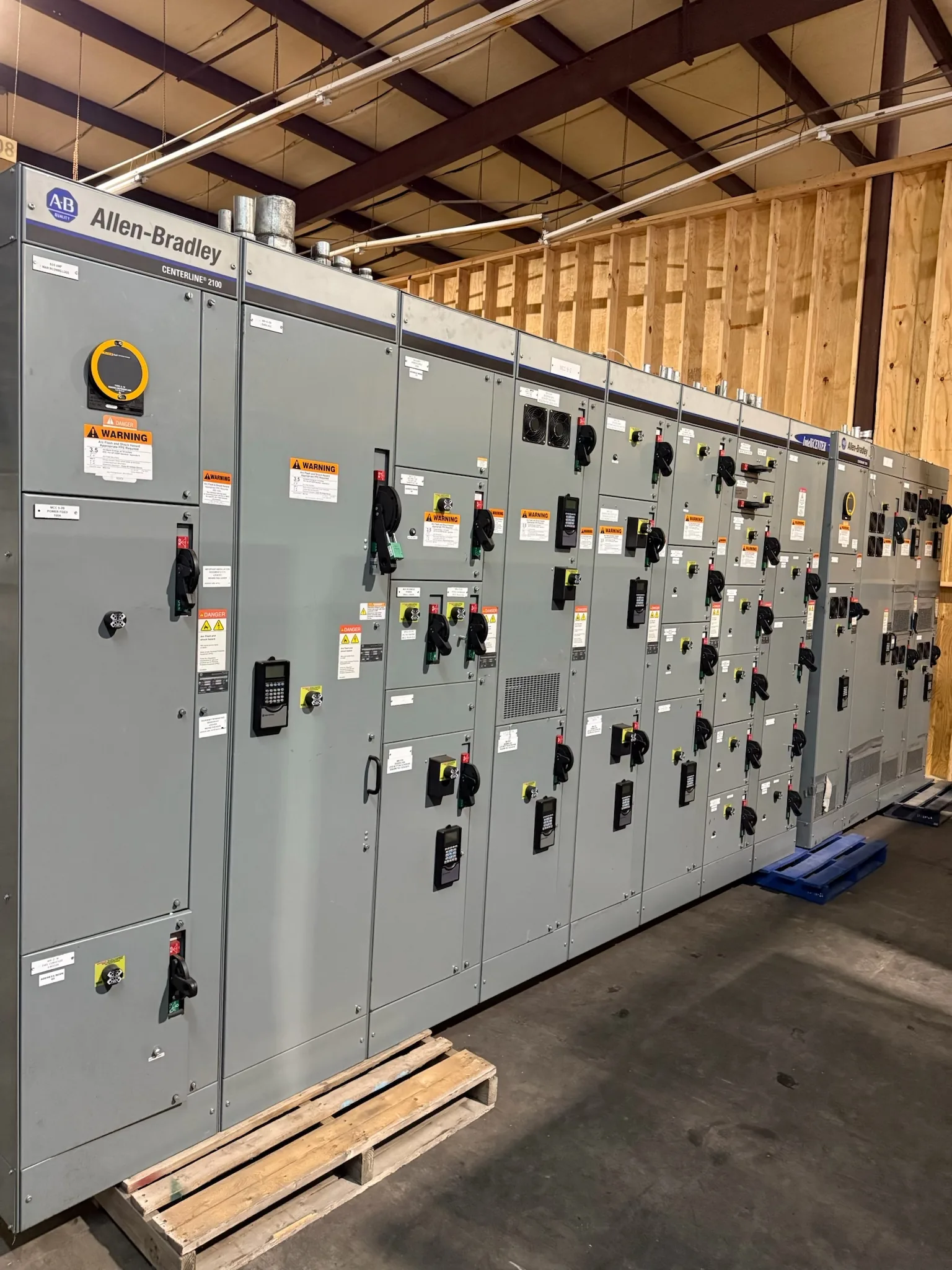
Power distribution, with purpose.
Choosing a switchgear voltage class starts with the electrical system, not a catalog label. The system’s nominal voltage describes its intended operating level; the equipment’s rated maximum voltage and insulation capabilities must also suit the system and its conditions. Grounding, fault exposure and connected equipment all affect the decision. A qualified electrical professional should confirm the design before a new assembly is specified or ordered.
Separate system voltage from equipment rating
Nominal voltage is the familiar system designation, such as 480Y/277 V or 13.8 kV. It identifies the system’s intended voltage and, where applicable, the relationship between phase-to-phase and phase-to-ground voltage. Equipment ratings are separate: a switchgear assembly and its internal devices have defined voltage and insulation limits. A product described by a nominal system level is not necessarily rated only to that exact number, and a higher maximum rating does not by itself establish suitability for every system at a lower nominal voltage.
Specify both the system and the equipment requirements rather than asking only for “480-volt gear” or “15-kV gear.” The appropriate equipment class, interrupting capability, insulation level and component ratings depend on the design and applicable standards. In medium-voltage contexts, 5 kV, 15 kV, 27 kV and 35 kV commonly refer to equipment classes; they should not be treated as interchangeable with system nominal voltage. UL 891 applies to low-voltage switchboards, not as a general listing for medium-voltage switchgear.
Grounding changes the voltage stress
Grounding method affects the voltage that phases and insulation may experience during normal operation and a ground fault. A solidly grounded system, a resistance-grounded system and an ungrounded system can behave differently during a single line-to-ground event. The neutral arrangement and grounding method therefore matter when establishing insulation requirements, selecting voltage transformers or surge protection, and coordinating protection. A nominal voltage alone does not reveal those conditions.
Provide the system grounding description and any known ground-fault assumptions to the engineer and equipment manufacturer. If the grounding arrangement is changing, or if the available information is incomplete, do not assume existing switchgear ratings remain appropriate. Grounding choices can influence protective-device settings, fault-current behavior and the interface with upstream and downstream equipment. Those relationships require engineering review, not a voltage-class lookup in isolation.


Check insulation and operating conditions
Insulation selection must account for the equipment’s rated maximum voltage and the specified dielectric withstand requirements. Depending on the system, design review may also consider lightning and switching surges, altitude, contamination, moisture, temperature and the installation environment. These factors can affect insulation coordination and the suitability of particular components or construction details. A rating that appears adequate from nominal voltage alone may not address the project’s actual exposure.
For a medium-voltage application, clarify the required insulation level and the standards basis with the responsible electrical engineer. For low-voltage equipment, confirm the applicable assembly type and ratings rather than assuming a voltage class establishes short-circuit performance or construction. Ratings, standards, component availability and any U.S.-origin requirements must be confirmed for the specific order. No general equipment description can establish those details for an unreviewed project.
Example: a nominal voltage is only the starting point
Consider a hypothetical facility supplied by a 13.8-kV nominal system. That figure is useful, but it does not finish the selection. The design team still needs to confirm the system’s maximum operating conditions, grounding method, required equipment class and insulation level, available fault current, protective-device coordination and connection details. If a transformer or utility interface changes the system arrangement, the receiving equipment’s requirements may change as well.
The example does not establish that a particular 15-kV-class assembly is suitable. The engineer must verify the applicable equipment ratings and system conditions, including how the equipment connects to the source and downstream loads. For a 480Y/277-V low-voltage system, the same discipline applies: distinguish nominal voltage from assembly and component ratings, and verify short-circuit requirements and the applicable product standard. The final specification—not a simplified example—controls.
Coordinate voltage class with the full design
Voltage class is linked to more than insulation. Confirm bus configuration, continuous current, short-circuit ratings, protective devices, metering, control power, cable or busway terminations, enclosure requirements and the physical arrangement. The selected equipment must interface with upstream protection and downstream loads, and it must fit the project’s one-line diagram and operating plan. A voltage class that is correct in isolation can still lead to a mismatch if the connected components or protection scheme are not coordinated.
A purchaser seeking a new custom-built assembly should provide the latest one-line diagram, system nominal voltage, grounding information, available fault-current data and the engineer’s specified equipment ratings. Include source and load connections, device and metering requirements, enclosure or environmental conditions, dimensional constraints, applicable standards, delivery destination and any documented origin requirements. The manufacturer can review the requested configuration and component availability; engineering approval remains essential where design decisions affect safety or system performance.
When to involve a qualified professional
Engage a qualified electrical engineer or other responsible design professional early, especially when the system voltage is changing, grounding is uncertain, fault-current data are unavailable, or existing equipment is being replaced. The professional should establish the design basis and confirm equipment ratings, insulation coordination and protection requirements. A manufacturer can clarify product configuration and identify information needed to evaluate a quote, but should not be treated as a substitute for project engineering or field verification.
For projects in Dallas–Fort Worth or elsewhere, the same technical checks apply; shipping destination does not determine the correct voltage class. New equipment can be built to a reviewed specification, with shorter lead time a goal rather than a guarantee. Confirm the exact ratings, standards, components and any U.S.-origin requirements for the order. Do not rely on a voltage label alone, and leave installation and energized work to appropriately qualified professionals following the project’s safety procedures.
Specifications & planning
Review the details that matter for your application. Final specifications and availability should be confirmed for your project.
| Evaluation factor | Information to confirm |
|---|---|
| System voltage | Nominal voltage and maximum operating conditions |
| Grounding | Grounding method and neutral arrangement |
| Insulation | Required withstand level and environmental conditions |
| Protection and interfaces | Available fault current, protective devices and connection requirements |