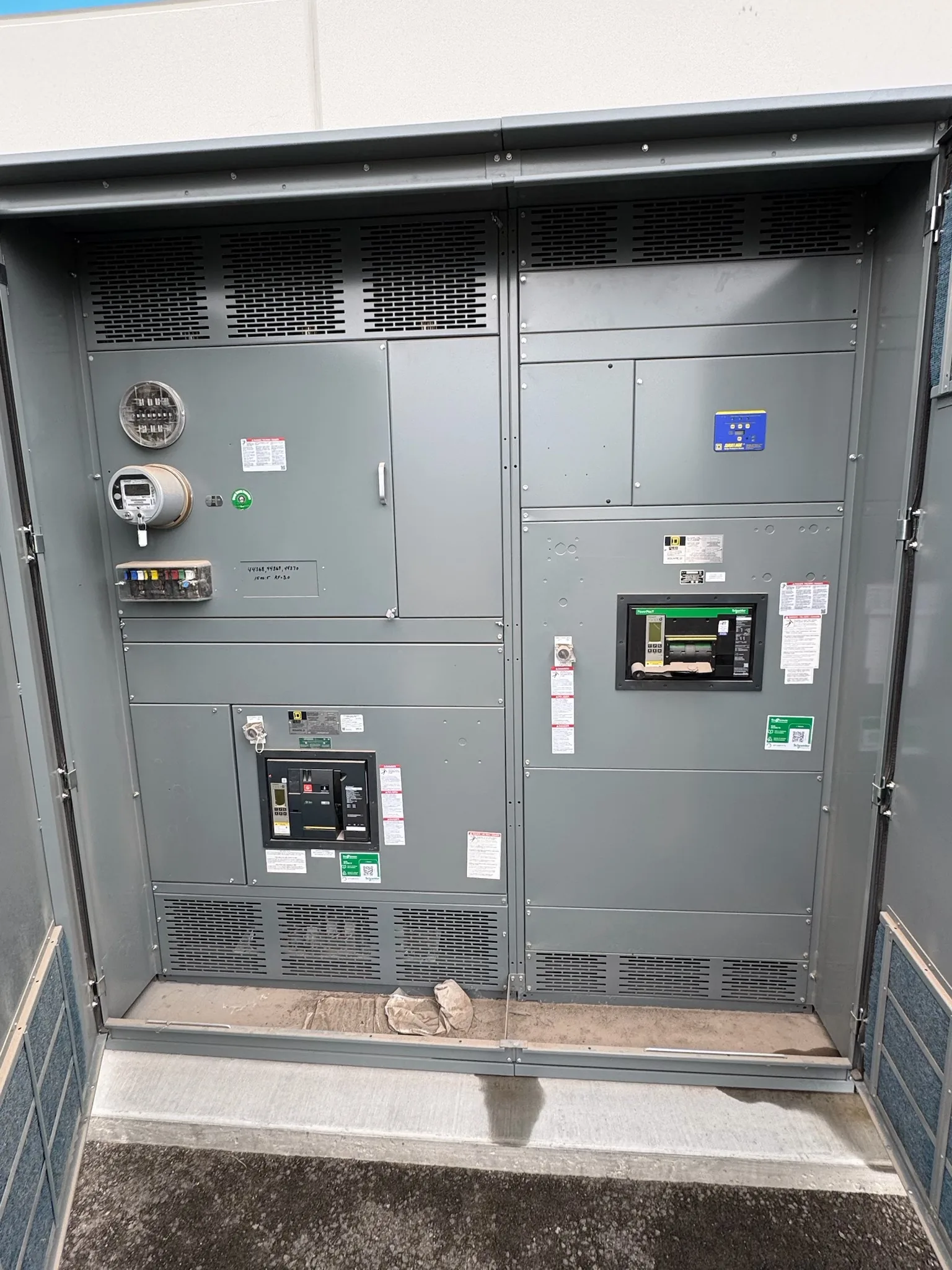
Power distribution, with purpose.
A useful switchgear quote starts with enough project information to define the electrical duty, physical arrangement, and required functions—not just a voltage and ampere rating. If some details are still under study, identify what is confirmed, what is provisional, and who can resolve open engineering questions. That lets a manufacturer assess the request without treating assumptions as final design requirements.
Start with drawings and the intended application
Send the latest one-line diagram, even if it is marked preliminary, and identify its revision date. Include available switchboard or switchgear elevations, room layouts, equipment schedules, and relevant specifications. A one-line diagram shows how sources, transformers, buses, feeders, and loads connect; it can reveal whether the request is for a service entrance, distribution lineup, tie section, or another arrangement. Mark known changes so an older drawing is not mistaken for the current design.
State what the equipment will serve and how it must operate. For example, a facility may need two incoming sources with a bus tie, while another needs a single service feeding several distribution sections. Clarify whether sources are utility, generator, transformer, or a combination, and describe any normal and alternate operating conditions. If the project is in Dallas–Fort Worth or elsewhere, location can help frame shipping and coordination questions, but it does not replace electrical design information.
Define voltage, current, and available fault duty
Specify the system’s nominal voltage and frequency, grounding arrangement, and number of phases and wires. Keep nominal system voltage distinct from the equipment’s maximum voltage rating; those values are related but are not interchangeable. State the continuous current required for the main bus and each relevant feeder, along with anticipated load or demand information when available. If a transformer or source is changing, identify its proposed size and impedance rather than relying on an existing rating.
Provide the available short-circuit current at the equipment location and the basis for that value, such as a utility study or project fault-current analysis. Also identify protective-device clearing assumptions or coordination requirements if they are specified. Fault duty cannot safely be inferred from bus amperes alone. If the study is incomplete, say so and request engineering review before selecting a short-circuit rating. Final ratings and component availability must be confirmed for the specific order; quoted assumptions should not be treated as approved design.


Describe devices, protection, and control behavior
Identify the incoming and outgoing devices by function, quantity, and required trip or switching features. Where known, provide breaker or fuse preferences, frame or sensor information, trip functions, metering, ground-fault protection, and any specified coordination constraints. A feeder schedule with load descriptions and device requirements is more useful than a total circuit count alone. Note spare provisions separately from populated circuits so the quote can distinguish installed devices from space reserved for future work.
Explain the control sequence in plain language, especially for multiple sources, transfer functions, or bus ties. State whether operation is manual or automatic, what conditions permit a transfer, and which interlocks or alarms are required. List control power source and voltage, communications protocols or points, indicating lights, and remote signals if those interfaces matter. A sequence narrative or control schematic can expose missing assumptions early; unresolved logic should be referred to the project engineer rather than guessed during equipment selection.
Set enclosure, environment, and physical boundaries
Give the required enclosure type or environmental protection level if the specification establishes one, and describe the installation environment: indoor or outdoor, ambient conditions, dust or moisture exposure, and any corrosive or unusual conditions. State the required cable entry direction and whether conductors enter from above, below, or both. Include conductor material, approximate sizes, and termination preferences when known, since termination space and bending room can affect the section arrangement.
Provide the maximum available lineup length, height, and depth, plus working-space limits, access routes, floor or housekeeping-pad details, and door or aisle clearances. Identify nearby walls, columns, existing equipment, overhead obstructions, and any restrictions on moving sections into the room. These constraints can change the number and width of sections or the shipping configuration. Do not assume that a nominal enclosure dimension proves the assembly will fit; compare the proposed outline drawing with field-verified measurements and applicable clearance requirements.
Use a realistic example and flag open decisions
As an example only, imagine a purchaser requesting a new low-voltage distribution lineup for a commercial building. A useful preliminary package might include a one-line diagram, service nominal voltage, main and feeder continuous-current requirements, available fault-current study, feeder schedule, metering needs, and room dimensions. It would also identify source and tie operation, cable entry, environment, and the desired delivery window. This example is not a recommended rating or a representation of a completed project; engineering review must determine the actual design.
If the package lacks a final fault study, confirmed utility data, or a settled control sequence, label each item as pending and name the responsible project contact or discipline. Separate mandatory requirements from preferences, such as a preferred device family or an optional communications feature. This helps compare proposals on equivalent scope and prevents an early budget quote from being mistaken for a released-for-construction design. A manufacturer can build custom new equipment and aim for a shorter lead time, but schedule depends on approved design, component availability, and order-specific requirements.
Bring qualified engineering into the right decisions
A licensed or otherwise qualified electrical professional should establish or validate system ratings, fault-current calculations, protection and coordination, grounding, transfer logic, and code or specification requirements. Engage that professional when source conditions are uncertain, when existing equipment is being replaced, or when the proposed lineup affects life-safety, emergency, or critical loads. The quote process can identify missing inputs, but it does not substitute for the project’s engineering authority or required approvals.
Before an order is finalized, confirm the scope, drawing revisions, ratings, short-circuit capability, device selections, enclosure details, interfaces, applicable standards, and any U.S.-origin requirements that apply to the project. UL 891 may be relevant to low-voltage switchboard assemblies where specified, but it is not a general designation for medium-voltage equipment. For any requested construction, listing, or standard, obtain order-specific confirmation rather than assuming it applies universally. A complete request makes review more precise while leaving final technical acceptance with the responsible project professionals.
Specifications & planning
Review the details that matter for your application. Final specifications and availability should be confirmed for your project.
| Evaluation factor | Information to provide |
|---|---|
| Electrical basis | Nominal voltage, frequency, phase and grounding arrangement |
| Fault duty | Available short-circuit current and study or source basis; confirm by engineering review |
| Functional scope | Incoming and feeder devices, protection, metering, controls, and operating sequence |
| Physical fit | Verified space limits, cable entry, access route, environment, and termination constraints |