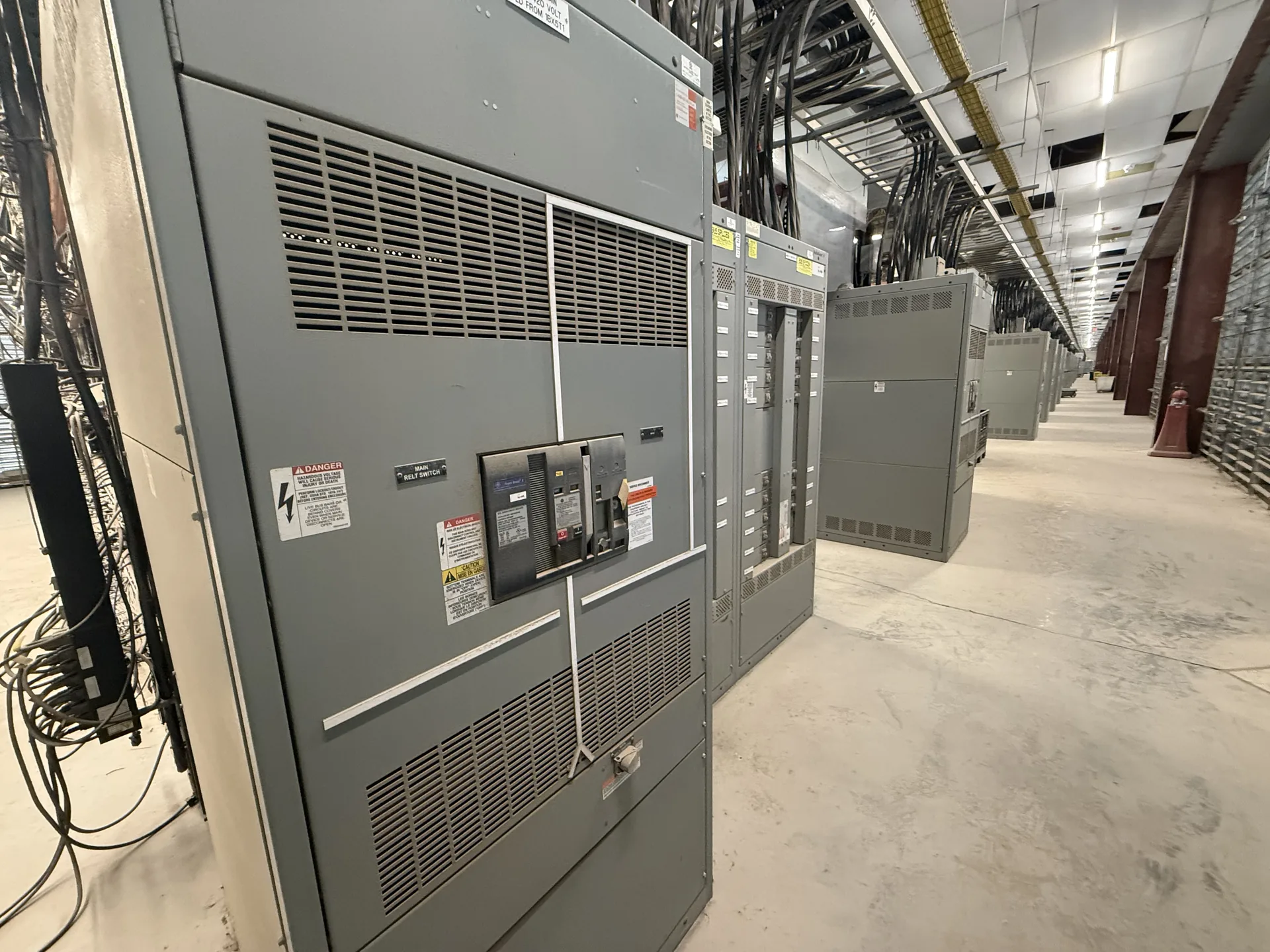
Power distribution, with purpose.
SCCR, or short-circuit current rating, describes the fault current an electrical assembly can withstand under specified conditions. It is not interchangeable with a circuit breaker’s interrupting rating or the available fault current at the installation point. Keeping these three values distinct helps purchasers and design professionals identify equipment that is appropriate for a project and avoid relying on a component rating that does not establish the capability of the complete assembly.
What the assembly SCCR tells you
An assembly SCCR is the short-circuit current level the assembled equipment is rated to withstand, subject to its specified voltage, configuration, protective devices and applicable evaluation. For a low-voltage switchboard, the rating concerns the assembly as a coordinated whole—not simply the strongest-looking component installed in it. A switchboard’s bus, supports, connections and protective-device arrangement all matter to its short-circuit performance.
The SCCR is meaningful only alongside its conditions of use. A stated value may depend on the exact breaker type, fuse selection, current-limiting characteristics or other design details identified for the assembly. Substituting a different protective device or altering the arrangement can affect whether the documented rating still applies. Confirm the rating and any conditions against project documents and the equipment information supplied for the specific order.
SCCR, breaker interrupting rating and available fault current
A breaker’s interrupting rating indicates the fault current that breaker can interrupt at a specified voltage under its applicable conditions. That rating does not, by itself, establish the SCCR of the switchboard containing it. The assembly rating depends on the breaker’s role within the complete design and the coordination or testing basis for that particular combination. A high interrupting rating on one breaker therefore should not be treated as proof of an equally high rating for the entire assembly.
Available fault current is the prospective current that the electrical system could deliver at a particular point during a fault. It is determined from the source and distribution system, including such factors as transformer characteristics, conductor impedance and upstream equipment. The design professional compares this calculated or otherwise established value with the equipment rating at the relevant voltage and location. The equipment’s applicable rating must not be lower than the available fault current required for the installation.


A practical example of the comparison
Consider a hypothetical low-voltage switchboard location where an engineer determines that the available fault current is 42 kA at the equipment’s nominal system voltage. If the proposed assembly’s applicable SCCR is 35 kA, that comparison flags a mismatch for engineering resolution; the breaker’s interrupting rating alone does not eliminate it. The figures are illustrative only and do not describe a product offering or a completed project.
The next step is not to select a higher number in isolation. The engineer may review the system calculation, source or transformer assumptions, protective-device coordination and the equipment configuration. A revised design could involve different equipment or a documented protective arrangement, but its suitability depends on the specific system and applicable requirements. Any revised rating and its conditions must be confirmed for the actual assembly and order.
Design choices and interface details that affect SCCR
SCCR decisions can influence the switchboard’s main and feeder protective devices, bus arrangement, compartment configuration and coordination with upstream equipment. The required voltage also matters: nominal system voltage and equipment maximum rating are related but distinct specification details, and short-circuit capability must be evaluated at the applicable voltage. Changes to the one-line diagram, source configuration or feeder protection can change the fault-current conditions or the design basis.
These choices involve tradeoffs. A design change intended to achieve a required short-circuit capability can affect selectivity, coordination, component availability, footprint or the project schedule. Current-limiting devices or series-rated combinations, where considered, require careful verification under their specific conditions; they are not blanket substitutes for checking assembly SCCR. UL 891 applies to low-voltage switchboards, not medium-voltage switchgear, and does not establish that every possible configuration is suitable for every project.
What to provide when requesting a new switchboard quote
For a useful quote, provide the one-line diagram and identify the nominal voltage, phase and wire arrangement, frequency, service entrance status, main and feeder requirements, and installation environment. Include the available fault current at the proposed equipment location, its calculation basis if available, and any required assembly SCCR or short-circuit rating. Share the specified protective-device types and ratings, upstream protection information, project standards and any required documentation or submittals.
Also identify the required lineup arrangement, incoming and outgoing connections, metering or control needs, dimensions or site constraints, and requested delivery timing. These details help establish whether the proposed configuration can be evaluated and whether component availability or a design change needs discussion. The manufacturer builds and supplies new equipment and can review project requirements for a custom build; shorter lead time may be a goal, not a guarantee. Ratings, components, standards, UL 891 applicability and any U.S.-origin requirements must be confirmed for the specific order.
When to involve a qualified professional
Engage a qualified electrical engineer or other professional responsible for the system design when available fault current is unknown, the source or transformer is changing, multiple protective devices must coordinate, or the specified assembly rating appears below the calculated fault current. A professional should also resolve discrepancies among the one-line diagram, equipment schedule and protective-device specifications before procurement. These are design questions, not matters to settle by comparing catalog numbers alone.
This is particularly important on retrofit and expansion work, where an added source or upstream change may alter fault current at existing equipment. In Dallas–Fort Worth or elsewhere, the same principle applies: verify conditions at the actual installation point and coordinate the selected equipment with the project’s responsible professionals. Do not open or work on energized switchgear to obtain information; use approved project records and have any field verification performed by qualified personnel under applicable safety procedures.
Specifications & planning
Review the details that matter for your application. Final specifications and availability should be confirmed for your project.
| Evaluation factor | What to verify |
|---|---|
| Available fault current | Value and basis at the equipment location |
| Assembly SCCR | Applicable rating, voltage and configuration conditions |
| Breaker interrupting rating | Rating at specified voltage; not a substitute for assembly SCCR |
| Protective-device arrangement | Exact device types and any documented coordination conditions |