Power distribution, with purpose.
UL 891 and UL 1558 address different types of low-voltage distribution assemblies. The practical distinction is not simply a label or a presumed level of protection: it affects breaker construction, compartmentation, maintenance choices, and how the equipment must be specified. Confirm the standard and listing for the exact assembly offered, rather than assuming that a product’s description establishes compliance.
The standards cover different assembly types
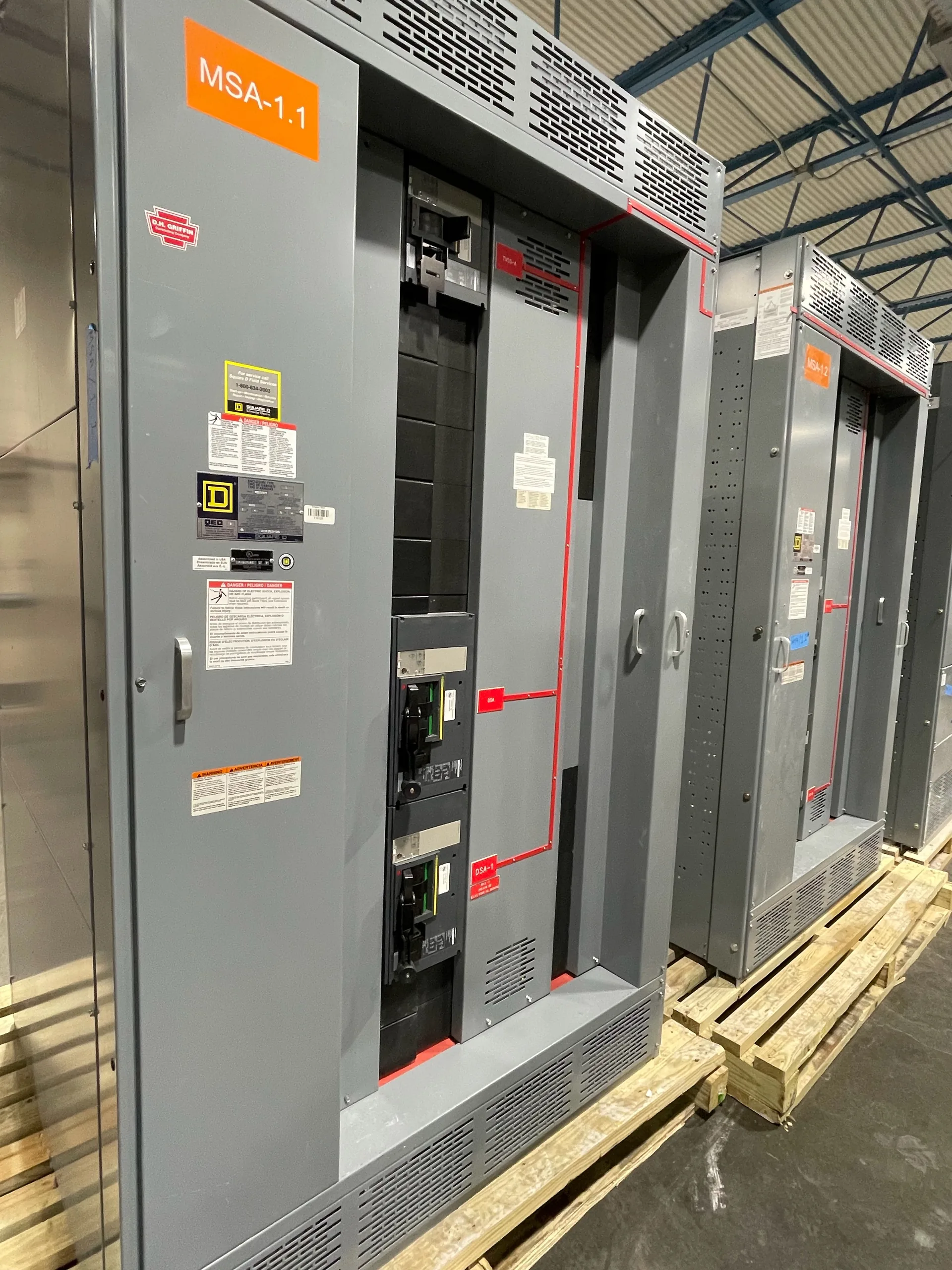
UL 891 applies to low-voltage switchboards. A switchboard commonly groups incoming and feeder devices, bus, and associated control or metering components in an assembly arranged for the project. Depending on its design, it may use molded-case circuit breakers, insulated-case breakers, or other permitted devices. The applicable design and construction details depend on the specific assembly; the standard name alone does not tell you its exact breaker type or features.
UL 1558 applies to metal-enclosed low-voltage power circuit breaker switchgear. A typical distinction is its use of power circuit breakers in individual compartments, with a drawout arrangement often specified to support removal or replacement without dismantling the entire assembly. The exact construction and functions still vary by design. Neither standard is a universal measure of quality, nor does the standard number by itself establish that a particular assembly is listed.
How the choice changes operation and maintenance
A switchboard may suit a distribution plan that prioritizes a compact lineup and a particular mix of feeder devices. A UL 1558 design may be considered when the owner’s operating plan calls for compartmented power circuit breakers and drawout handling. These are starting points for evaluation, not blanket recommendations: available fault-current duty, continuity requirements, electrical room space, operating procedures, and maintenance resources can change the preferred choice.
Compare the consequences of servicing and replacing a device, not just the initial lineup footprint. Drawout construction can support a different maintenance approach, but it does not eliminate the need for qualified personnel, appropriate isolation, and the manufacturer’s instructions. A switchboard may offer a different balance of access, configuration, and space. The engineer and owner should assess operating risk and maintenance practices for the specific installation.


Example: the same building need can lead to either
Consider a hypothetical commercial facility with a low-voltage service entrance and several large feeders. If the design team selects a switchboard, it could specify a UL 891 assembly with feeder devices suited to the load schedule and available fault current. If the owner instead needs power circuit breakers in separate compartments and a drawout maintenance approach, the team could evaluate UL 1558 switchgear. This example describes design options only; it is not a completed project or a claim about a particular product.
The decision should follow the one-line diagram, utility and transformer data, protection study, and owner’s operational criteria. Also check how the assembly interfaces with upstream protection, downstream equipment, grounding, metering, and any transfer or control scheme. A change from one standard to the other can affect lineup dimensions, cable entry, bus arrangement, breaker coordination, and procurement scope, so it should be resolved before drawings and bids are finalized.
Verify the actual listing and project ratings
Ask the supplier to identify the applicable standard for the proposed assembly and provide documentation that substantiates any claimed listing for that exact configuration. Do not infer listing from a component label, a general product description, or the fact that a design resembles equipment built to a standard. Review the assembly scope, options, and any exceptions with the responsible engineer and the relevant authority having jurisdiction.
Specify nominal system voltage separately from the equipment’s maximum voltage rating. Establish continuous current, short-circuit rating, incoming and feeder device requirements, and any required withstand or coordination criteria using project data. Confirm standards, ratings, component availability, and any U.S.-origin requirements for the specific order. UL 891 is a low-voltage switchboard standard; it should not be presented as the standard for medium-voltage classes such as 5 kV, 15 kV, 27 kV, or 35 kV.
Information to provide for a useful quotation
For a quote, provide the latest one-line diagram, system nominal voltage and grounding arrangement, available fault current or study basis, main and feeder ratings, and the required short-circuit duty. Include load schedules, incoming source details, cable or bus connections, enclosure and environmental conditions, and the desired metering, relaying, controls, and communications. State whether the specification requires UL 891 or UL 1558 and attach the project specification so deviations can be identified.
Also share room dimensions, access and cable-entry constraints, lineup arrangement, owner preferences for breaker operation and maintenance, delivery destination, and requested schedule. A manufacturer that builds new custom equipment can use these details to assess a configuration and work toward a shorter lead time, but timing and component availability must be confirmed for the order. Customers in Dallas–Fort Worth and elsewhere should submit the same engineering basis; service to a region does not establish a local manufacturing facility.
Engage qualified professionals before locking the specification
Have a qualified electrical engineer determine the required equipment type, ratings, and protection approach, and coordinate the design with the utility, owner, and authority having jurisdiction as applicable. A switchboard-versus-switchgear decision can affect safety, maintainability, cost, and schedule. It should not be made solely from a catalog phrase or an assumed hierarchy between UL 891 and UL 1558.
A manufacturer can review the requested scope and confirm what it can build, document, and supply as new equipment, including whether the proposed assembly’s standard and listing meet the project requirements. Treat that confirmation as specific to the quoted configuration. Final acceptance depends on verified documentation and project review, not on a general statement that equipment is “UL 891” or “UL 1558.”
Specifications & planning
Review the details that matter for your application. Final specifications and availability should be confirmed for your project.
| Evaluation factor | UL 891 direction |
|---|---|
| Assembly category | Low-voltage switchboard |
| Breaker approach | Device type depends on specified design |
| Decision inputs | Layout, feeder needs, ratings, and maintenance plan |
| Verification | Confirm standard and listing for exact assembly |