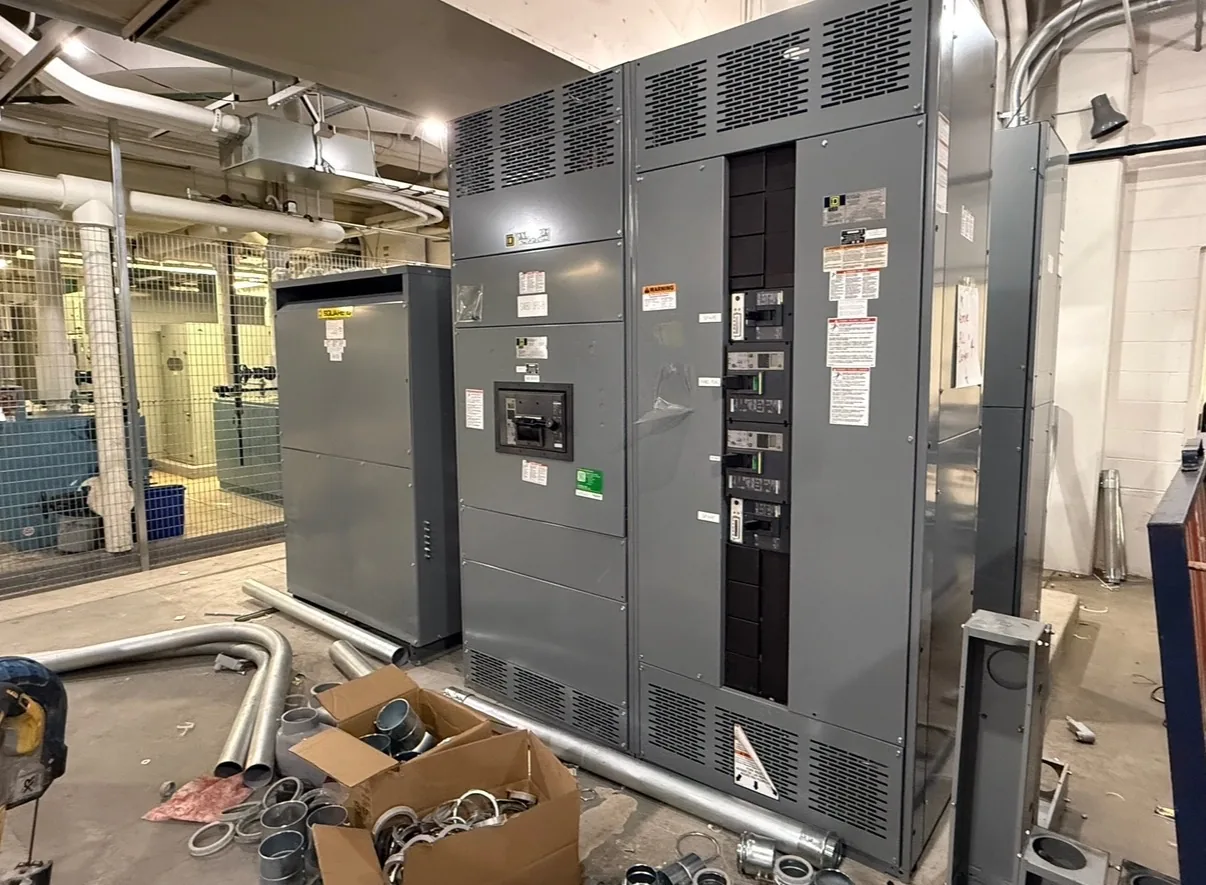
Power distribution, with purpose.
Primary-selective distribution provides a way to transfer a downstream load between two primary sources when the normal source is unavailable. Its value depends on the actual utility arrangement, switching sequence, protection coordination, and the ability to isolate equipment for maintenance—not simply on having two incoming feeders. The architecture must be designed around the service provider’s requirements and the facility’s operating priorities.
Trace both sources to the transfer point
In a typical arrangement, two medium-voltage sources feed a primary switching assembly, with one source designated normal and the other alternate. The sources may come from separate utility circuits, separate sections of a utility system, or another arrangement approved by the serving utility. A transfer device changes which source supplies the downstream transformer or distribution system. Two cables or two source labels alone do not establish independent supply: upstream common equipment, shared routes, or utility switching constraints can limit the benefit.
Before selecting an architecture, provide the source one-line diagrams and utility service requirements, nominal system voltage, available fault-current data at each source, grounding method, transformer information, connected and future load, and the consequences of a brief interruption. Also identify whether transfer must be open transition, with the first source disconnected before the second closes, or whether another sequence is permitted. Utility approval and protection coordination can rule out an otherwise attractive arrangement.
Define normal operation and transfer logic
The design documents should state the normal operating position of every source and tie device, what condition initiates transfer, and how the alternate source is confirmed acceptable. A control scheme may use source-voltage sensing, protective relays, interlocks, and operator controls, but sensing and logic must reflect the utility’s scheme and the facility’s load tolerance. An open-transition sequence avoids intentionally paralleling the sources, though the interruption can affect motors, controls, and process loads.
The specification should address automatic versus manual transfer, transfer delays, retransfer policy, loss of control power, local and remote indications, and what happens if neither source is healthy. Interlocking must prevent an unauthorized or unintended connection between sources. Settings and operating procedures are project-specific matters for qualified protection and electrical professionals; a generic transfer-time assumption is not a substitute for load analysis, utility review, or commissioning plans.


Select devices for isolation and serviceability
Primary switching devices may include load-interrupting switches, circuit breakers, protective relays, grounding provisions, and control-power components, as appropriate to the selected voltage class and utility arrangement. Their duties are not interchangeable. The engineer must verify continuous current, interrupting or switching duty, insulation level, short-circuit withstand, grounding, and the intended switching sequence against calculated system conditions and applicable requirements. Nominal system voltage and equipment maximum rating are related but distinct specification values.
Maintainability depends on the physical and electrical boundaries created by the lineup. Consider whether a source compartment, bus section, control circuit, or downstream transformer can be isolated while the remaining path serves required loads. Review cable termination access, barriers, indication, test access, spare parts strategy, and the consequences of a device being unavailable. A second source does not automatically make the assembly serviceable under load, and no maintenance approach should be inferred without approved drawings and qualified work practices.
Compare the architecture with alternatives
Primary-selective service can keep a transformer or downstream system supplied after a source-side outage, but its benefit may be limited by a shared upstream failure or a fault in common downstream equipment. It also adds switching and control complexity, protection interfaces, and potential transfer interruption. A simple radial feed may be less complex and lower in equipment scope where interruption is acceptable. A secondary-selective arrangement transfers at the low-voltage side and may suit different transformer and load layouts, while generator-backed systems address an onsite standby source rather than a second utility feeder.
For a hypothetical decision, consider a facility whose process can tolerate a short interruption but cannot tolerate a prolonged outage, and whose utility offers two approved primary feeds. If the feeds are sufficiently independent and the load can ride through an open-transition interruption, primary-selective service may be worth evaluating. If the utility feeds share a vulnerable upstream path, or the process cannot tolerate the transfer interval, the owner should compare other source and ride-through strategies instead. This example is not a recommendation for a particular facility.
Specify evidence, interfaces, and quote inputs
A useful design package includes a one-line diagram, source and load schedules, equipment layout, control schematic, elementary diagrams, cable and termination details, grounding information, and protection and coordination study inputs. Record normal positions, transfer permissives, interlocks, alarms, and interface points with utility equipment, transformers, generators, and building controls. The final documents should identify responsibility for settings, testing, utility coordination, and updates to operating records.
For a manufacturer quotation, supply the required voltage class and system nominal voltage, continuous-current and short-circuit requirements, source arrangement, switching sequence, protective-device preferences, enclosure and environmental conditions, cable entry and termination needs, control voltage, monitoring interfaces, and applicable project specifications. New custom-built equipment can be evaluated with American components and a shorter lead time as a goal, subject to confirmed scope and component availability. UL 891 applies to low-voltage switchboards, not medium-voltage primary-selective gear; ratings, standards, any applicable listing, and U.S.-origin requirements must be confirmed for the specific order. Dallas–Fort Worth customers should include delivery destination and site access constraints in the request.
Keep the conclusion within its limits
A concept-level comparison cannot establish that two sources are independent, that a selected device can clear a particular fault, or that transfer will preserve every load. Those conclusions require verified utility data, load and fault studies, equipment-specific ratings, control logic review, and the applicable code and utility interpretation. A design may change as source conditions, future load, or the owner’s continuity targets become clearer.
Treat the architecture as a basis for engineering review rather than a final operating instruction. Qualified professionals should finalize protection settings, switching procedures, commissioning requirements, and code interpretations for the site. Manufacturer capabilities, component availability, standards applicability, and schedule must likewise be validated against the released project specification before equipment is ordered.
Specifications & planning
Review the details that matter for your application. Final specifications and availability should be confirmed for your project.
| Evaluation factor | What to establish |
|---|---|
| Source independence | Utility topology and shared upstream exposure |
| Transfer behavior | Open-transition or other approved sequence; interruption tolerance |
| Device duty | Voltage class, continuous current, fault duty, and grounding |
| Maintenance access | Isolation boundaries, test access, and service continuity |
| Quote documentation | One-line, utility data, controls, terminations, and site constraints |