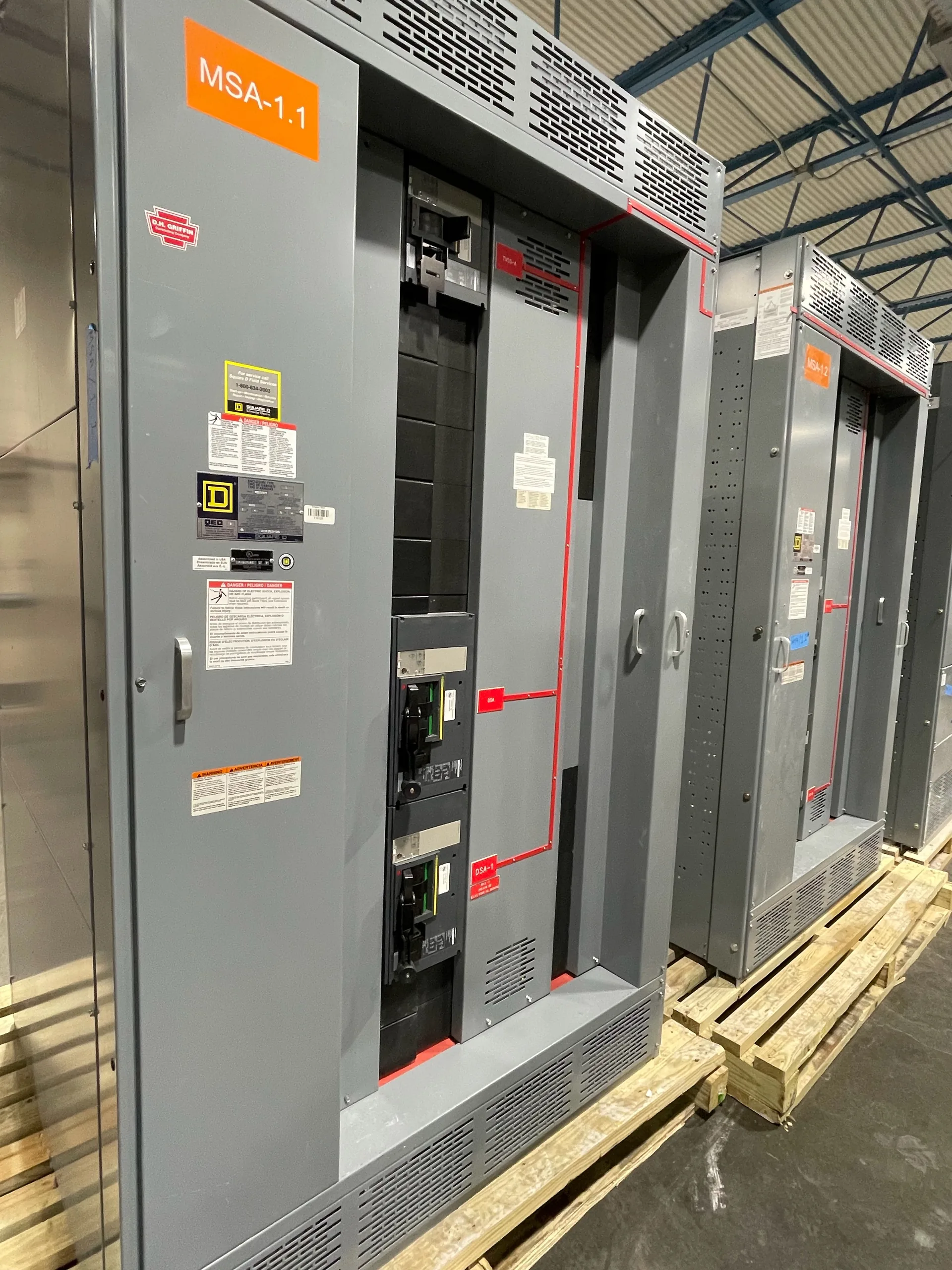
Power distribution, with purpose.
High ambient temperature changes more than the room-temperature number on a switchgear specification. Solar loading, enclosure ventilation, nearby heat sources, elevation, duty cycle, and the temperature limits of individual components can all affect equipment selection and operating margin. A sound design begins with site-specific evidence and a clear distinction between the expected environment and the conditions the assembly must withstand. Use this guide to assemble those inputs for a new switchgear quotation and engineering review; final ratings, settings, work practices, and code interpretation belong to qualified professionals.
Build the temperature picture from site data
Start with the temperature at the intended equipment location, not just a regional weather average or the building thermostat setpoint. Request the project’s design maximum and minimum temperatures, the measurement location, the expected duration and frequency of peak conditions, and whether the equipment is indoors, outdoors, or in a partially conditioned electrical room. For a Dallas–Fort Worth project, for example, outdoor summer conditions may inform the investigation, but they do not establish the temperature inside a particular room or enclosure. Confirm the project design basis with the engineer of record.
Record factors that can create a local hot spot: direct or reflected sunlight, dark roofing or paving, adjacent transformers, process equipment, exhaust discharge, and restricted room airflow. Include elevation, humidity, dust, corrosive agents, and wind or rain exposure where applicable. Useful source material includes site climate criteria, architectural room data, HVAC design documents, heat-source layouts, equipment schedules, and owner operating assumptions. If data is estimated rather than measured, label it as an assumption and identify who must confirm it.
Match the enclosure to its surroundings
Enclosure selection is a balance between environmental protection and heat rejection. An outdoor enclosure may need protection from rain, sun, dust, or corrosive exposure, while a sealed or filtered design can limit natural convection and raise internal temperatures. Indoor equipment may still face high ambient conditions if installed in a compact room with limited cooling or ventilation. Specify the actual indoor or outdoor location, exposure, required enclosure construction, access clearances, and room ventilation assumptions rather than relying on a generic enclosure label to resolve every condition.
Ask how the proposed configuration manages heat at the expected ambient temperature and load. Options may include a different enclosure arrangement, improved room cooling or airflow, altered equipment layout, or a revised component selection, subject to design review. Each option shifts cost, maintenance, space, and reliability considerations: filters require attention, cooling systems introduce auxiliary equipment, and tighter enclosures may constrain heat dissipation. Confirm environmental protection, thermal assumptions, and maintainability at the assembly level; do not assume a particular protection rating or thermal capability is available without order-specific confirmation.


Evaluate thermal limits across the assembly
Thermal review should consider the complete current path, not only the switchboard or switchgear nameplate. Bus conductors and joints, breakers, fuses, terminals, control power components, wiring, and electronic devices can have different temperature limits and derating requirements. Loading profile matters too: continuous load, load diversity, peak duration, future expansion, and harmonic content can affect losses and temperature rise. Provide the system nominal voltage, frequency, current requirements, available fault information, and intended duty so the manufacturer and engineer can review a coherent design basis.
A higher ambient can reduce usable thermal margin even when equipment operates within its published limits under reference conditions. Engineering review may consider component-specific derating, conductor sizing, bus arrangement, ventilation, and separation from other heat sources. Do not treat a nominal voltage as the equipment maximum rating, or infer a short-circuit rating from a thermal discussion. Ratings and component availability must be confirmed for the specific order. Where low-voltage switchboards are specified, UL 891 may be relevant to the assembly; it does not apply as a general listing basis for medium-voltage equipment.
Compare options with a hypothetical decision
Consider a hypothetical indoor distribution room where the owner reports warm summer conditions, but has not supplied peak room temperature or HVAC failure assumptions. One option is to retain the planned enclosure and ask the building team to document and maintain a defined room environment. A second is to evaluate an equipment arrangement or component selection for a higher design ambient. A third is to review added cooling or airflow. None is automatically preferable: the first depends on reliable room controls, the second on confirmed equipment capability and dimensions, and the third on auxiliary-system performance and maintenance.
The decision should compare the verified temperature envelope, expected loading, equipment footprint, service access, environmental protection, and consequences of cooling loss. For example, if the room is normally conditioned but can experience short peaks during a cooling outage, the engineer may need both normal and contingency conditions rather than one maximum number. This is a decision framework, not a completed design or customer example. A qualified professional must decide which conditions govern and confirm that selected equipment, protection settings, and installation details meet the project requirements.
Specify inspection evidence and records
A useful inspection plan connects each thermal concern to observable evidence. Depending on the design and approved procedures, inspection criteria may address ventilation openings, filter condition, enclosure damage or corrosion, signs of discoloration or overheating, loose or contaminated connections identified through appropriate maintenance practices, and operation of room cooling or alarms. Establish inspection intervals and acceptance criteria with qualified personnel and the equipment documentation. Do not use visual inspection alone to establish internal temperature or electrical condition, and do not expose personnel to energized hazards.
For a quotation and design review, supply a one-line diagram, load schedule, equipment location and room layout, environmental design criteria, enclosure requirements, system voltage and frequency, fault-current data, and any required future provisions. Include relevant HVAC assumptions, expected duty, site elevation, heat-source locations, and owner standards. Ask for proposed drawings and records that show arrangement, ratings, enclosure details, component identification, and applicable thermal assumptions. Final settings, inspection methods, work practices, and code interpretation must be set or approved by qualified project professionals.
Keep the conclusion specific to the order
A high-ambient review can identify design inputs and tradeoffs, but it cannot establish a universal temperature limit for every assembly. The conclusion depends on the exact component combination, enclosure, loading, installation, environmental exposure, and applicable project criteria. Standards, short-circuit ratings, component availability, and any U.S.-origin requirements must be confirmed for the specific order. New custom-built equipment can be evaluated against supplied requirements, but a shorter lead time is a goal rather than a guarantee and depends on the final design and component availability.
Before release, resolve missing site data, state which values are measured and which are assumptions, and obtain engineering approval of the design basis. A change in room cooling, load, enclosure, or installation location can invalidate an earlier thermal review and should trigger reassessment. Purchasers should submit complete project documents and identify governing specifications when requesting a quote. This keeps the review tied to actual conditions instead of implying that a general guide, nominal voltage, or regional climate establishes suitability.
Specifications & planning
Review the details that matter for your application. Final specifications and availability should be confirmed for your project.
| Evaluation factor | Example input to confirm |
|---|---|
| Ambient conditions | Design maximum, duration, location, and source |
| Solar and nearby heat | Direct exposure, reflected heat, adjacent equipment |
| Enclosure and airflow | Indoor or outdoor setting, protection needs, ventilation assumptions |
| Thermal duty | Load profile, continuous demand, harmonics, future load |