Power distribution, with purpose.
A useful dust and moisture inspection program starts with the specific distribution equipment and the environment it will face—not a generic calendar or a quick visual check. For a new switchboard or switchgear design, the owner, designer, and qualified maintenance team should connect enclosure selection, installation details, operating documentation, inspection criteria, and records that show how conditions change over time. The program can then flag deterioration early without treating every trace of dust or condensation as an automatic reason to open energized equipment.
Start with equipment and site source data
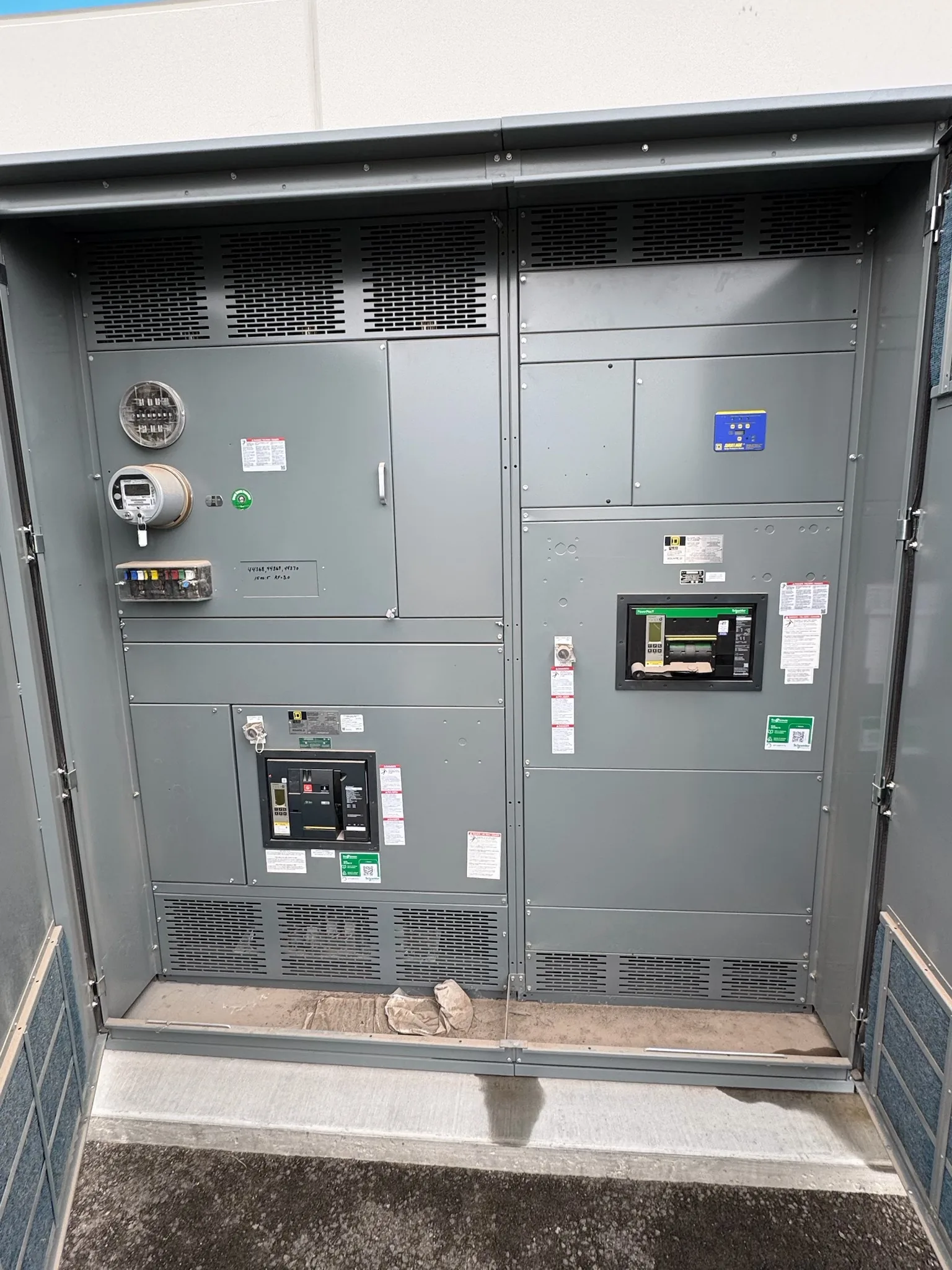
Before setting inspection intervals, identify the equipment type, voltage class, ratings, location, and the manufacturer’s enclosure and maintenance documentation. Gather the one-line diagram, equipment schedules, approved submittals, installation drawings, environmental data, and available operating history. Site information should address temperature swings, humidity, water entry or plumbing above the gear, airborne dust, construction activity, ventilation, washdown practices, and the condition of doors, seals, drains, and cable-entry points. Note whether the equipment is indoors or outdoors and whether the room shares air with a process area.
These facts affect what an inspection can establish. A sealed enclosure may limit routine access and require condition checks at designated interfaces; a filtered or ventilated design can require filter and airflow attention. Neither label alone proves suitability for a particular site. A purchaser seeking a new custom assembly should provide the intended application, system nominal voltage, requested equipment ratings, fault-current information, indoor or outdoor conditions, room layout, cable entry, and any specified enclosure or environmental requirements. The design team must confirm equipment maximum ratings and component availability for the order.
Turn observations into a documented maintenance plan
The operating plan should define who inspects, what can be observed without opening equipment, what conditions trigger escalation, and how findings are recorded. Routine external observations may include visible dust accumulation, water staining, condensation indicators, damaged gaskets, corrosion, blocked ventilation openings, and changes in room temperature or humidity where monitored. Inspection frequency should reflect the equipment manufacturer’s instructions, site conditions, operating duty, and applicable maintenance guidance; a dusty room or repeated moisture event may justify a different review schedule from a stable, clean electrical room.
The plan must distinguish observation from internal inspection, cleaning, testing, or repair. Those activities can involve electrical hazards and require appropriate isolation, work practices, and qualified personnel under the site’s safety program. Do not ask operators to remove covers or disturb deposits to determine their composition. Define escalation for active water intrusion, recurring condensation, conductive-looking residue, unusual odor or heat, corrosion, or a change in equipment condition. Qualified professionals should determine safe work boundaries, maintenance methods, final settings, and applicable code interpretation.


Choose enclosure and room controls as a system
Dust and moisture control is an interface problem. Compare enclosure construction and specified environmental protection with room HVAC, pressure or airflow strategy, door seals, cable penetrations, conduit sealing, and the possibility of condensation during shutdown or seasonal transitions. A more protective enclosure can reduce exposure, but it does not correct water entering through the building, trapped moisture, poor cable-entry execution, or unsuitable room conditions. A ventilated approach may help manage heat while introducing a need to maintain filters and preserve clear airflow.
A practical selection review weighs access for inspection, heat dissipation, contamination exposure, and the owner’s ability to maintain the chosen design. For example, a hypothetical indoor lineup near a dusty process room could be evaluated for improved room separation, a different enclosure approach, or routine filter maintenance. The preferred option depends on heat-loss data, operating conditions, installation constraints, and the responsible engineer’s review—not on a single enclosure descriptor. In Dallas–Fort Worth and other regions, seasonal humidity and temperature changes may inform the site assessment, but local climate alone cannot establish the conditions inside a specific electrical room.
Use a worked decision without overreading the evidence
Consider a hypothetical facility that finds moisture staining near a cable-entry area during a scheduled external inspection, with no known internal inspection or testing result. The immediate decision is not to infer that the switchboard is safe or failed. The operator records the location, date, visible extent, recent weather or room events, and any alarm or environmental-monitoring data, then reports the finding under the site’s escalation process. Qualified personnel assess whether the source may be a building leak, condensation, or another condition and decide what inspection or corrective action is appropriate.
If the staining recurs after a building repair, the program should preserve both observations and the corrective-action record, then prompt review of the entry detail, room conditions, and maintenance interval. A one-time dry surface does not demonstrate that insulation, bus, or protective devices are unaffected; conversely, a stain does not by itself establish internal damage. Conclusions about continued operation, testing, cleaning, repair, or design changes belong to qualified professionals using the equipment documentation and site-specific evidence.
Preserve lifecycle evidence and design interfaces
A defensible history links each observation to the equipment identity and its installed configuration. Retain approved drawings, nameplate and component data, enclosure requirements, installation and commissioning records, operating instructions, inspection logs, environmental readings where available, photographs taken under the site’s safe procedures, work orders, and records of repairs or design changes. Note who performed each task and whether the record documents an external observation, qualified internal inspection, test, or corrective action. This prevents a later reviewer from treating unlike activities as equivalent evidence.
For a new equipment quotation, provide the one-line and load or distribution requirements, requested ratings, available fault-current data, environmental conditions, layout and cable-entry constraints, applicable project specifications, and required submittal or documentation deliverables. Custom builds and American components may be considered where the order’s requirements support them; shorter lead time can be a goal, not a guarantee. UL 891 may apply to low-voltage switchboard assemblies when appropriate, but it is not a general qualification for medium-voltage gear. Confirm standards, ratings, short-circuit capability, origin requirements, and component availability for the particular order.
Specifications & planning
Review the details that matter for your application. Final specifications and availability should be confirmed for your project.
| Evaluation factor | Evidence to review |
|---|---|
| Dust exposure | Site process, airborne sources, room separation, and observed deposits |
| Moisture pathway | Staining, condensation history, room data, seals, and cable-entry details |
| Maintenance method | Manufacturer instructions, qualified-personnel scope, and escalation criteria |
| Lifecycle record | Equipment identity, dated findings, work orders, and approved configuration changes |