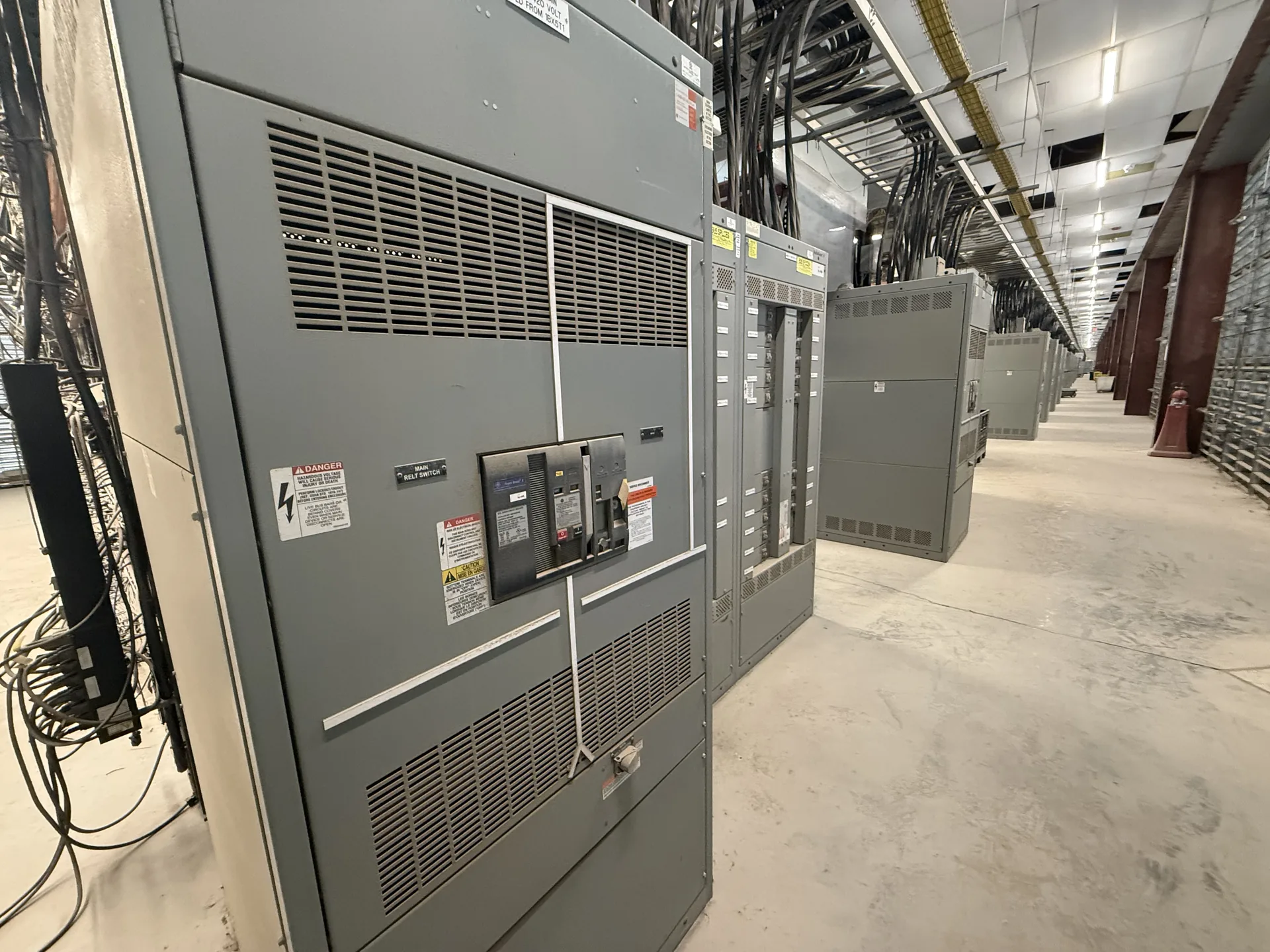
Power distribution, with purpose.
Data center switchgear expansion is easiest to manage when the next capacity step is designed into today’s lineup, rather than treated as a last-minute addition. Planning must connect load growth and feeder timing with physical space, electrical interfaces, operating constraints and approval boundaries. A preliminary expansion plan can identify what to reserve, what to verify and what information a manufacturer needs to develop a new-equipment proposal.
Translate capacity forecasts into feeder phases
Start with the facility’s anticipated load by phase, not simply a target for total future megawatts. Identify which loads are expected to arrive, when they are expected, and whether each addition needs a dedicated feeder, a change to an existing feeder, or a separately arranged lineup. Distinguish normal, standby and redundant paths in the one-line diagram so that capacity assumptions do not obscure which equipment must carry which operating condition. Forecasts are planning inputs, not a substitute for a coordinated load study.
For each phase, record the expected voltage, current, protection needs, cable or busway connection, and required short-circuit rating for the actual point of installation. Also identify whether future sections are intended to be installed alongside the existing board or supplied as a later, separately connected lineup. These choices affect bus arrangements, transition details and how much of the original design must be fixed early. System nominal voltage and equipment maximum rating are related but distinct; confirm both for the proposed configuration.
Reserve space and interfaces before the room fills
A reserved footprint is useful only if it accounts for the equipment and the route needed to install and connect it. Check lineup length and depth, access for handling, working clearances, door swing, overhead services, cable-entry direction and the path from delivery access to the electrical room. Confirm whether future sections can be moved into place without obstructing operating equipment or disrupting other building systems. Room layouts should be reviewed against applicable code, facility rules and the equipment’s installation requirements by the responsible project professionals.
At the electrical interface, document bus phase arrangement, bus rating, neutral and grounding provisions where applicable, enclosure and environmental requirements, cable termination space, and the location and type of future connections. A future section may need a matching bus design and compatible protection scheme, but matching appearance alone is not enough. Record the existing manufacturer and model information, drawings, nameplate data and any field changes. If the existing gear’s condition or documentation is uncertain, engineering review may favor a standalone addition over a physical extension.


Plan live-site constraints without assuming live work
Operating data centers may have limited windows for outages, access and construction activity. Map each proposed feeder addition to its source, destination, upstream and downstream devices, and the facility’s approved switching and outage process. Identify dependencies such as commissioning sequence, temporary power strategy, redundancy objectives and restrictions on simultaneous work. These constraints belong in the project plan and specification; they do not authorize work on energized equipment or replace the facility’s safety procedures.
An illustrative scenario makes the tradeoff clear: a hypothetical operator expects one new data hall now and another later, while the available electrical room has room for only part of the eventual lineup. The team could reserve a continuous lineup footprint and define future bus interfaces, or plan a later adjacent lineup with a separate connection. The first approach may simplify continuity but requires early space and interface decisions; the second may preserve near-term room but introduce additional coordination and transition design. Neither is universally preferable, and neither describes a completed customer project.
Bring stakeholders into the same design basis
The owner or data center operator should define load-growth assumptions, redundancy intent, operating limits, future phases and decision authority. The electrical engineer should establish design criteria, one-line documentation, protection coordination and applicable code requirements. The general contractor and electrical contractor can inform room access, routing, construction sequencing and connection logistics, while the commissioning team can flag testing, documentation and turnover needs. Facility operations should identify maintenance access and constraints that may not appear on drawings.
For a quote, provide the current one-line diagram, load and feeder schedule, existing switchgear nameplate details, available fault-current information, protection and control requirements, enclosure and connection preferences, site layout, expansion schedule and delivery constraints. Mark what is confirmed versus assumed, and identify the engineer or owner representative responsible for resolving open items. A manufacturer can use this basis to evaluate a new custom build and identify information gaps; final design, system studies, installation planning and operational approvals remain with the designated project professionals.
Compare selection tradeoffs and define approvals
Selection should weigh phased procurement against interface certainty. Ordering a complete future lineup early can establish continuity across sections, but commits space and capital before later loads are certain. Buying only the current phase can preserve flexibility, yet a later addition may depend on component availability, compatible design details and a fresh engineering review. Other tradeoffs include fixed versus drawout devices where applicable, feeder compartment arrangement, cable versus busway connections, monitoring provisions, maintainability and the consequences of a non-matching addition. Ratings, short-circuit capability, standards, component availability and any U.S.-origin requirements must be confirmed for the specific order.
Approval boundaries should be explicit. The manufacturer can confirm the proposed equipment configuration and applicable documentation for its scope, but should not be treated as the authority for facility load forecasts, protection coordination, code interpretation, outage authorization or acceptance of field conditions. Where applicable, UL 891 concerns low-voltage switchboards; it does not establish a general listing for medium-voltage switchgear, and applicability must be verified for the actual assembly. Customers in Dallas–Fort Worth and elsewhere can request new equipment from a manufacturer serving the region and shipping nationwide, with project requirements reviewed before a proposal is finalized.
Specifications & planning
Review the details that matter for your application. Final specifications and availability should be confirmed for your project.
| Evaluation factor | Planning question |
|---|---|
| Feeder phasing | Which loads arrive in each phase, and what source and destination serve each feeder? |
| Space reservation | Does the reserved area include installation access, clearances and connection routes? |
| Electrical interface | Are bus, voltage, fault-current, grounding and termination assumptions documented for review? |
| Operating constraints | What outage windows, redundancy objectives and commissioning dependencies govern the sequence? |