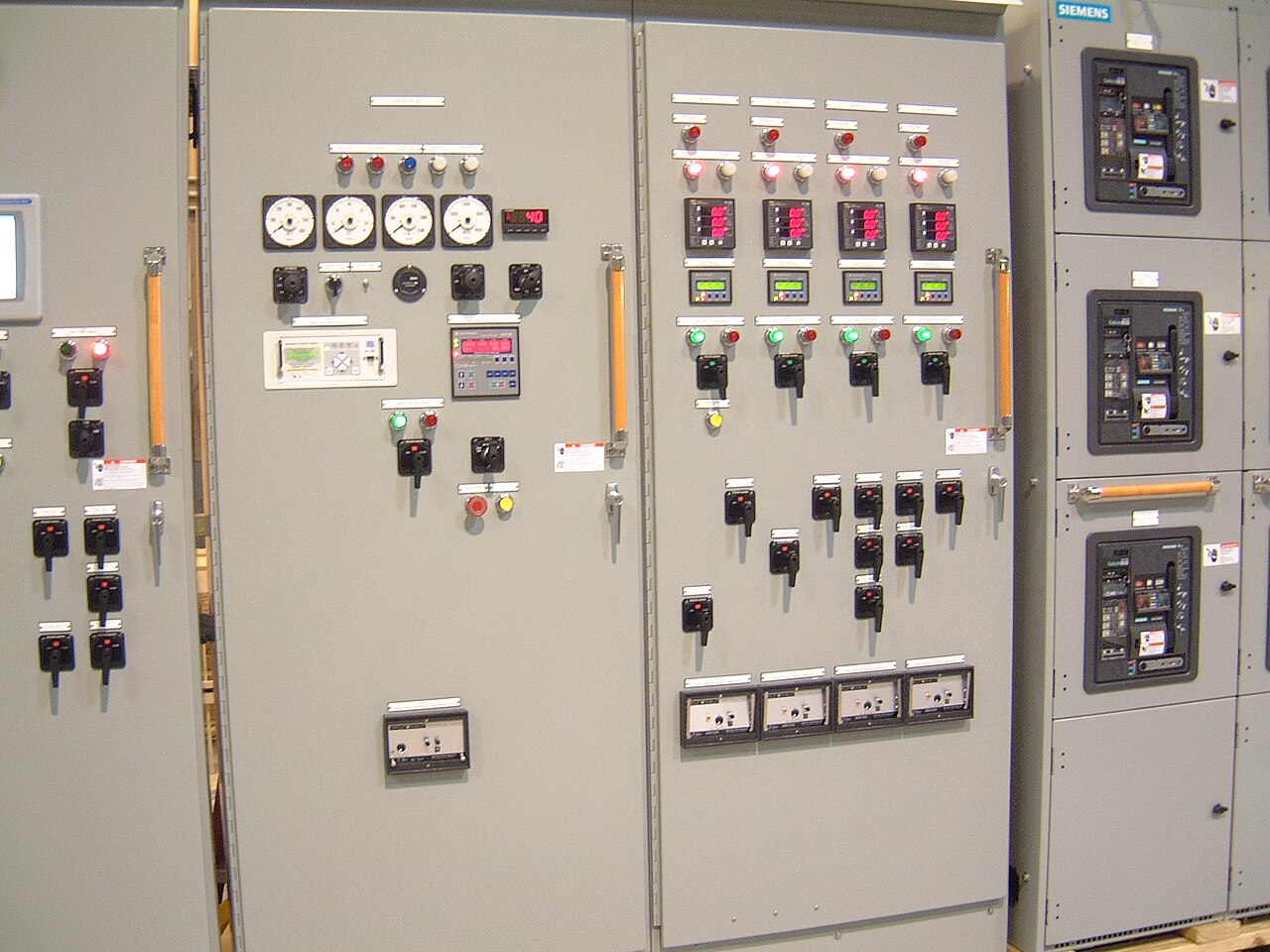
Power distribution, with purpose.
At a water or wastewater facility, an enclosure decision starts with the exposure at the equipment location—not simply the word “indoor” or “outdoor” on a drawing. Persistent condensation, chemical vapors, washdown, airborne salts, and temperature swings can affect the enclosure, door hardware, seals, wiring, and connected devices differently. A useful review turns site observations into defined requirements, then checks that the proposed switchboard or switchgear arrangement and its interfaces suit the actual environment.
Describe the exposure where the gear will sit
Record conditions at the proposed equipment position, rather than relying only on general plant descriptions. Relevant details include whether the room is conditioned, how often doors are opened, whether ventilation draws in damp or chemically affected air, and whether nearby processes produce mist, dust, or vapor. For outdoor gear, note direct rain, sun, wind-driven moisture, standing water, and any enclosure location that could be reached by hose spray. A site plan and photographs can help communicate the setting, but photographs do not replace measured conditions or a written exposure description.
Humidity alone does not fully describe the risk. Ask facility staff about seasonal temperature ranges, observed condensation, flooding or leak history, washdown schedules, and maintenance practices. Identify chemicals by product or composition where available, and explain how they are used, stored, or exhausted near the equipment. “Corrosive atmosphere” is too broad to support a sound selection: concentration, frequency, duration, and likely contact with surfaces all matter. Share uncertainty honestly so it can be treated as an open engineering question rather than an assumed condition.
Match enclosure details to the actual hazard
Enclosure suitability involves more than the cabinet material. Door seams, hinges, latches, gasket materials, hardware finishes, cable-entry provisions, and ventilation openings may each become a weak point under moisture or chemical exposure. A design intended to limit water entry can also change heat dissipation and access for inspection. Review the enclosure type or environmental protection designation against the specific exposure and installation orientation; do not infer that a rating addresses corrosive gases, chemical compatibility, condensation, or every washdown condition unless the applicable documentation says so.
Material and coating choices involve tradeoffs. A more corrosion-resistant construction may be appropriate in one atmosphere but does not automatically protect dissimilar-metal interfaces, fasteners, cut edges, or field-made penetrations. Sealed construction can reduce ingress while making internal temperature management more demanding. If heaters, thermostats, ventilation, or other environmental controls are being considered, define their intended function and how they interface with the electrical design. Confirm component availability, applicable standards, and any required U.S.-origin conditions for the specific order rather than assuming a preferred option is available or compliant.


Bring operations, engineering, and maintenance into the review
The purchaser should coordinate inputs from the facility owner, electrical engineer, operations staff, maintenance personnel, and whoever controls the building or process environment. Operations can describe chemical use and washdown practices; maintenance can identify recurring seal or corrosion problems; the engineer can establish system voltage, protection, fault-duty requirements, and applicable codes. The equipment manufacturer needs enough detail to understand the proposed assembly and its intended location, including indoor or outdoor placement, cable entry direction, service clearances, and adjacent heat sources.
A quote request is more useful when it includes one-line diagrams, load or feeder information, required device functions, system nominal voltage, available fault-current data, requested short-circuit rating, and the environmental observations described above. Include the project specification, site constraints, preferred enclosure details, delivery destination, and any required documentation. Nominal system voltage is not the same as equipment maximum rating, and neither should be inferred from a shorthand description. Ratings, short-circuit performance, component availability, standards, and U.S.-origin requirements all need confirmation against the particular build.
Illustrative scenario: a humid process-adjacent room
Consider a hypothetical treatment facility planning new low-voltage distribution equipment in a room beside a chemical dosing area. Staff report warm, humid conditions, occasional visible condensation, and routine floor washing, but the proposed cabinet location is not directly sprayed. The initial request says only “indoor, corrosive environment.” Before choosing an enclosure, the project team would clarify the chemicals and handling pattern, whether vapors reach the room, how the room is ventilated, and whether condensation occurs on nearby metal surfaces or inside existing electrical cabinets.
That information could lead the team to compare a more protected enclosure arrangement with a location change or improvements to room ventilation and moisture control. Each path has consequences: a tighter enclosure may affect heat removal and maintenance access, while relocating gear may lengthen feeders or conflict with clearances. This example is not a completed project or a recommendation for a particular facility. It shows why exposure data and facility design should be evaluated together, with the engineer and owner approving the final requirements.
Set approval boundaries and document assumptions
The manufacturer can use purchaser-supplied requirements to develop and quote new equipment, including custom builds and American components where confirmed for the order. A shorter lead time may be a goal, not a promise; timing depends on the approved design, component availability, and project conditions. For low-voltage switchboards, UL 891 may be relevant where applicable, but it is not a general enclosure-corrosion rating and does not apply as a blanket claim to medium-voltage equipment. The project specification and applicable standards must be reviewed for the actual assembly.
Keep responsibility for site conditions and system design explicit. The owner or engineer should approve environmental assumptions, required ratings, protective measures, and interfaces with HVAC, process ventilation, cable systems, and building structures. Ask that unresolved items be identified before approval, including chemical exposure not yet characterized or a short-circuit rating awaiting confirmation. For projects in Dallas–Fort Worth or elsewhere in the United States, the same discipline applies: specify the destination and site conditions, then verify the design and delivery requirements for that particular order.
Specifications & planning
Review the details that matter for your application. Final specifications and availability should be confirmed for your project.
| Evaluation factor | Information to establish |
|---|---|
| Moisture | Humidity pattern, condensation evidence, washdown reach, and water-entry exposure |
| Chemical contact | Chemical identity, concentration if known, use frequency, vapor path, and likely surface contact |
| Enclosure interfaces | Cable entries, door seals, hardware, ventilation, access, and field modifications |
| Electrical basis | System nominal voltage, equipment rating, fault-current data, and project-specific review |