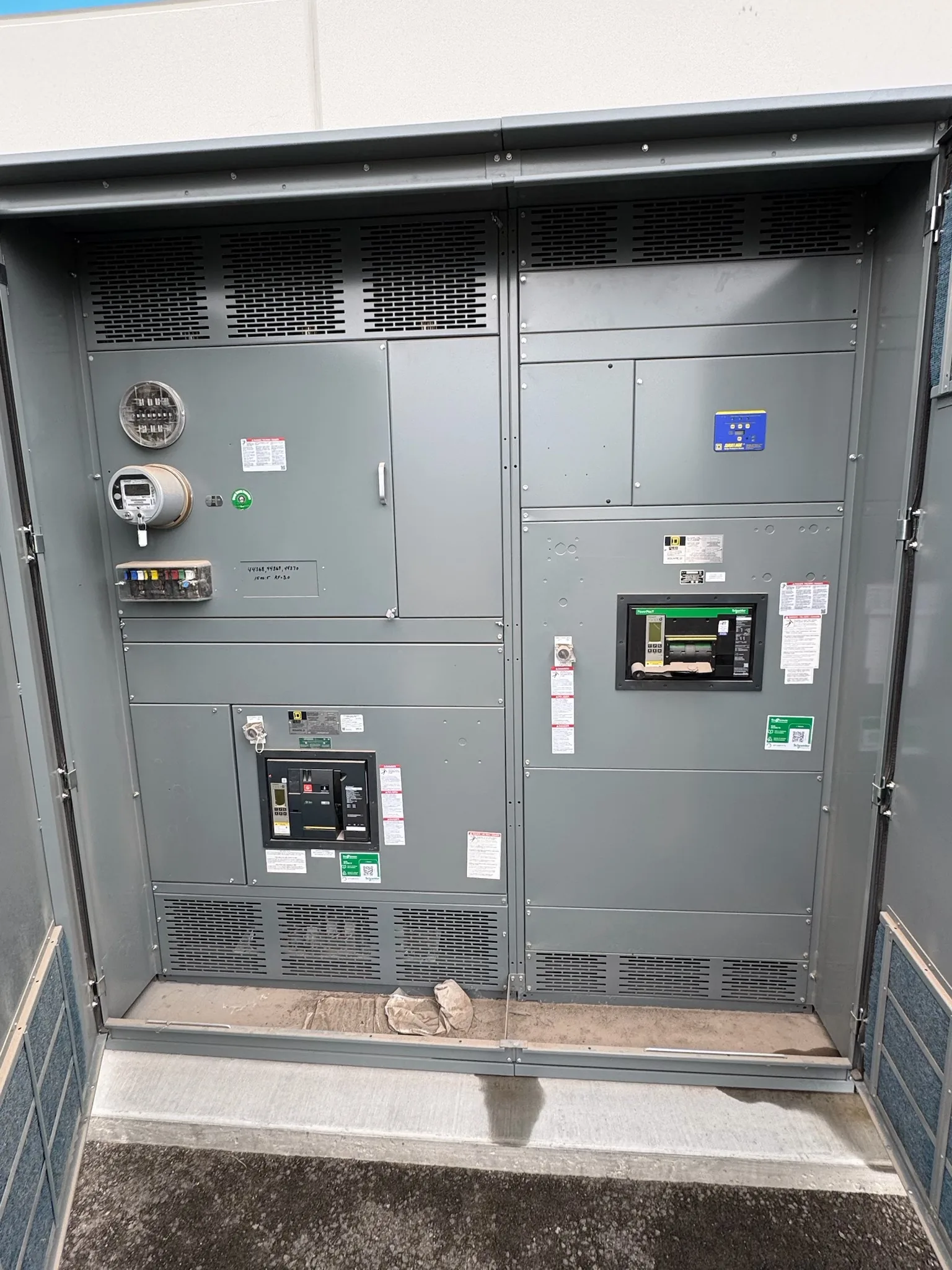
Power distribution, with purpose.
Hospital electrical switchgear must support a carefully engineered essential electrical system, not simply add capacity to a building service. The switchboard, transfer equipment, protective devices and downstream distribution must work together under normal operation, emergency conditions and planned maintenance. Early coordination helps keep life-safety and critical branches distinct, clarify who supplies each interface and reduce surprises during an already constrained outage.
Start with the essential-system arrangement
The first specification decision is how the hospital divides normal and essential loads. Applicable codes and the project’s design determine the required branches and permitted arrangements; the switchgear package should reflect that design rather than assume a universal hospital configuration. Identify the normal source, emergency source, transfer equipment and downstream distribution boundaries on the one-line diagram. Confirm which loads are served from each section and whether separate equipment or compartments are required by the engineered design.
A useful scope review traces each source-to-load path and identifies which equipment is included in the switchgear order. A manufacturer may build new switchboards and related assemblies, but the project team must define whether transfer switches, generator paralleling gear, distribution panels, controls or feeders are furnished by others. Clear boundaries prevent omissions and incompatible terminals, controls or bus connections. For a custom build, provide the latest one-line, load and branch information, and note any design requirements that remain open for engineering review.
Define the transfer interface, not just the source rating
Transfer equipment is a functional interface between sources, not merely a line item adjacent to a switchboard. Confirm whether transfer is open-transition, closed-transition or another engineered arrangement, and document the intended sequence, interlocks, bypass or isolation provisions and control-power source where applicable. The selected scheme depends on the system design and operating requirements. Do not assume that a switchboard manufacturer is supplying or programming transfer equipment unless the purchase scope expressly says so.
The switchgear and transfer-equipment suppliers need compatible electrical and mechanical connection details. Specify incoming and outgoing conductor or bus arrangements, phase sequence, neutral treatment, grounding method, control wiring responsibilities and terminal-space requirements. Identify who provides source-available contacts, remote status, alarms and any building-management or generator-system interface. These details are especially important when existing equipment must connect to a new assembly; field dimensions and verified interface drawings are more reliable than assumptions based on a prior installation.


Coordinate outages around real operating constraints
Hospital outage planning should begin while equipment is being specified, not after delivery. The facility’s electrical engineer and operations team should identify affected loads, acceptable outage windows, temporary-service strategy and required approvals. A replacement switchboard can have correct electrical ratings yet remain unsuitable if its footprint, cable access or connection sequence makes the planned cutover impractical. Confirm shipping splits, access route, lifting constraints and whether existing conduits or bus connections can be reused.
The manufacturer can build to approved drawings and agreed interfaces, but outage authorization, temporary power, field installation and commissioning responsibilities must be assigned by the project team. Provide the intended cutover sequence and construction-phase constraints with the quote request so the proposed configuration can be reviewed against them. In Dallas–Fort Worth or elsewhere, site access and delivery timing are project-specific; regional familiarity should not be treated as proof of a local factory, installation service or guaranteed delivery window.
Match protective-device coordination to the system study
Protective-device selection affects both fault protection and continuity of service. Supply the available fault-current information at the equipment, the system grounding details, and the current coordination and arc-flash study requirements. Identify breaker types, trip-unit functions and settings that the design calls for, while distinguishing equipment short-circuit ratings from the system’s calculated fault current. A rating that appears adequate at one point may not be appropriate at another, and final selection requires engineering confirmation.
Hospital designs can involve multiple sources and operating modes, so coordination should be checked for each relevant configuration rather than only normal utility operation. Generator contribution, tie-breaker status and transfer sequence can change fault-current conditions and protective-device behavior. State whether studies, settings or field testing are by the consulting engineer, contractor or another provider. Do not rely on a manufacturer quotation alone to establish code compliance or validate the protection study.
Specify construction, ratings and documentation precisely
A useful request for quotation includes nominal system voltage, phase and wire configuration, continuous-current needs, bus arrangement, required short-circuit rating, enclosure conditions and applicable project specifications. State whether the equipment is a low-voltage switchboard or medium-voltage gear; the terms are not interchangeable, and UL 891 applies to low-voltage switchboards, not medium-voltage equipment. For a low-voltage assembly, request UL 891 construction only when it is applicable to the specified design and confirmed for the particular order.
Include the latest one-line and elevations, device schedule, cable-entry direction, connection details, control schematics, environmental conditions, shipping constraints and requested submittal milestones. Identify any required American-origin components or other sourcing conditions explicitly. Component availability, standards, origin requirements and every voltage, current and short-circuit rating must be confirmed for the actual configuration. New custom assemblies can be built around project needs, with shorter lead time as a goal rather than a guaranteed delivery promise.
Prepare a quote package that exposes open decisions
Before requesting a price and schedule, provide the project location, delivery constraints, required quantity, desired ship window and responsible technical contacts by role. Include drawings in their current revision and mark assumptions, alternates and items furnished by others. If final studies or dimensions are pending, identify them as pending instead of presenting provisional values as approved. This lets the manufacturer identify information gaps and quote a defined new-equipment scope rather than an ambiguous collection of components.
Ask the design team to review submittals for source separation, transfer interfaces, protective-device selection and connection compatibility before release to production. Record who approves drawings, who supplies field measurements and who resolves deviations. For a hospital, disciplined document control is a practical reliability measure: it keeps the build aligned with the engineered essential-system concept and gives the outage team a clearer basis for planning. Final suitability remains dependent on project engineering and confirmation of the ordered configuration.
Specifications & planning
Review the details that matter for your application. Final specifications and availability should be confirmed for your project.
| Evaluation factor | Information to confirm |
|---|---|
| Essential-system topology | Source paths, branches served and equipment scope |
| Transfer interface | Transition scheme, controls, interlocks and supplier boundary |
| Ratings and protection | Nominal voltage, current, fault data and study requirements |
| Outage and delivery | Cutover constraints, access, shipping splits and requested window |