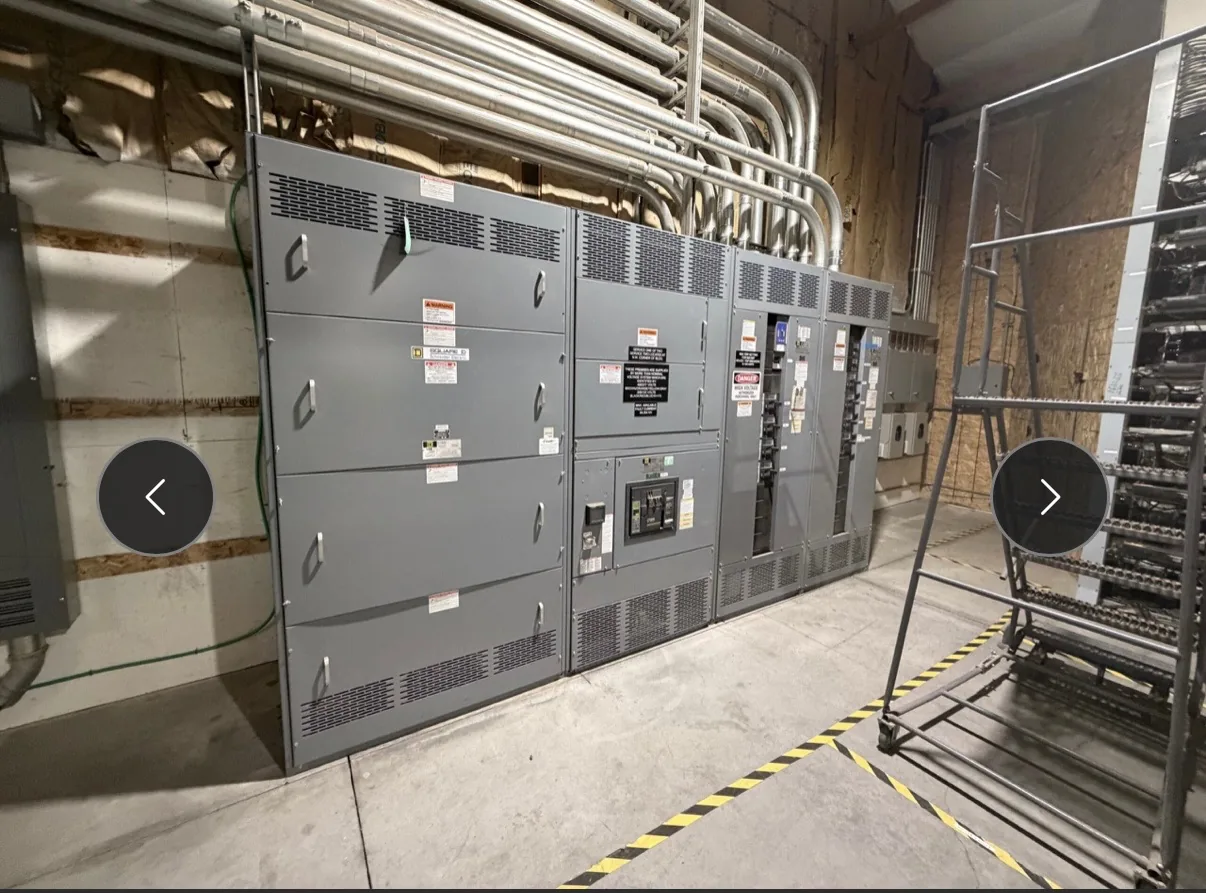
Power distribution, with purpose.
A switchgear nameplate turns design decisions into durable equipment identification, but it is not a substitute for reviewing the approved drawings, ratings, or evidence behind a third-party certification claim. A careful review aligns each proposed marking with the project specification, system conditions, selected components, and required documentation before equipment is released for manufacture. For buyers in Dallas–Fort Worth and nationwide, the practical goal is to resolve mismatches early and define what the delivered records will actually confirm.
Start with the system and specification inputs
A useful review begins with the electrical basis of design, not a preselected label format. Supply the system nominal voltage and frequency, grounding arrangement, source information, continuous load or bus current, available fault-current study, and the project’s required short-circuit performance. Include the one-line diagram, equipment specification, approved deviations, applicable codes or standards, and any owner-specific marking rules. If the system may change between normal and alternate sources, identify those operating conditions so the review does not assume one source tells the whole story.
The purchaser should also provide the intended installation environment and enclosure requirements, including indoor or outdoor use, access constraints, ambient conditions, and any specified enclosure classification. Identify the equipment type and boundaries: a low-voltage switchboard, for example, is not interchangeable with medium-voltage switchgear simply because both serve distribution functions. For a quote, provide the required lineup arrangement, incoming and outgoing connections, metering or control needs, documentation expectations, and target schedule. Missing or provisional inputs should be marked as such rather than converted into unexamined nameplate assumptions.
Keep nominal voltage distinct from equipment rating
System nominal voltage describes the electrical system; equipment voltage markings and maximum ratings describe the limits applicable to the selected apparatus. They are related, but they are not synonyms. A review should check the specified system against the proposed equipment rating, insulation requirements, and the ratings of breakers, switches, instrument transformers, and other components. Voltage class terminology also matters: 5 kV, 15 kV, 27 kV, and 35 kV are normally medium-voltage classes in this context, not low-voltage UL 891 switchboards.
Frequency should be checked against the actual system and component application, rather than copied from a general template. A mismatch can affect device suitability, metering, control power, or other design details, depending on the equipment. The review should trace each voltage and frequency statement to an approved design source and flag conflicts between the one-line, specification, component data, and proposed marking. Final ratings and component availability require confirmation for the specific order; a nameplate draft alone cannot establish that the assembled equipment is suitable.


Verify current and short-circuit statements together
Continuous-current markings should reflect the intended bus or equipment rating and the design conditions that support it. Review bus ratings, device ratings, conductor interfaces, and any specified temperature or installation assumptions as a coordinated set. A single current value on the nameplate does not explain every branch rating or prove that each connected device has the required capability. The approved drawings and component schedules should make those distinctions visible, particularly when incoming equipment and feeder devices have different ratings.
Short-circuit ratings require their own careful check against the available fault current, protective-device arrangement, and the exact assembly configuration. Confirm what rating is specified, where it applies, and whether any conditions or restrictions are part of the design basis. Do not treat a breaker interrupting rating as automatically equivalent to an assembly short-circuit rating. Changes to devices, bus, barriers, or lineup arrangement can affect the basis for a rating, so substitutions and revisions need engineering review before the marking is finalized. Any stated performance must be supported for the particular configuration, not inferred from a generic product description.
Treat enclosure markings as design-specific
Enclosure information should match the installation environment and the construction actually specified. Review the required enclosure type or environmental designation, access and ventilation needs, cable entry, and any project requirements for dust, moisture, corrosion, or other exposure. A more demanding enclosure can affect footprint, heat management, access, and component selection; it should not be added as a label-only change. Where the specification uses a recognized enclosure classification, verify its meaning and applicability for the equipment rather than assuming that a similar-looking marking is equivalent.
Coordinate the enclosure review with layout and interface documents. Confirm that the proposed dimensions, wireway and cable spaces, door access, and connection locations suit the project arrangement. Outdoor service or a specific site exposure may require details that are not captured by a general indoor enclosure description. The final marking should be consistent with the approved design and verified construction. Environmental suitability, ratings, and standards requirements are project-specific and should not be represented as universally available without confirming the order scope.
Separate nameplate content from listing evidence
A nameplate is equipment identification and may state manufacturer, equipment designation, electrical ratings, and other required particulars. Its presence does not, by itself, prove that a third party evaluated or listed the assembly. A purchaser should distinguish required markings from a certification or listing claim, then specify what evidence is required and which exact equipment configuration it covers. UL 891 applies to low-voltage switchboards; it is not a general listing for medium- or high-voltage switchgear. Any applicable listing status must be confirmed for the specific assembly and scope.
A useful documentation package can include a proposed nameplate schedule or proof, approved equipment drawings, one-line references, component and rating schedules, and records supporting applicable claims. The review should establish who approves the proof, how revisions are tracked, and whether the final record set reflects approved substitutions. Custom builds and American components may be considered where the order requires them, but country-of-origin requirements and component availability must be confirmed rather than presumed. Shorter lead time can be a goal, not a guaranteed result, and should be evaluated alongside documentation and design approvals.
Define review boundaries and release records
A nameplate-data review can identify missing inputs, compare proposed markings with approved project documents, and document open questions for resolution. It does not replace a system study, site verification, code determination, independent certification, or an engineering approval that is outside the agreed scope. If fault-current data, environmental conditions, or component selections remain provisional, record the assumption and responsible party instead of implying that the final rating has been established. Confirm who has authority to approve technical deviations before manufacturing release.
The useful output is a controlled record: an approved nameplate schedule or proof, a comment-and-resolution record, and drawing or submittal revisions that identify the data used. Retain the final approved version with the equipment documentation so future maintenance and replacement decisions can be tied to the delivered configuration. A manufacturer can evaluate a new custom assembly against the purchaser’s requirements, subject to engineering review and order confirmation; it should not imply it buys or accepts used equipment. This boundary keeps the review focused on accurate identification of new equipment and traceable project records.
Specifications & planning
Review the details that matter for your application. Final specifications and availability should be confirmed for your project.
| Evaluation factor | Review question |
|---|---|
| Voltage and frequency | Do system conditions align with proposed equipment and component ratings? |
| Continuous current | Are bus and device ratings clearly distinguished and supported by the design? |
| Short-circuit performance | Does the stated assembly rating match the specified configuration and fault-current basis? |
| Enclosure and evidence | Do environmental markings and any third-party claim match the approved scope? |