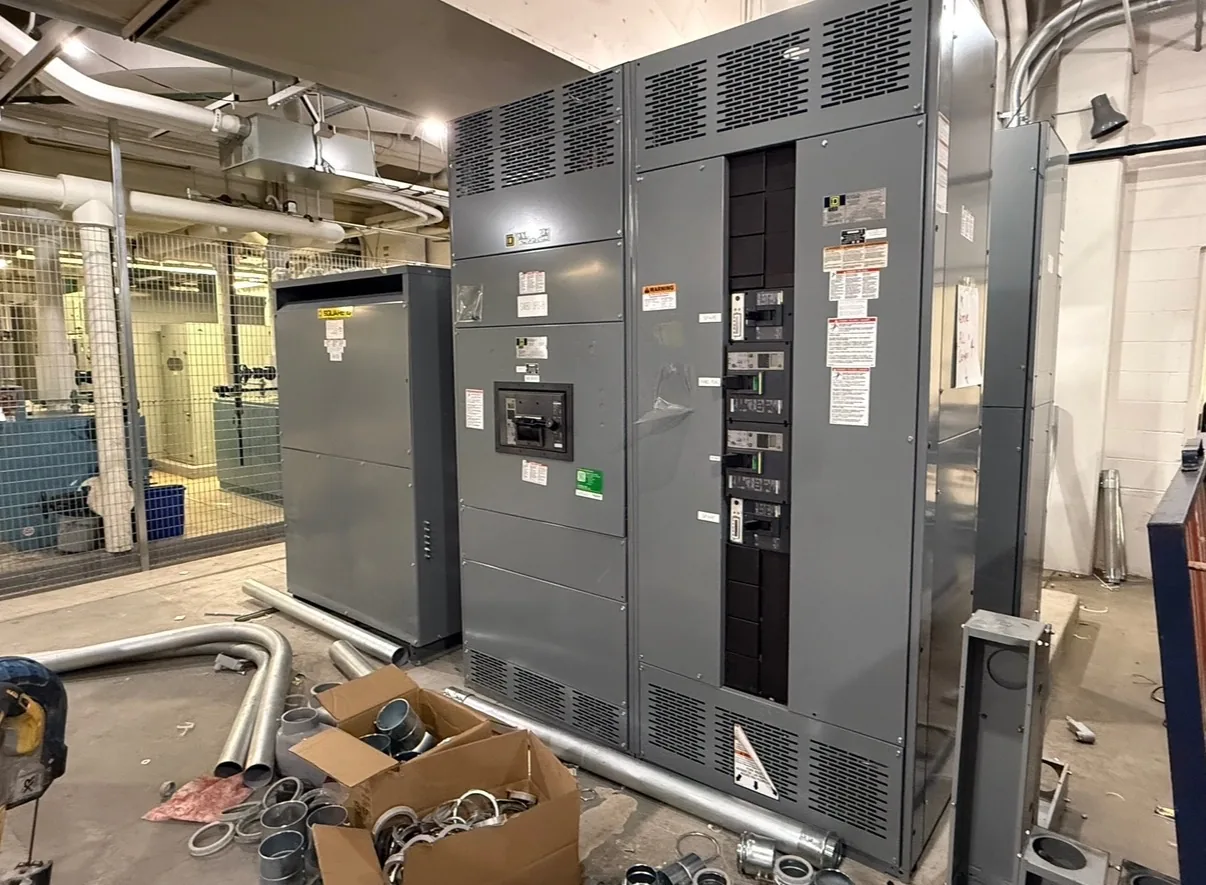
Power distribution, with purpose.
Switchgear packaging and shipping are part of the equipment plan, not an afterthought. Section dimensions, lifting access, transport limits, weather exposure, and the receiving site all influence how an assembly should be divided, protected, documented, and unloaded. For a new-equipment quote, provide the delivery constraints early so proposed arrangements can be reviewed before drawings and shipment plans are finalized.
Choose shipment splits around electrical and site interfaces
A switchboard or switchgear lineup may need to ship as one assembly or in multiple sections. The choice depends on shipping envelope and weight limits, access routes, available unloading equipment, and the electrical and mechanical interfaces between sections. A split can make transport or placement more practical, but it adds field work: joints must be reassembled, bus connections made, and alignment and continuity checked according to approved instructions. Keeping a lineup together may reduce those interfaces while creating a larger, heavier load that the route or receiving area cannot accommodate.
The project team should identify which boundaries are suitable for shipment breaks and confirm them against the one-line diagram, layout, bus arrangement, and installation plan. Share site access dimensions, overhead obstructions, door and corridor clearances, floor loading limits, crane or forklift constraints, and any restrictions on delivery timing. These inputs are especially important when equipment is being shipped to a Dallas–Fort Worth site or another destination with limited receiving access; serving a region does not establish the conditions at a particular site.
Confirm lifting provisions before packing is defined
Lifting arrangements must suit the actual shipping configuration, not just the final installed lineup. The proposed plan should identify each shipping section’s weight and center-of-gravity information when available, designated lifting points, and any required spreader or rigging arrangement. Lifting provisions, such as removable lifting angles or designated pick points, must be reviewed for the specific assembly. A fork truck may be an option for some loads, but only when the base, fork access, load balance, equipment capacity, and handling instructions support it.
Purchasers should provide the expected unloading method and the receiving team’s equipment limits before the shipping plan is approved. Confirm whether the site can accept a truck-mounted crane, requires a separate rigging contractor, or has restrictions on staging and load movement. These details can affect section size, packaging, delivery sequence, and the documents needed at receipt. No one should improvise a lift from enclosure features or handle equipment contrary to its approved instructions; qualified personnel must plan and execute handling.


Match protective packaging to route and storage conditions
Packaging should be selected for the expected journey and the period before installation. Road transport, multiple transfers, outdoor staging, humidity, dust, and exposure to rain can create different risks. A proposed package may use a secured base, protective wrapping, enclosure barriers, or moisture-control measures, but the appropriate method depends on the equipment design and shipping conditions. Packaging is not a substitute for specifying suitable storage conditions or maintaining protection after delivery.
Tell the manufacturer whether the load will travel in a dry, enclosed vehicle or may encounter open transport, extended staging, or repeated handling. Identify whether the destination has covered storage and who will inspect and maintain packaging after arrival. Any shipping braces, barriers, or moisture-control materials should have clear instructions for removal or retention, as applicable. The project-specific packaging plan and any requirements for preservation, environmental protection, or export preparation must be verified before order release rather than assumed from a general description.
Define receiving checks and damage escalation
A receiving plan should make the handoff observable and timely. Before dispatch, agree on shipment identification, package counts, section markings, packing documentation, and the condition checks expected at delivery. At receipt, the designated team can compare the delivery against those records and inspect accessible packaging and equipment surfaces for visible impact, moisture, missing items, or signs of shifting. If damage or a discrepancy is found, document it promptly with photographs and delivery records, preserve the packaging where practical, and notify the responsible project contacts and carrier according to the agreed claims process.
Clarify who can accept the shipment, where it will be placed, and whether delivery requires an appointment, special vehicle access, or advance notice. Receiving personnel should not open or alter protected equipment in a way that could affect warranty, preservation, or safety without following applicable instructions. The handoff should identify responsibility for unloading, storage, inspection, and escalation; otherwise, a package can pass between carrier, site, and contractor without a clear record of condition or custody.
Submit the inputs needed for a useful quote
A quote request should include the equipment scope and destination alongside the information that governs shipment. Supply the one-line diagram and preliminary layout, desired lineup arrangement, known section or doorway limits, delivery address at the project level, receiving hours, unloading method, and any site-specific packaging or documentation requirements. Include requested delivery milestones and any restrictions on partial shipments. If requirements are not yet fixed, mark them as provisional so the manufacturer can identify assumptions and open decisions instead of treating them as confirmed.
New custom-built equipment can be configured around project needs, and shorter lead time may be a goal, but neither shipment timing nor a particular packaging capability should be assumed. The proposed configuration, component availability, dimensions, weights, shipping split, protective measures, and delivery sequence require confirmation for the specific order. Ask the quote to distinguish confirmed scope from items awaiting engineering or logistics review, and identify any purchaser-supplied information needed to close those items.
Make approval a documented project-team decision
Packaging and shipment submittals should connect the electrical design to the site plan. Depending on project scope, useful deliverables may include proposed shipping-section boundaries, estimated weights and dimensions, lifting information, package identification, handling instructions, and receiving or storage notes. Their availability and level of detail must be confirmed for the order. Review them against equipment drawings, transport constraints, rigging plans, installation sequencing, and the site’s actual access conditions before authorizing release.
Approval belongs to the project team, not to a shipping assumption embedded in a quote. The purchaser, electrical engineer, contractor, logistics coordinator, and receiving representative may each need to resolve different interfaces. Record who approves the split, handling method, protection requirements, delivery sequence, and any exceptions, then communicate approved revisions to all affected parties. If a change in route, site access, or installation sequence occurs later, reassess the plan before dispatch rather than relying on an earlier approval.
Specifications & planning
Review the details that matter for your application. Final specifications and availability should be confirmed for your project.
| Evaluation factor | Project input to confirm |
|---|---|
| Shipment split | Route, access, section limits, and field-assembly implications |
| Lifting plan | Section weights, pick points, unloading equipment, and qualified rigging |
| Protection | Transport exposure, staging duration, and storage conditions |
| Receiving handoff | Authorized receiver, inspection record, damage escalation, and custody |