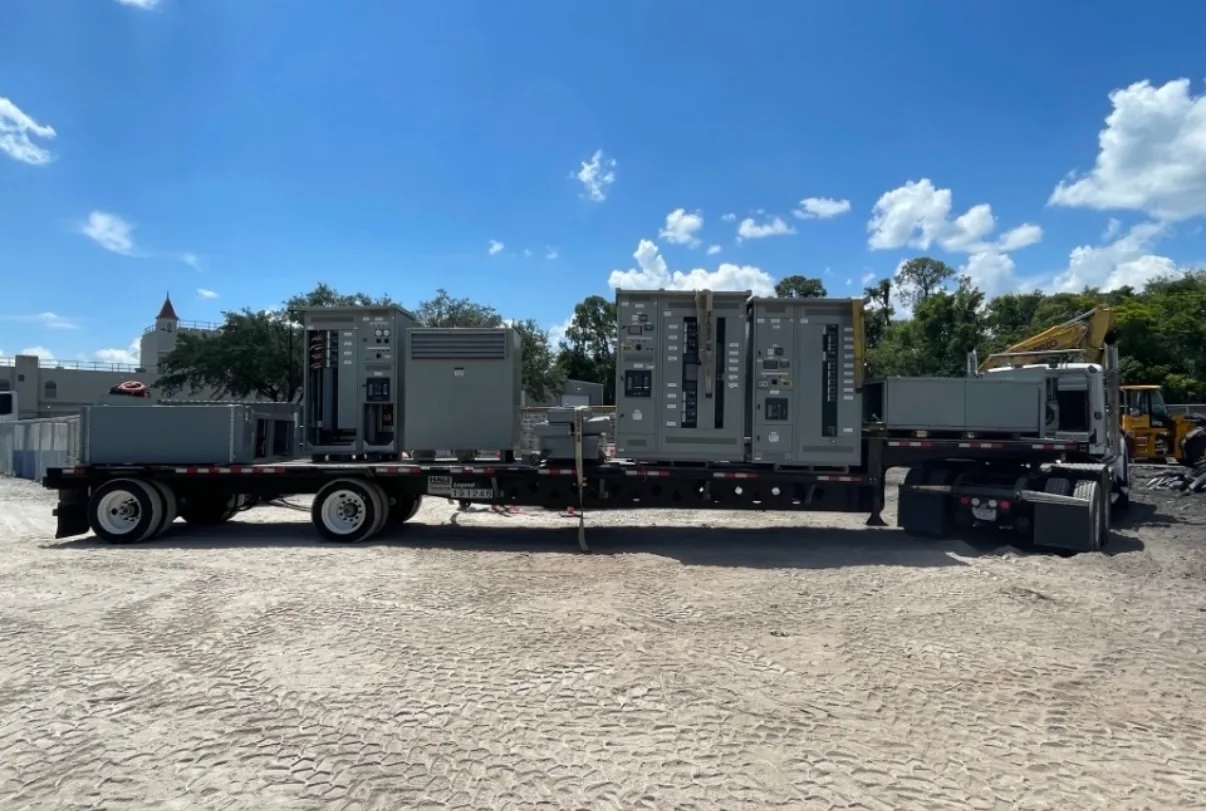
Power distribution, with purpose.
Switchgear lifting and handling should be planned from the instructions and markings for the actual equipment—not from a familiar-looking cabinet or a generic rigging assumption. Before a new assembly is released for shipment, the purchaser, manufacturer, carrier, and receiving team need to align on its configuration, weight, center of gravity, approved lifting points, and route to the final position. Those details affect packaging, crane and rigging choices, unloading, and whether the assembly can be moved as one section or must be handled in separate sections.
Start with the approved equipment configuration
A lifting plan is only as useful as the configuration it describes. Switchboards and switchgear can change weight and balance as sections, bus, breakers, control components, and enclosure features are added or revised. The quote request should identify the intended arrangement, section lineup, electrical ratings, indoor or outdoor construction, and any options that affect the shipping configuration. If the final bill of material is not settled, mark weights and handling details as preliminary rather than treating them as release information.
For a new custom assembly, the manufacturer can review project-specific inputs and establish which handling information is available for the approved build. Purchasers should provide the destination, unloading constraints, intended placement sequence, and known access limits early enough to inform packaging and shipping preparation. A Dallas–Fort Worth project shipping to a site elsewhere in the country may have different carrier, dock, and receiving constraints than one delivered locally; the shipping plan should reflect the actual destination rather than assume a standard route.
Use marked lifting points and the equipment’s instructions
Before lifting, the receiving team should locate and verify the lifting-point markings and consult the handling instructions issued for that specific assembly. Do not infer lift points from the cabinet shape, use an unmarked roof feature, or assume that a visually similar lineup has the same lifting arrangement. The instructions may distinguish between a complete lineup and individual shipping sections, or specify conditions that apply to a particular enclosure or configuration.
The actual equipment manufacturer’s directions govern the lift. Rigging hardware, sling arrangement, spreader requirements, and the relationship between lifting points are matters for the qualified lifting team to evaluate against those directions and the equipment condition. If markings are missing, damaged, obstructed by packaging, or inconsistent with supplied documentation, stop and obtain clarification before proceeding. This page is planning guidance, not authorization to lift or a substitute for the equipment-specific instructions and site safety controls.


Confirm weight, center of gravity, and section boundaries
Ask for the applicable shipping weight and whether it represents the entire lineup, a shipping split, or one section. Clarify whether the figure includes skids, crating, weather protection, or other packaging, because a shipping weight and an installed-equipment weight may not be interchangeable. The center of gravity is also configuration-dependent: a lineup with unequal section contents may not balance at its geometric center. Teams need to know which documented value applies to the item being lifted and whether it is preliminary or final.
Shipping splits create important handoff points. The purchaser and manufacturer should confirm which sections travel together, what connection or alignment work is expected after arrival, and whether each shipping piece has its own weight and handling direction. A crane, forklift, dock, or floor route may be suitable for one piece but not another. The receiving plan should also account for turning clearance, overhead obstructions, floor capacity, and the final position without assuming those conditions have been verified by the equipment supplier.
Make rigging documentation useful at the site
A practical document set should let the site team match the instructions to the shipment. Depending on the approved build and project scope, useful records may include a section identification drawing, marked lift-point information, documented weights, center-of-gravity data, and handling notes tied to the shipping configuration. The drawing should make clear whether it is for planning, approval, or use with the released assembly. Revision control matters: an outdated arrangement or weight can undermine an otherwise sound lift plan.
The purchaser should identify who will receive and review these records, when they are needed, and whether the site requires a particular drawing format or submittal process. If a lift plan, engineered rigging design, crane selection, route survey, or site-specific safety review is required, establish responsibility separately. These are not automatically provided by switchgear manufacturing or shipping documentation. Any additional analysis or drawing should be confirmed for availability and scope before it is assumed to be part of an order.
Coordinate packaging, transport, and arrival conditions
Packaging protects equipment in transit, but it can affect how the shipment is handled and inspected. Discuss whether the receiving team expects a crated or skid-mounted delivery, how markings remain visible, and what access is needed to verify shipping sections and identify handling instructions. The shipping plan should also establish who removes packaging, how visible damage is documented, and how the equipment will be protected if it cannot be moved immediately to a suitable indoor location.
Transportation and site conditions may require tradeoffs. More protective packaging can affect dimensions and handling access, while a tight receiving area may constrain unloading options or temporary storage. Share delivery-hour restrictions, dock or curb conditions, security rules, weather exposure, and route limitations during quote and order review. The carrier’s equipment and services are separate from the assembly’s lifting design; confirm that the planned delivery method can accommodate the shipment without treating the carrier’s standard practice as approval to lift the switchgear.
Define responsibilities and verify before release
A reliable handoff identifies who supplies each decision-critical item. The manufacturer can confirm information associated with its approved equipment configuration and provide agreed manufacturing or shipping documents. The purchaser or site team supplies destination and access conditions, coordinates qualified rigging resources, and verifies that the receiving plan matches the shipment. The carrier’s responsibilities should be confirmed under the transportation arrangement. Any unverified capability, special handling service, or project-specific document should be treated as a planned requirement pending written confirmation.
For a quote, provide the equipment scope and configuration, destination, delivery constraints, requested handling records, and any known unloading or placement requirements. Confirm the applicable weights, lifting-point markings, center-of-gravity information, shipping splits, and document revisions against the released equipment before the lift. Ratings, component availability, standards requirements, and any U.S.-origin requirements must likewise be confirmed for the specific order. Custom builds and American components may be requested, and shorter lead time can be a goal, but neither handling documentation nor delivery timing should be assumed until the order details and responsibilities are agreed.
Specifications & planning
Review the details that matter for your application. Final specifications and availability should be confirmed for your project.
| Evaluation factor | What to confirm |
|---|---|
| Configuration | Shipping lineup, section splits, and revision that the handling documents describe |
| Weight and balance | Applicable piece weight, packaging inclusion, and configuration-specific center-of-gravity data |
| Lift guidance | Marked lifting points and instructions for the actual equipment and shipping condition |
| Site interface | Unloading access, route constraints, receiving responsibility, and required document timing |