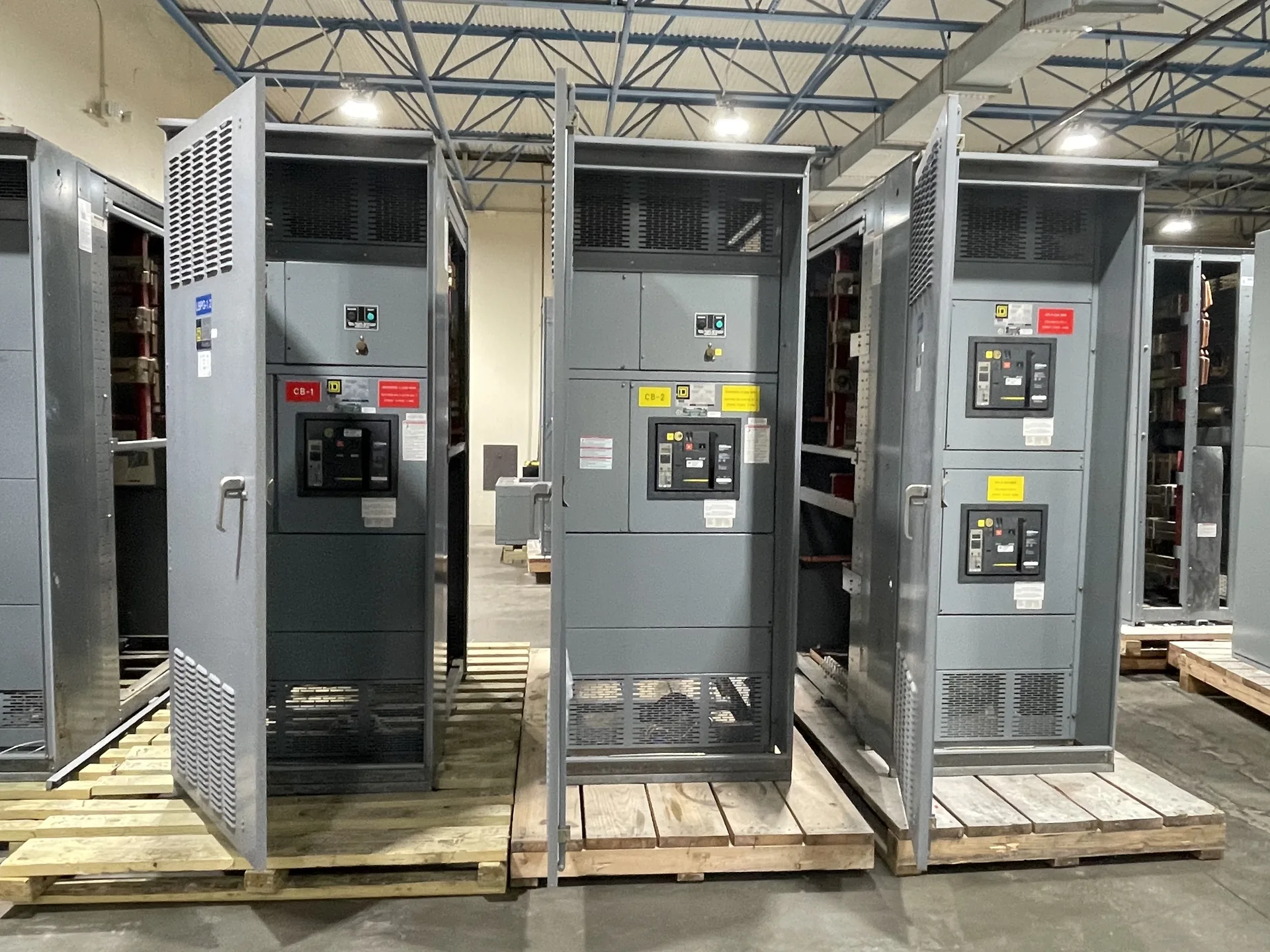
Power distribution, with purpose.
A 3200 A figure is a starting point for evaluating an assembly, not a complete equipment specification or confirmation that a particular design is available. A sound review separates the continuous-current rating of the bus from the breaker’s frame and trip settings, then checks both against the electrical system, installation conditions, and project documents. Those distinctions help purchasers define what they need without treating one ampere value as a finished design.
Separate the bus rating from breaker ratings
Bus continuous current describes the current the bus is specified to carry under its stated design and operating conditions. Breaker frame size identifies the breaker’s current-carrying frame class, while its trip unit and settings determine the protection response within the applicable device limits. These values are related, but they are not interchangeable. A 3200 A bus does not, by itself, establish that a particular breaker frame, trip setting, or protective scheme is suitable.
For a useful review, identify the intended meaning of every 3200 A reference in the specification: main bus, vertical bus, incoming breaker, tie breaker, or feeder device. State whether the figure is a continuous-current requirement, a device frame reference, or a proposed trip value. The selected equipment must also be checked for system voltage, available fault current, interrupting and withstand requirements, coordination, and the specific breaker and bus arrangement. Those details require project-specific engineering review.
Check trip settings against the actual load
A breaker trip setting is a protection decision, not a way to make a bus rating fit an assumed load. Load studies and protection coordination determine how the trip unit should respond to expected demand and faults. Depending on the device and scheme, settings may include long-time, short-time, instantaneous, or ground-fault functions. The applicable settings, sensor or rating-plug choices, and permitted adjustment ranges must be verified for the exact breaker and protection design.
Provide a load schedule that distinguishes connected load from calculated demand and identifies continuous loads, motor starting, nonlinear loads, and known growth allowances. Include load profiles or operating modes when loads are intermittent or when normal and standby configurations differ. A demand total alone may not reveal simultaneous operation or starting effects. If the data is preliminary, mark it as such and identify who will confirm the final values before equipment selection and protection settings are finalized.


Include installation ambient and enclosure conditions
Current ratings depend on stated equipment conditions; they should not be assumed to apply identically in every installation. Site ambient temperature, altitude, ventilation, enclosure type, heat-producing devices, and the arrangement of sections can affect the review. Identify indoor or outdoor placement, expected room temperatures, elevation, dust or moisture concerns, and any unusual heat sources. If the switchgear is installed in a constrained electrical room, provide available clearances and relevant ventilation information rather than assuming the room matches a standard condition.
Ask the equipment manufacturer to confirm how the proposed assembly’s ratings apply to the stated conditions and whether a design adjustment or different configuration is needed. Do not assume that a breaker’s marked frame value or a bus label independently resolves ambient suitability. For a Dallas–Fort Worth project, indoor equipment-room conditions and any outdoor exposure should be documented just as carefully as for a project elsewhere; regional climate alone does not establish the actual installation ambient.
Provide drawings and system data for a meaningful review
A quote review is more useful when it includes the one-line diagram, equipment layout or elevation, system nominal voltage, frequency, grounding method, and incoming and outgoing connection details. Supply available fault-current information at the equipment location, upstream protective-device data, and the required short-circuit or withstand criteria. Identify service entrance requirements, metering, control power, communications, and any interlocking or transfer functions. Confirm whether connections are top or bottom entry and note cable, bus duct, or other interface constraints.
Include the project specification, applicable owner standards, and any required submittal or coordination documents. Mark drawing revisions and identify unresolved design inputs so an outdated one-line is not mistaken for the current basis. A manufacturer can assess a proposed new custom-built assembly from defined requirements, but cannot responsibly treat an incomplete drawing set as proof that a specific rating, component, or configuration will work. All ratings, component availability, standards, and any U.S.-origin requirements need confirmation for the particular order.
Compare configurations without treating 3200 A as a product promise
Compare alternatives by looking at how the main bus, breakers, section layout, and future feeder needs fit the operating plan. A design with a 3200 A bus and appropriately selected protective devices may differ materially from one that uses another bus value or divides loads among different sections. Review fault-duty capability, selective coordination goals, maintainability, footprint, connection space, and the consequences of planned expansion. A larger nominal current value is not automatically the safer or more economical choice if it does not match the load and protection study.
When requesting pricing, describe the required function and performance rather than assuming a 3200 A assembly is an offered standard product. The manufacturer builds new equipment and can evaluate custom configurations, with shorter lead time as a goal rather than a guarantee. UL 891 may apply to low-voltage switchboard assemblies where appropriate; it is not a general listing for medium-voltage switchgear. The applicable construction, standards, and any listing status must be confirmed for the proposed assembly.
Record assumptions before releasing a specification
A practical rating review should leave a clear record of what is known and what remains open. Document the assumed bus continuous-current basis, breaker frame and trip-unit selections under consideration, load-data revision, ambient conditions, fault-current basis, and equipment interfaces. Note who is responsible for supplying or approving each missing input and when it must be resolved. This record reduces the risk that a preliminary value is carried into procurement as though it were a final engineered requirement.
For a quote, provide the latest one-line and layout, load schedule, system and fault data, applicable specifications, site conditions, preferred configuration, and required delivery or documentation milestones. Ask for confirmation of the proposed ratings and any deviations or assumptions in writing. Until the manufacturer validates its capabilities and the project team confirms site-specific requirements, 3200 A remains a rating under review—not a complete design, a guarantee of suitability, or confirmation of an available product.
Specifications & planning
Review the details that matter for your application. Final specifications and availability should be confirmed for your project.
| Evaluation factor | Information to confirm |
|---|---|
| Bus continuous current | Required bus rating and stated operating conditions |
| Breaker selection | Frame class, trip unit, settings basis, and protective scheme |
| Site ambient | Temperature, altitude, enclosure, ventilation, and location |
| System and fault duty | Nominal voltage, available fault current, and required withstand criteria |