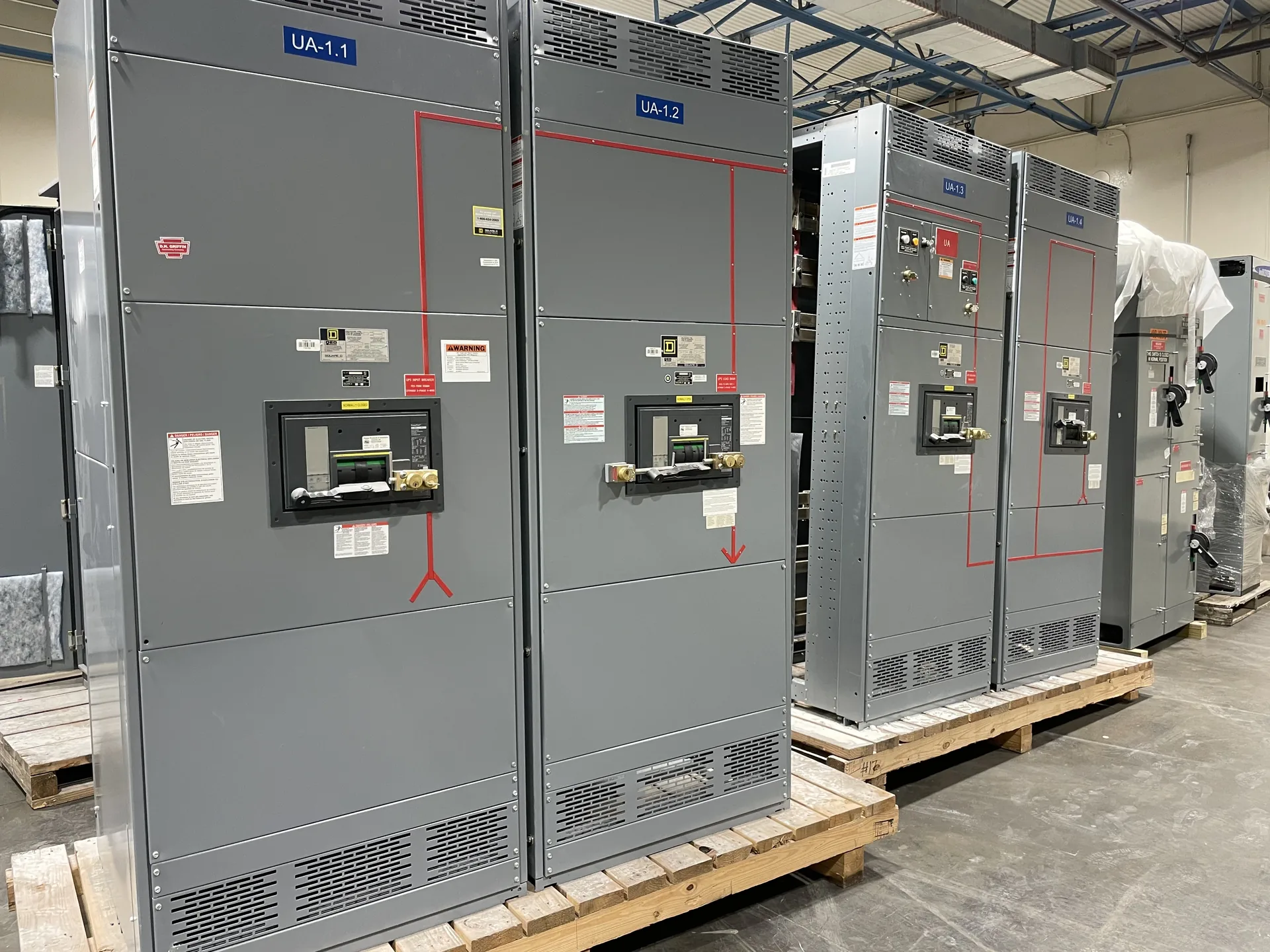
Power distribution, with purpose.
A useful switchgear quote starts with enough project information to define the electrical duty, physical arrangement, and boundaries of supply. Send the latest single-line diagram and available specifications, then identify open decisions rather than guessing at them. Clear inputs help the manufacturer assess the requested equipment and state assumptions, exclusions, and items requiring engineering review. They do not guarantee a particular price, delivery date, component supply, or final design.
Start with the drawing set and project basis
Attach the current single-line diagram, identifying the drawing revision and whether it is preliminary, issued for bid, or approved for construction. Include relevant plans, elevations, control schematics, and equipment schedules when available. Mark proposed switchgear boundaries and show connected sources, transformers, generators, ties, major loads, and downstream distribution. A diagram that omits a tie, alternate source, or operating condition can change the required arrangement and protective-device coordination, so call out known alternatives explicitly.
State the project location, application, owner or design authority requirements, and anticipated procurement stage. If the drawing is still developing, identify which details are fixed and which remain subject to the engineer’s direction. A purchaser serving a Dallas–Fort Worth site, for example, should provide the actual delivery location and site restrictions; regional service does not establish a manufacturer facility or installation scope. The quote can then identify its design basis without presenting preliminary information as final.
Define voltage, current, and fault-duty requirements
Give the system nominal voltage and frequency, grounding method, and the equipment voltage class or maximum rating required by the project documents. These are related but distinct values; do not treat a nominal system voltage as the equipment’s maximum rating. Specify continuous current for each bus and feeder where applicable, along with the source conditions used to establish it. If load schedules or future capacity affect the request, explain the basis rather than relying only on a general service size.
Provide available short-circuit current at the proposed equipment terminals, the source and transformer data used in the study, and any specified withstand or interrupting requirements. Identify whether figures are preliminary and who will confirm them. Short-circuit capability depends on the complete configuration and selected components, not simply a nominal voltage label. Ratings, applicable standards, component availability, and any U.S.-origin requirements must be confirmed for the specific order. Do not assume a requested rating is available until it has been reviewed.


Describe lineup, enclosure, and distribution scope
Explain the intended lineup: main devices, feeder quantities and functions, bus ties, metering compartments, spare provisions, and future sections. Include preferred access, cable entry and exit directions, termination space, and any limits on overall width, depth, or height. State whether the request is for a complete switchboard or switchgear assembly, a defined section, or equipment coordinated with existing gear. For low-voltage switchboards, identify whether UL 891 construction is specified; applicability and the status of the particular proposed assembly must be confirmed rather than assumed.
Describe the installation environment and enclosure requirements, including indoor or outdoor use, exposure, ambient conditions, and any project-specific enclosure classification. Note room access, door clearances, rigging path, floor openings, cable trenches, and restrictions that could affect shipping splits or assembly dimensions. Provide site drawings if they exist. These details can reveal conflicts before proposal review, but a quote based on incomplete plans should state its dimensional assumptions and leave final fit-up subject to coordinated drawings.
Set protection, controls, and interface expectations
Identify the protective functions required for mains, feeders, ties, and other devices, and provide available coordination-study criteria or relay specifications. State whether the scope includes metering, ground-fault functions, communications, alarms, control power, or interlocking. Where a named device or protocol is specified, provide the exact requirement and indicate acceptable alternatives, if any. Protection settings and coordination depend on system studies and project engineering; a quote should not be mistaken for a completed protection study.
Clarify interfaces with upstream and downstream equipment, building controls, remote monitoring, and utility or owner systems. Supply relevant control-voltage, communications, terminal, and wiring requirements, along with responsibility boundaries for field connections and integration. State whether the requested manufacturing scope includes drawings, documentation, or other deliverables only when these are defined in the project specification. Custom builds and American components may be considered where suitable, but component selection, origin requirements, and compatibility require project-specific confirmation.
Make schedule and delivery constraints visible
Provide the required-on-site date, the date by which a proposal is needed, and any procurement milestones that affect drawing approval or release. Identify whether the schedule is firm, a planning target, or still being developed. A manufacturer may aim for a shorter lead time, but a requested date is not a commitment. Engineering review, approved submittals, component availability, changes, and transportation can affect the schedule; any stated timing should be tied to a defined scope and confirmed in the proposal.
Describe delivery conditions that can influence shipment planning, including receiving hours, unloading capability, access limits, indoor storage, phased delivery, and whether the site can accept oversized or split sections. Distinguish requested delivery terms from installation, setting, connection, or commissioning responsibilities. Unless expressly included and verified, do not assume those activities are part of a manufacturing quotation. For a project in Dallas–Fort Worth or elsewhere, provide the specific destination and constraints instead of relying on a regional label.
Review assumptions, revisions, and competing proposals
Ask the proposal to identify its drawing and specification revisions, included equipment, exclusions, open technical questions, and assumptions. Check that the quoted lineup, device functions, ratings, enclosure, and interfaces match the intended scope. If information is missing, agree on whether the proposal uses a stated basis or leaves that item unresolved. Clarify how changes after quotation are handled, since revised fault data, feeder counts, dimensions, or delivery requirements may require new engineering review and a revised commercial proposal.
Compare proposals on the same technical and commercial basis, not price alone. Check rating definitions, scope boundaries, included documentation, exceptions, schedule basis, delivery terms, and responsibility for unresolved interfaces. Record deviations and request written clarification before treating alternatives as equivalent. A custom manufacturer can evaluate a new-equipment build against project requirements, but no quote should imply guaranteed price, stock, delivery, or standards compliance where these have not been confirmed for the specific order.
Specifications & planning
Review the details that matter for your application. Final specifications and availability should be confirmed for your project.
| Evaluation factor | What to provide or verify |
|---|---|
| Drawing basis | Single-line diagram revision and status |
| Electrical duty | Nominal voltage, continuous current, and documented fault-current basis |
| Physical fit | Enclosure conditions, dimensions, access, and cable-entry needs |
| Scope alignment | Protection, controls, interfaces, exclusions, and proposal assumptions |
| Schedule and delivery | Required dates, destination, receiving limits, and stated timing basis |