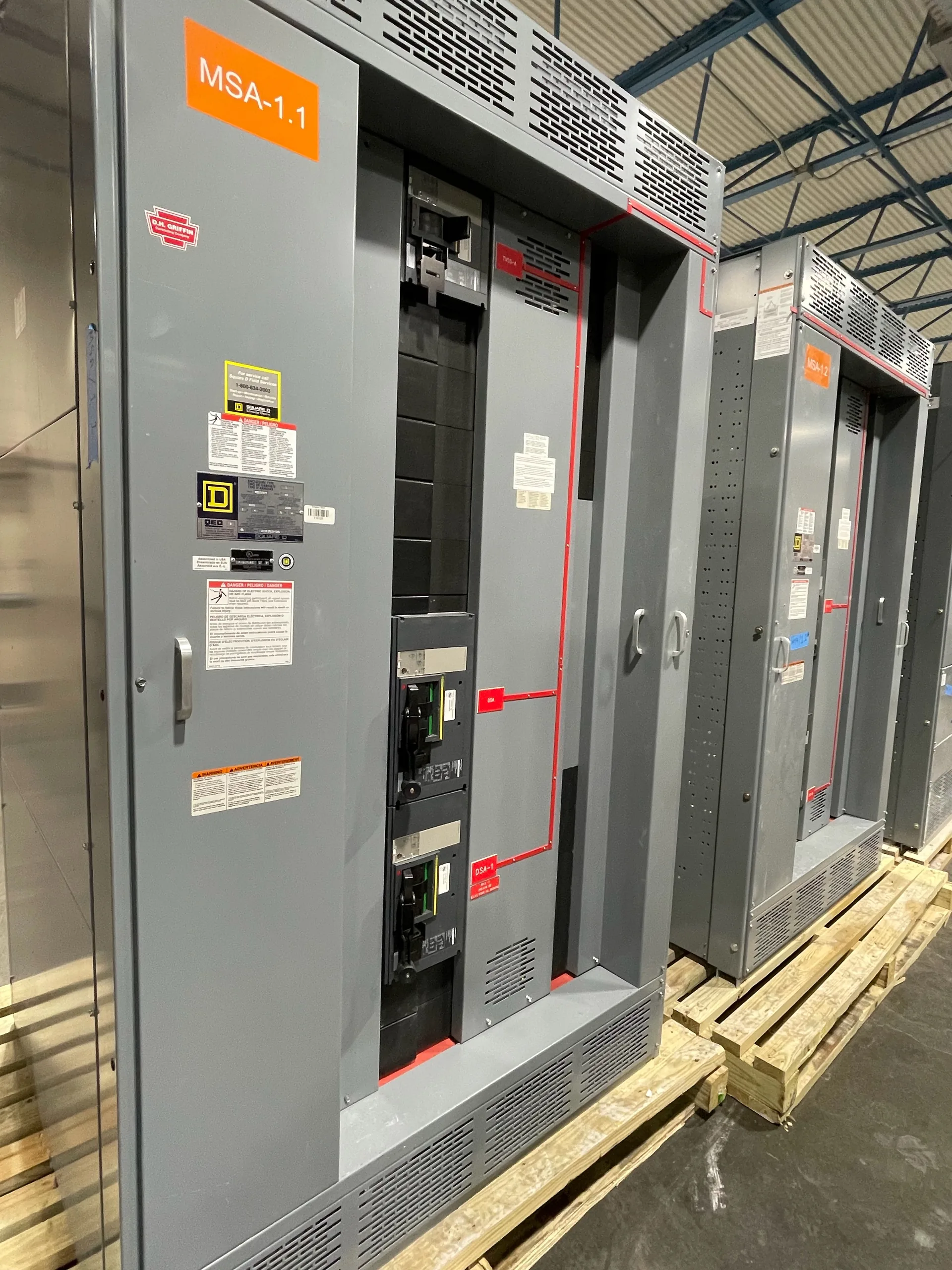
Power distribution, with purpose.
Custom switchgear design is a set of connected decisions, not a blank check for any layout or feature. A change to enclosure dimensions can affect access, cable routing, heat management, bus supports and shipping; an added option can alter controls, wiring and review time. Buyers get a more dependable proposal by identifying operating needs, documenting interfaces and agreeing on how revisions will be evaluated before drawings are released.
Start with the installation envelope and access
Provide the available room dimensions, equipment lineup limits, door and aisle clearances, floor conditions, cable entry zones and the path from delivery point to final position. Include overhead obstructions and any restrictions on turning or moving sections. A compact lineup may save floor space but leave too little working or maintenance access, while a wider arrangement may conflict with walls, adjacent equipment or building routes. Final clearances and access requirements must be checked against applicable codes, the installation design and the project’s safety requirements.
Describe how operators and qualified maintenance personnel are expected to approach the equipment, where doors must open, and whether rear access is available or practical. Also identify adjacent gear and the locations of upstream and downstream connections. These details help the manufacturer assess section arrangement and interfaces; they do not replace site verification by the project’s responsible design professionals. For a Dallas–Fort Worth job or a shipment elsewhere in the United States, the same principle applies: confirm the actual room and delivery constraints rather than assuming a standard footprint will fit.
Define electrical ratings before optimizing bus
Bus selection depends on the system and load, not on a desired number in isolation. Supply the system’s nominal voltage and grounding arrangement, continuous current requirements, available fault current or required short-circuit rating, protective-device information, and any known load growth. Distinguish nominal system voltage from the equipment’s maximum voltage rating. Specify whether the request concerns a low-voltage switchboard or medium-voltage equipment; the voltage class affects construction, components and applicable standards.
Higher current or fault-duty requirements can affect bus dimensions, supports, spacing, enclosure arrangement and the protective devices used in the lineup. Those changes may increase space needs or constrain component choices. Do not assume that a particular bus rating, short-circuit rating or component is available in every configuration. The manufacturer and project engineer should confirm ratings and coordination for the specific order, including the basis for any requested withstand or interrupting values.


Treat options as interfaces, not checkboxes
Options such as metering, control power, communications, key interlocks, space heaters or special cable provisions can affect panel space, wiring, terminal points and external connections. State what each feature must accomplish and identify the devices or systems it must connect to. For communications, provide the required protocol and data points where known; for control circuits, provide the applicable control voltage and interface expectations. A request for an option without its operating purpose may leave important design assumptions unresolved.
Each addition should be reviewed for fit with the selected lineup and with equipment supplied by others. For example, a utility or generator interface may impose control and protection requirements that cannot be inferred from the switchgear description alone. Identify responsibility for external relays, cables, network configuration, programming and field connections. Custom manufacturing can accommodate project-specific requirements within confirmed design and component limits, but it does not mean every combination is feasible or included in the quoted scope.
Control revisions through documented approvals
A layout or rating change after quote development can ripple through drawings, material selection, enclosure construction, wiring and schedule planning. Establish a review sequence that identifies who may approve electrical design, physical arrangement and commercial changes. Keep one controlled set of requirements and mark revisions clearly; informal comments spread across emails or separate drawing copies can create conflicting instructions. Ask the manufacturer to identify the effect of a requested change on scope, price and target timing before treating it as accepted.
Set approval milestones for the one-line diagram, general arrangement, elementary diagrams, connection details and other documents needed for the project. Confirm which documents are included in the submittal and what information remains the purchaser’s responsibility. Approval should verify that the submitted design reflects the agreed requirements, not transfer responsibility for site conditions or for engineering outside the manufacturer’s scope. A shorter lead time may be a goal, but timing depends on the confirmed design, components, approvals and order conditions; it should not be treated as guaranteed.
Worked hypothetical: choosing a compact lineup
Consider a hypothetical facility replacing a low-voltage lineup in a restricted electrical room. The initial request favors the narrowest possible arrangement, includes future feeder space, and asks for metering and communications. The purchaser provides a room sketch but no cable-entry locations, available fault-current data or communications requirements. A quote based on those gaps would rely on assumptions, so the practical decision is to pause layout optimization until the missing interfaces and electrical basis are established.
After review, the project team confirms top cable entry, a fixed aisle constraint, the required future feeder provision, metering points and the communication interface. The team then compares a compact arrangement with a wider option that improves access and routing. It may decide that the future space is essential but that one optional feature can be deferred. This is an example only, subject to engineering review: the right choice depends on verified dimensions, ratings, component availability, code requirements and the manufacturer’s confirmed capabilities.
Prepare a quote package with clear boundaries
For a useful quote, provide the one-line diagram, equipment type and quantity, nominal voltage and system details, continuous and fault-duty requirements, protective-device schedule, load and future-growth assumptions, room and access drawings, cable-entry plan, control and communications requirements, environmental conditions, and applicable project specifications. Include desired submittal milestones, delivery destination and any documented U.S.-origin or other procurement requirements. Those requirements must be reviewed for the specific order rather than assumed from a general product description.
Ask the manufacturer to state the proposed scope, exclusions, assumptions, required purchaser-furnished information and items needing engineering confirmation. Confirm whether the requested construction and any UL 891 requirements apply to the low-voltage switchboard configuration; UL 891 is not a general listing for medium-voltage equipment. Before release, resolve open comments and approve the governing drawings in the agreed process. Custom builds and American components may be considered as project requirements allow, but ratings, standards, component availability, origin requirements and schedule all require order-specific confirmation.
Specifications & planning
Review the details that matter for your application. Final specifications and availability should be confirmed for your project.
| Evaluation factor | Evidence to provide |
|---|---|
| Physical arrangement | Dimensioned room plan, access clearances and delivery route |
| Bus and protection basis | Nominal voltage, load, fault-current data and protective-device schedule |
| Options and interfaces | Control requirements, metering points and connection details |
| Revision control | Drawing milestones, authorized approvers and change-review process |