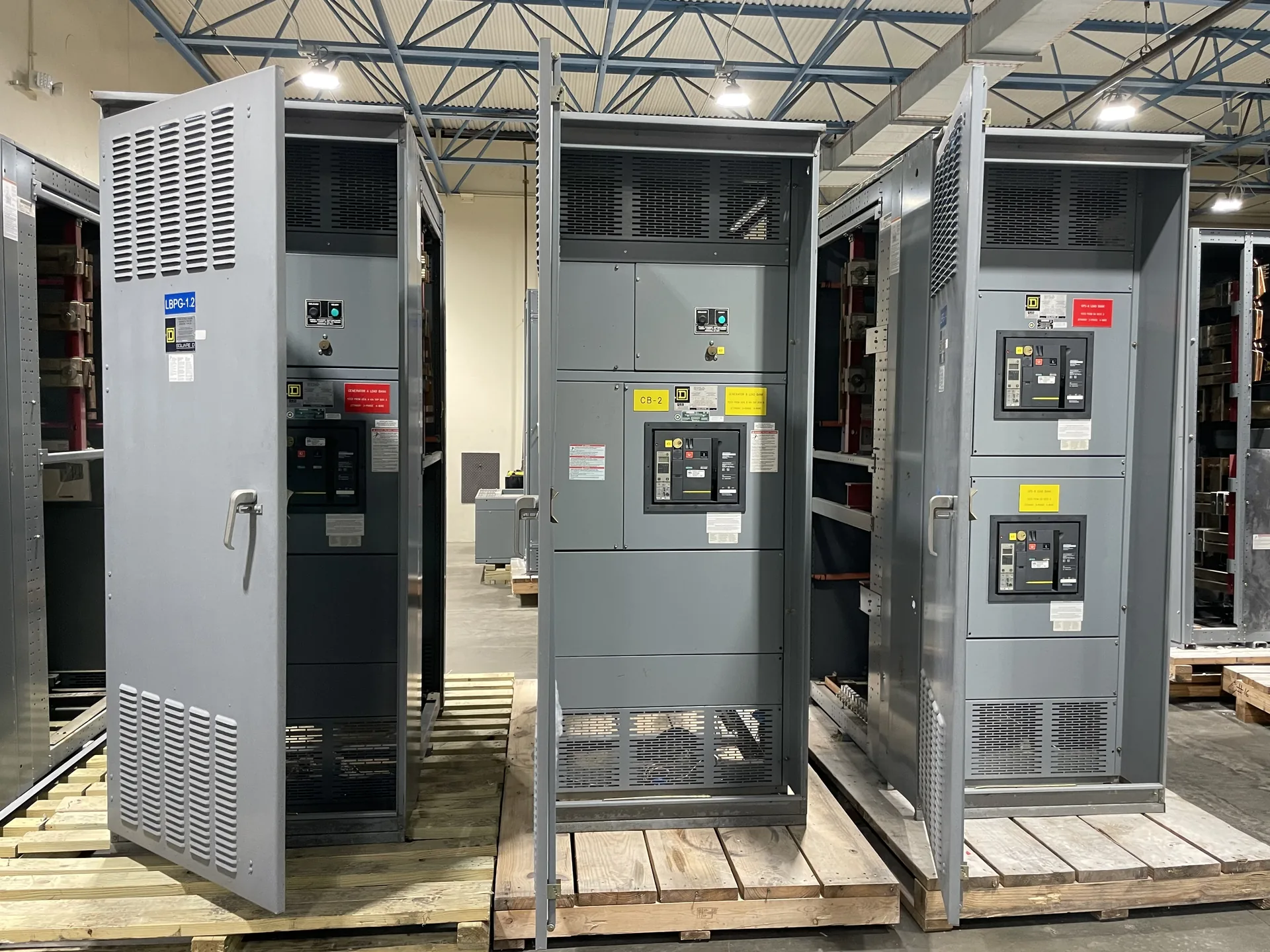
Power distribution, with purpose.
Switchgear production schedules depend on a chain of decisions, not a single factory countdown. A date can shift when a specified device is difficult to source, drawings remain unsettled, approval cycles run long, or shipping requirements are unclear. Buyers planning new equipment can reduce avoidable uncertainty by identifying these dependencies early and asking for a schedule based on the actual scope. The factors below help frame that discussion without implying a guaranteed delivery time.
Device availability begins with exact specifications
A switchgear schedule is affected by the components the design actually requires, not simply by the equipment’s general description. Breaker type and frame, trip unit, control voltage, metering, protective relays, communications options, and accessory requirements can influence sourcing and assembly sequencing. A functionally similar substitute may not fit the approved design, coordinate with the protection scheme, or meet the owner’s requirements, so substitution should never be assumed.
For a useful quote, provide the one-line diagram and equipment schedule, including system nominal voltage, configuration, continuous-current requirements, available fault-current information, and requested short-circuit ratings. Identify named manufacturers or approved alternates, if applicable, and call out critical components separately. The manufacturer must confirm component availability and suitability for the specific order; availability can change before procurement, and no universal stock or lead-time claim should replace that confirmation.
Design maturity determines what can be released
A project with a stable electrical design is easier to schedule than one still changing its lineup, feeder arrangement, or control scheme. Changes to breaker positions, bus configuration, incoming connections, instrument transformers, or cable entry can affect material selection, layout, fabrication, and drawing reviews. Even a late change that appears small may require engineering to check clearances, ratings, interfaces, and downstream documentation before work proceeds.
Send the latest design documents and mark their revision status clearly. Explain which requirements are fixed and which remain under review, such as utility service details, transformer information, protective-device settings, or field cable routing. If the design is preliminary, ask what assumptions the quote uses and which unresolved items could affect scope or schedule. A custom build can address project-specific requirements, but customization is most productive when decisions and interfaces are defined rather than left implicit.


Approval cycles are a schedule dependency
Submittal review takes calendar time, and the number of review rounds is not always predictable. The owner, engineer, contractor, and utility may each need to confirm different aspects of the design. Delayed comments, conflicting markups, or approval conditions can hold up release of materials or production, especially when they change a component selection or physical arrangement.
Before requesting a quote, identify who reviews drawings, who has authority to approve them, and how comments will be consolidated. Supply project specifications, applicable utility requirements, preferred document formats, and any required review milestones. Ask the manufacturer to distinguish a proposed schedule from a committed schedule and to state what event starts each phase. For example, engineering release, approved drawings, and confirmed component procurement are different milestones, not interchangeable promises.
Testing and acceptance need a defined scope
Testing requirements affect both planning and documentation. Routine production checks, requested witness points, customer-specific inspections, and special records can require coordination before a unit is ready to ship. The applicable standards and acceptance criteria depend on equipment type and project scope. UL 891 applies to low-voltage switchboards; it should not be treated as a general listing for medium-voltage switchgear. Requested standards, ratings, and any listing requirements must be confirmed for the particular assembly.
State what evidence is required at quotation: test documentation, inspection records, witness arrangements, nameplate information, or other submittals. Clarify whether a witness is required and who coordinates attendance, since an undefined hold point can disrupt the planned sequence. The manufacturer should confirm which tests and records are included and whether a requested procedure or certification applies to the exact design. Do not assume that a familiar requirement automatically covers every voltage class or configuration.
Shipping readiness is more than a destination
A completed assembly is not necessarily ready for an uncomplicated delivery. Shipment planning depends on final dimensions and weight, loading access, receiving hours, unloading resources, indoor storage, and the route from delivery point to installation area. Site restrictions or a need to coordinate multiple sections can affect packaging and shipment arrangements. These details matter whether the destination is in Dallas–Fort Worth or elsewhere in the United States; serving a region does not imply a local factory or a particular delivery capability.
Provide the delivery ZIP code, site contact or receiving process, access constraints, requested delivery terms, and any restrictions on truck size, arrival windows, or unloading. Confirm what is included in the quoted scope and who handles freight coordination, offloading, and movement after delivery. Do not treat a production-complete date as an arrival date. Transit, carrier arrangements, weather, and site readiness are separate variables that should be discussed and documented.
Use a decision gate and make the handoff explicit
Consider a hypothetical project in which an owner must replace a low-voltage lineup before a planned shutdown. The initial specification names a particular breaker and requests witness testing, but the utility has not finalized available fault-current data and the site has not confirmed delivery access. Rather than assume a date, the buyer can compare two paths: hold the design until those inputs are verified, or request a budgetary proposal with clearly stated assumptions and unresolved schedule risks. The first may improve schedule confidence; the second may support early planning but cannot eliminate redesign or sourcing uncertainty.
For the handoff, provide the one-line diagram, equipment schedules, specifications, project milestones, required submittals and tests, approval contacts, and delivery constraints in one controlled package. Ask for written assumptions, exclusions, schedule-start conditions, and dependencies requiring customer action. Confirm system nominal voltage separately from equipment maximum rating, and have ratings, short-circuit capability, component availability, standards, and any U.S.-origin requirement reviewed for the specific order. A manufacturer’s goal of shorter lead time is not a guaranteed delivery commitment; the order-specific schedule must be validated before it is relied upon.
Specifications & planning
Review the details that matter for your application. Final specifications and availability should be confirmed for your project.
| Evaluation factor | Evidence to provide or confirm |
|---|---|
| Device selection | Device schedule, approved alternates, and order-specific availability confirmation |
| Design maturity | Current one-line, specifications, revision status, and open decisions |
| Approvals and testing | Review owners, required milestones, witness points, and acceptance records |
| Delivery planning | Destination ZIP code, access limits, receiving process, and scope of freight |