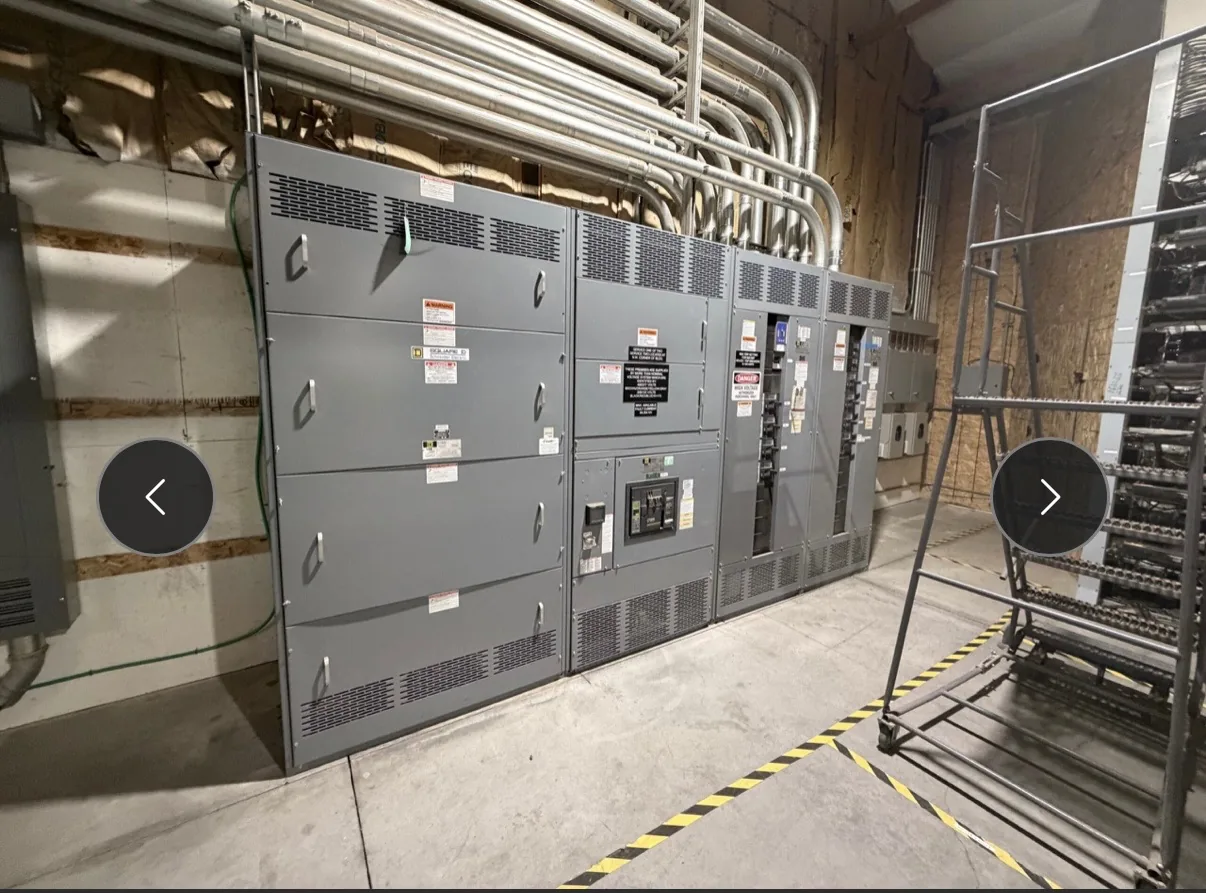
Power distribution, with purpose.
Switchgear approval delays often begin before manufacturing: drawings circulate without a named decision-maker, conflicting comments arrive in separate files, or a late design change resets work already reviewed. A useful schedule plan makes each review cycle, revision freeze, and change decision visible. These are project-management controls, not promises of a delivery date; actual timing depends on the approved scope, engineering review, component availability, and order-specific requirements.
Define the approval path before submittals begin
Agree on who reviews and consolidates comments for the purchaser, electrical engineer, utility, and other parties whose approval is required. Identify which documents need approval, who has authority to accept them, and whether a review is for coordination, design acceptance, or release to proceed. A drawing returned with comments from several reviewers is not necessarily an approved design. Consolidated, unambiguous feedback helps prevent contradictory instructions from becoming a manufacturing question.
Set review windows as planning assumptions, then confirm them with every stakeholder; do not treat them as manufacturer delivery commitments. Establish how a reviewer signals approval, how unresolved comments are tracked, and when a revised document replaces an earlier one. For a project serving Dallas–Fort Worth or another location, include the utility and site coordination parties relevant to that project rather than assuming a standard local approval sequence.
Make the submittal package decision-ready
A meaningful review requires a stable design basis. Supply the one-line diagram, system nominal voltage, available fault-current information, required short-circuit rating, main and feeder arrangements, bus requirements, enclosure and environmental conditions, and control or metering needs. Identify interfaces with transformers, protective relays, transfer equipment, generators, building systems, and field cabling. Missing or inconsistent inputs can leave reviewers unable to resolve whether a drawing is correct, even when comments are returned promptly.
For a quote, provide the project schedule and approval milestones alongside the technical documents, quantities, delivery destination, required submittal content, and any specified U.S.-origin or component requirements. Distinguish system nominal voltage from the equipment maximum rating, and flag project specifications that call for particular standards or certifications. Ratings, components, standards applicability, and origin requirements must be confirmed for the specific order; UL 891 applies to low-voltage switchboards, not medium-voltage switchgear generally.


Use revision freezes to control design maturity
A revision freeze is an agreed point at which the purchaser accepts a defined design basis for the next phase of work. It should name the drawing revision and identify what is frozen, such as lineup arrangement, ratings, breaker and protective-device selections, bus configuration, interfaces, and connection details. It does not mean that every project question has vanished. Open items should have an owner, a decision date, and a clear statement of whether they block release or can be resolved later without changing approved equipment.
Keep a controlled record of comments, responses, disposition, and superseded documents. The current revision should be easy to identify across the purchaser’s team and the manufacturer’s review. If approval is conditional, spell out each condition and its effect on release. A vague “approved as noted” can create risk when notes affect protection, dimensions, utility coordination, or field connections. Confirm in writing which revision is authorized for the next step before relying on it.
Evaluate changes by scope and downstream impact
After a freeze, a requested change should be assessed before it is treated as a simple drawing correction. A change to a breaker, fault rating, bus layout, enclosure, or control interface may affect engineering, component sourcing, testing, documentation, and coordination with connected equipment. A wording correction that does not alter design intent may have a different impact. The manufacturer must review the actual request; purchasers should not assume that a change is minor because it appears small on a marked-up page.
Use a written change request that identifies the affected revision, exact requested change, reason, approving authority, and required decision date. Ask for an impact assessment covering scope, price where applicable, schedule effect, and any revised submittals or approvals needed. Do not treat a schedule effect as known until it has been reviewed against the order’s engineering status and component availability. Custom builds and shorter lead time may be goals, but neither substitutes for order-specific confirmation.
Worked hypothetical: resolve a late feeder change
Suppose a purchaser approves a low-voltage switchboard submittal, then asks to change one feeder breaker after the revision freeze because a connected load has changed. The project team should first verify the revised load data and confirm who can authorize the change. It should then request an engineering review of the breaker selection, available fault-current basis, coordination requirements, bus and connection implications, and any effect on enclosure or control details. This is a hypothetical decision path, not a description of a completed project or a promised outcome.
If review finds no effect beyond the breaker and associated documentation, the parties can record that limited scope and issue a controlled revision for approval. If the new requirement changes ratings, protection coordination, physical arrangement, or component availability, the purchaser must weigh the design benefit against additional review and schedule exposure. The decision should be to proceed with the change, retain the approved design, or seek another technically acceptable option after engineering review—not to release an undocumented substitution.
Hand off a complete, bounded release package
Before release, reconcile the accepted drawings with the purchase scope and record exclusions, purchaser-furnished items, field work, and interfaces that are not part of the equipment supply. Confirm the required ratings and short-circuit information, component selections, control and metering scope, applicable standards, document revision, and any origin requirements. This boundary matters: approval of switchgear drawings does not automatically approve connected systems, site installation, utility requirements, or work outside the quoted scope.
A practical handoff is a single controlled package containing the approved revision, closed or explicitly tracked comments, written change decisions, current technical inputs, and named contacts authorized to resolve open issues. The purchaser should verify that the package matches the order and obtain confirmation of project-specific capabilities, components, and schedule assumptions before release. This gives engineering and manufacturing a clearer basis for proceeding while preserving a traceable record if a later change is proposed.
Specifications & planning
Review the details that matter for your application. Final specifications and availability should be confirmed for your project.
| Evaluation factor | Evidence to review |
|---|---|
| Approval ownership | Named reviewers, decision authority, and consolidated comment record |
| Design basis | Current one-line, load data, fault-current basis, and interface requirements |
| Revision freeze | Identified drawing revision, frozen scope, and disposition of open items |
| Change impact | Written engineering assessment, scope boundary, and schedule effect confirmation |