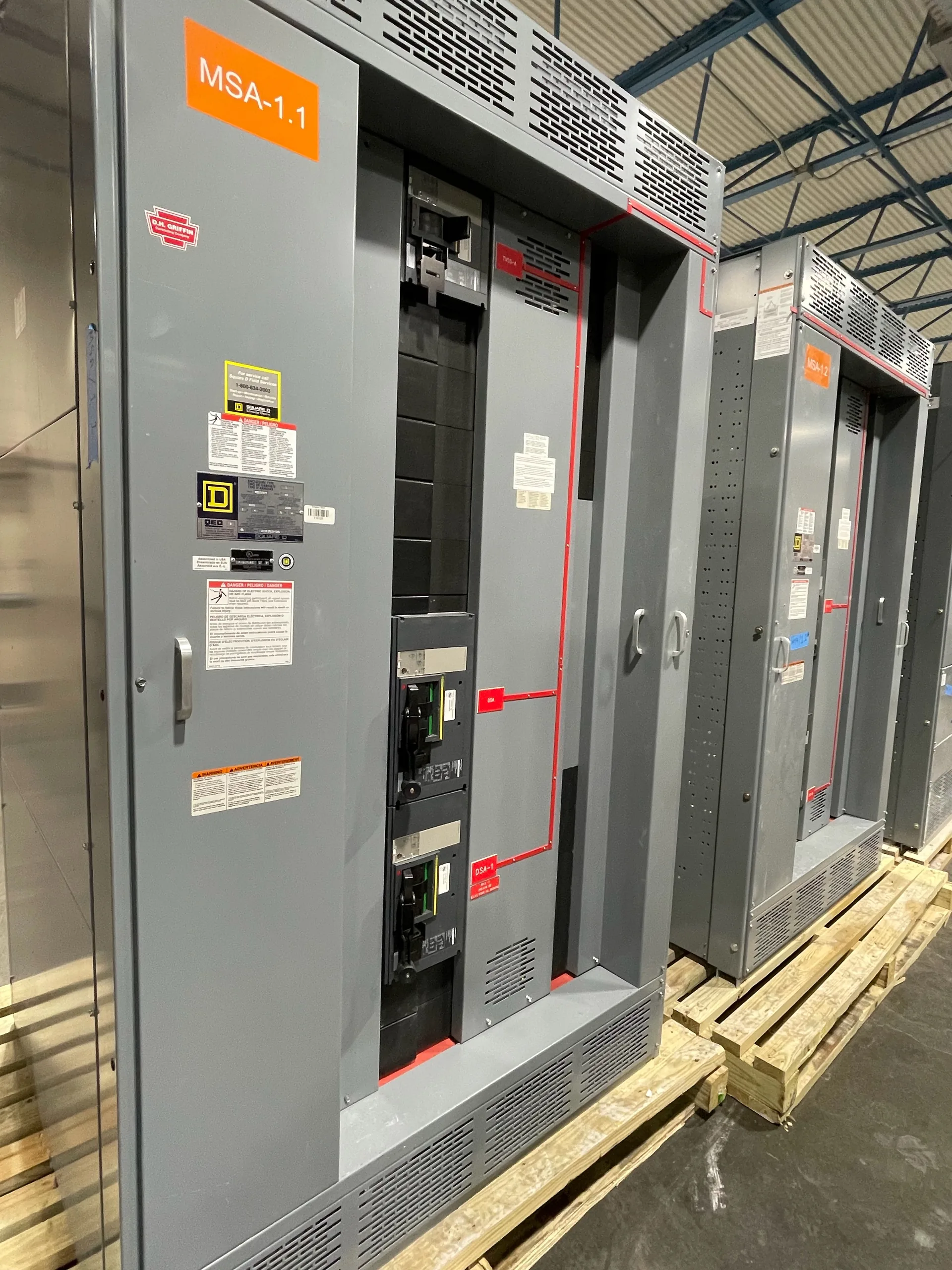
Power distribution, with purpose.
Choosing a switchgear manufacturer near Dallas–Fort Worth is less about how close a factory appears on a map and more about whether the supplier can coordinate a technically sound new-equipment build with your project team and deliver it where needed. We manufacture and supply new switchgear and switchboards, support projects in the DFW area, and ship nationwide. Share the project’s electrical requirements, site constraints, and schedule early so the proposed equipment and delivery plan can be reviewed against the actual installation.
Define what “near me” needs to mean for this project
For a DFW project, proximity may matter because the engineer, owner, electrical contractor, and supplier need to resolve drawing comments and interface questions without losing time. But a supplier serving the area is not necessarily a manufacturer with a local factory, and geographic wording alone does not establish where equipment is built or how support is arranged. Ask how submittals, design clarifications, and shipment coordination will be handled for your project rather than assuming a local facility or on-site service.
Also decide which kinds of support are essential. A project may need help clarifying lineup dimensions, reviewing incoming and outgoing connections, or coordinating a shipment window with the electrical contractor. Those are different from field installation, commissioning, or emergency response, which should not be assumed as part of an equipment purchase. Identify the responsibilities your contract assigns to the manufacturer, installer, engineer, and owner before comparing proposals.
Send a quote package that answers engineering questions
A useful request for quotation includes the one-line diagram, equipment schedule, applicable specifications, and the intended application. State the system nominal voltage and grounding arrangement, frequency, available fault-current information, required continuous current, and any specified short-circuit rating and duration. Include the project location, indoor or outdoor conditions, ambient or environmental requirements, and target delivery window. If documents conflict, flag the conflict instead of relying on a supplier to guess which requirement governs.
Physical and interface information is equally important. Provide the available lineup footprint, access and working-clearance constraints, cable entry direction, conductor sizes and termination details, and the location of existing or planned equipment at each connection. Identify metering, protective relaying, communications, control power, and auxiliary contacts when required. A complete package makes it easier to identify design questions before a quotation becomes a purchase commitment; final ratings, components, standards, and country-of-origin requirements remain subject to review for the specific order.


Match the equipment type and rating to the actual system
The word switchgear can refer to different equipment depending on voltage class and function. A low-voltage distribution project may call for a switchboard, switchgear, or another assembly specified by the engineer; medium-voltage service and distribution involve different equipment and design considerations. Do not use a nominal system voltage as a substitute for the equipment’s required maximum rating. Confirm both with the project’s electrical design documents and have the proposed configuration reviewed for its intended application.
For low-voltage switchboards, UL 891 may be relevant when required by the project, but it is not a general designation for medium-voltage or high-voltage switchgear. Likewise, a voltage class stated in a request does not by itself confirm that a particular assembly, interrupting device, or configuration meets the project’s requirements. Treat short-circuit capability, protective-device coordination, bus arrangement, and applicable standards as order-specific engineering items, not assumptions based on a product category or a general web description.
Treat the equipment lineup as an interface, not an island
A new lineup must connect cleanly to the electrical system around it. Confirm how incoming power reaches the equipment, where feeder conductors leave, and whether the project uses top or bottom entry. Check bus connections, cable-termination space, grounding provisions, control wiring, and the division of responsibility for upstream and downstream devices. A small mismatch in orientation, connection location, or required working space can force design changes even when the electrical ratings appear suitable.
In a retrofit or phased project, record the existing equipment’s verified nameplate information and field dimensions, but do not assume the replacement must copy every legacy feature. The engineer should establish which interfaces must remain fixed and which can change. Coordinate any transition section, adapter, or connection detail through approved drawings and engineering review. This reduces the risk of ordering a lineup that fits the electrical schedule but cannot be connected or placed as intended.
Plan DFW delivery around the jobsite, not a map estimate
Shipping to Dallas–Fort Worth still requires project-specific logistics. The delivery point may be a construction site, an electrical contractor’s staging location, or another designated receiving point, and each can have different access rules. Provide the receiving address during quoting without expecting a delivery estimate from distance alone. Lineup dimensions and shipping splits, truck access, unloading responsibility, delivery-hour restrictions, and the site’s readiness can all affect the practical plan.
For a nationwide shipment, the same planning questions apply, with added coordination across the destination’s receiving process and project schedule. Ask what shipment assumptions are included in the proposal and which responsibilities remain with the purchaser or carrier. Protect the installation sequence by confirming that the receiving party can accept the planned shipment and that the destination can store equipment appropriately if installation is not immediate. Delivery dates are planning targets to confirm for a specific order, not guarantees based on service area.
Compare proposals by documented fit and scope
When comparing new-equipment proposals, review the equipment description against the one-line diagram and specification line by line. Check the stated system and equipment ratings, short-circuit requirements, protective-device details, enclosure and access requirements, controls, metering, and included accessories. Note deviations and exclusions explicitly. A proposal that leaves a requirement unresolved may look comparable on price or schedule while shifting design work or procurement risk back to the project team.
We build custom equipment using American components and aim for shorter lead times, while actual component availability and timing depend on the requested configuration and order. To begin a quote, send the current drawings and specifications, required ratings, project location, physical interfaces, schedule milestones, and any US-origin or standards requirements. We can review the information for fit and open questions; ratings, component selection, standards applicability, and origin requirements must be confirmed for the specific order before they are treated as commitments.
Specifications & planning
Review the details that matter for your application. Final specifications and availability should be confirmed for your project.
| Evaluation factor | What to provide or verify |
|---|---|
| Electrical basis | Nominal system voltage, required equipment maximum rating, grounding, and fault-current data |
| Physical interfaces | Lineup footprint, cable entry, terminations, clearances, and connection locations |
| Project coordination | Drawing review responsibilities, schedule milestones, and named receiving party |
| Delivery planning | Destination access, unloading scope, receiving hours, and storage readiness |